.
.
.
Showing posts with label Kenneth Tobey. Show all posts

Friday, January 24, 2020

Lost Empire, The (1984)

... aka: Drei Engel auf der Todesinsel (Three Angels on the Island of Death)
... aka: Kauhun valtakunta (Kingdom of Horror)

Directed by:
Jim Wynorski

After a botched attempt at getting a film school education, Long Island native Jim Wynorski spent much of the 1970s working for publisher Doubleday (who'd later release the Wynorski-edited sci-fi compilation They Came from Outer Space in 1981), but his desire to work in film never went away. Quitting his job in New York, Wynorski relocated to Los Angeles and promptly went to work for legendary low budget producer Roger Corman. At Corman's New World Pictures, Wynorski cut his teeth editing trailers and helping to devise outrageous ad campaigns for a variety of exploitation flicks like SCREAMERS (1980). From there, he got to write several Corman-produced films like the Alien cash-in Forbidden World (1982) and the fantasy Sorceress (1982) before finally making his feature debut with The Lost Empire. Empire however was not made for New World but instead for a wealthy theater owner who was, unbeknownst to Wynorski at the time he was making this, actually looking for a tax write-off!

Few would have guessed it back in the early 80s, but this low budget exploiter would be the first of over 100 movies from a director who'd go on to make films in pretty much every popular genre over the next few decades. Though he spent most of his time making sci-fi, horror and action flicks (usually with heavy doses of meta humor) and then erotic thrillers and soft-core porn "spoofs," he also ventured into teen comedies, westerns, TV movies and even the occasional PG-rated kid's film. He was, in fact, the first person to cast a pre-star Jennifer Love Hewitt in a leading role.


What's especially interesting about Empire is that this is a virtual sampler of everything Wynorski would later offer up. Not only are the tongue-in-cheek tone and cup-size-casting established right out of the gate (a lingering close-up of a well-endowed blonde's cleavage is fittingly the very first thing we even see), but this merrily skips along touching base with nearly every exploitation subgenre known to man. Here you get action, horror, sci-fi, fantasy and comedy all rolled up into one, plus some Charlie's Angels-style girl power, some Conan the Barbarian, some Enter the Dragon, a pinch of creature feature, a bit of a buddy cop flick and even a mini women-in-prison spoof thrown in. This is Wynorski basically overflowing the kitchen sink, but the results are pleasantly silly and always entertaining.


In an attempt to remove a precious jewel from an ancient statue, three ninjas break into a Chinatown jewelry store and kill the owner. A face-off with police follows and everyone ends up dead. Among those killed is Rob Wolfe (Bill Thornbury), the brother of tough female policewoman Angel Wolfe (Melanie Vincz). Vowing to avenge his death, Angel is given a throwing star that clues her lover, FBI Agent Rick Stanton (Paul Coufos), in on just what they're dealing with. According to legend, two hundred years ago a man named Lee Chuck sold his sold to the devil for immortality but, in order to stay alive, he must send Satan at least one soul every 24 hours. That has linked him to nearly every major disaster of the past century. From the Titanic sinking to the Chicago fires, from Hiroshima to Jonestown, he's been directly involved. Lee Chuck's main priority however is acquiring the second of a pair of "Eyes of Avatar" jewels, which will grant him absolute power. Unbeknownst to Angel, the missing one happens to be hiding out in her purse.


Clues eventually point in the general direction of reclusive religious guru / wacko Dr. Sin Do (Angus Scrimm), who has relocated to an isolated island where he's rumored to be transforming cult members into an army of trained assassins. Dr. Sin Do holds frequent tournaments there and invites those he deems "perfect specimens" to compete for cash prizes... only no one seems to return. Since the tournament only accepts teams of three, Angel has a little recruiting work to do. She first selects Native American ghost Whitestar, who's played by voluptuous Russ Meyer film graduate and former stripper Raven De La Croix, who was also an associate producer and designed her own costumes. Her second choice is bosomy tough cookie prison inmate Heather McClure (the late Angela Aames), who is first seen winning a catfight against a sadistic dominatrix named Whiplash, who HAS to be the inspiration behind Wendy O. Williams' character in Reform School Girls and is hilariously played by Angelique Pettyjohn, another veteran exploitation actress who passed away at a young age.


Our spirited heroines, plus a half dozen other female competitors, are whisked away to the island in a jet by Koro (Robert Tessier), the bald and bushy-eyebrowed second-in-command to the guru. They're immediately dressed in skimpy outfits, thoroughly checked with lasers to make sure they aren't spies and then put on an obstacle course where they jog around orange cones and do jumping jacks, shoot arrows and practice spear throwing. It's all in preparation for the "games," which include a swordfight-to-the-death between Angel and a masked muscle man. Two guesses as to who comes out on top there. In between, the girls try to figure out just what's going on. There's an attack by a robot tarantula, a gorilla on a leash that's eventually kicked in the balls, a hilarious phallic laser weapon, a blood-drinking megalomaniac skeleton man, lots of sarcastic-girls-kicking-butt action and much more fun stuff crammed into every nook and cranny. I enjoyed myself.


The pace is fast, sets and costumes are surprisingly good and frequent John Carpenter film composer Alan Howarth contributes a fine electronic score to the works. The cast also includes Blackie Dammett (the father of Red Hot Chili Pepper lead singer Anthony Kiedis) as a corrupt cop, Linda Shayne (who co-wrote the T&A comedy Screwballs with Wynorski) as one of the island prisoners, Kenneth Tobey as a police captain (named in reference to his character from THE THING FROM ANOTHER WORLD), Anne Gaybis and Garry Goodrow. This was also the film debut of Debbie Blaisdell, who later became prolific 80s adult film actress Tracey Adams.

Even though Empire debuted in theaters in limited release in 1984, it wasn't given its wider theatrical release until the following year almost in coordination with the Lightning Video VHS release. Afterward, the film was caught up in ownership limbo and went unseen for three long decades. After Wynorski reclaimed the rights, it was finally given a restored DVD release in 2014.

1/2

Tuesday, February 5, 2019

Howling, The (1981)

... aka: Aullidos
... aka: Das Tier (The Animal)
... aka: Gritos de Horror (Horror Scream)
... aka: Howling: The Beast
... aka: Hurlements

Directed by:
Joe Dante

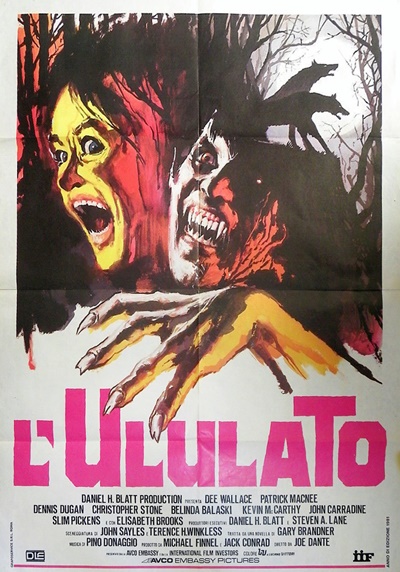
"What's the best werewolf movie of the 80s: An American Werewolf in London or The Howling?" That's one of the most frequently debated topics in all of 80s horror and one I can finally provide a definitive answer to: Both! There really may be no "better" in this particular case. These two films both provide completely different pleasures with completely different werewolf transformations / make-up designs, a completely different attitude and a completely different sense of humor. So, like many things, this is strictly a matter of personal taste and no one is exactly right or wrong for preferring one over the other. Both are well-made, well-written, well-cast, manage to provide scares, laughs and atmosphere and deservedly hold their place in the genre as not only two of the best werewolf films of their decade but two of the best werewolf movies of all time.

What's really not up for debate is that An American Werewolf was the more popular and successful of the two right out of the gate. It received more critical praise, grossed nearly twice as much to become the highest-grossing horror movie of 1981 and even won the very first Academy Award handed out in the make-up category for Rick Baker's brilliant work. Meanwhile, The Howling was also praised (just not as much), also financially successful (just not as much) and also won some industry awards (just not as prestigious). However, it's worth noting that American Werewolf was significantly more expensive to produce and also had the luxury of being a heavily-promoted wider release from Universal, while Howling was distributed by the smaller (though not tiny by any means) AVCO Embassy. Preferences aside, one thing no one can ever take away from The Howling is its ability to pull off many of the same things American Werewolf did on a fraction of the cost, with Howling's 1.5 million budget dwarfed by the 10+ million it cost to bankroll Landis' movie.


Also typically left out of the conversation completely is the wide release of a third wolf-themed horror movie in 1981: Michael Wadleigh's Wolfen. It reputedly cost 17 million to produce (just a few million less than 1981's top-grossing film, Raiders of the Lost Ark!) and failed to match the box office of either American Werewolf or The Howling. Wolfen, which actually is a unique, stylish and pretty damn good movie in its own right, didn't come close to making back its budget in theaters. That likely cost its director (who'd made the Best Documentary Oscar winner Woodstock a decade earlier) his career while Dante and Landis both went on to successful careers in Hollywood.


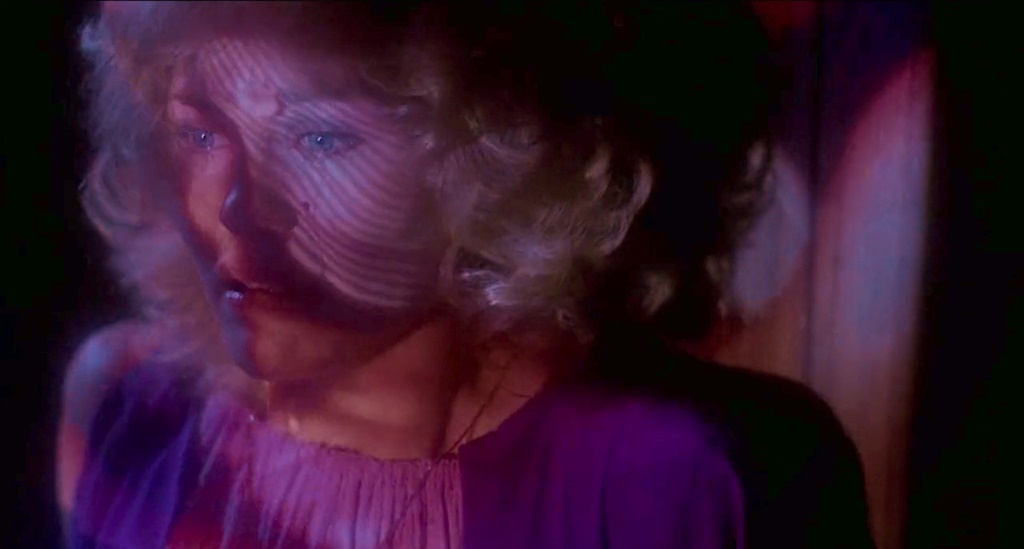
Los Angeles-based TV newscaster Karen White (Dee Wallace) has been recently receiving calls from a local serial killer known as Eddie the Mangler (Robert Picardo), who uses a yellow smiley face as his calling card. In an effort to help finally end his reign of terror, Karen decides to act as a decoy for police and lures Eddie to an adult book shop where he's eventually shot dead. Unfortunately for our heroine, a police screw almost got her killed before Eddie bit the bullet and she's now traumatized to the point of temporary amnesia and unable to recall exactly what happened that night. Instead, she's haunted by nightmarish glimpses of the event, which reveal only small pieces of information at a time and are having a detrimental effect on both her personal and professional life. In an effort to "recharge her batteries," author, behavioral expert and psychiatrist Dr. George Waggner (Patrick Macnee) sends her off for a relaxing stay at his secluded "experimental living community" called The Colony, where she's to take part in seminars and group therapy in a peaceful, tranquil setting.


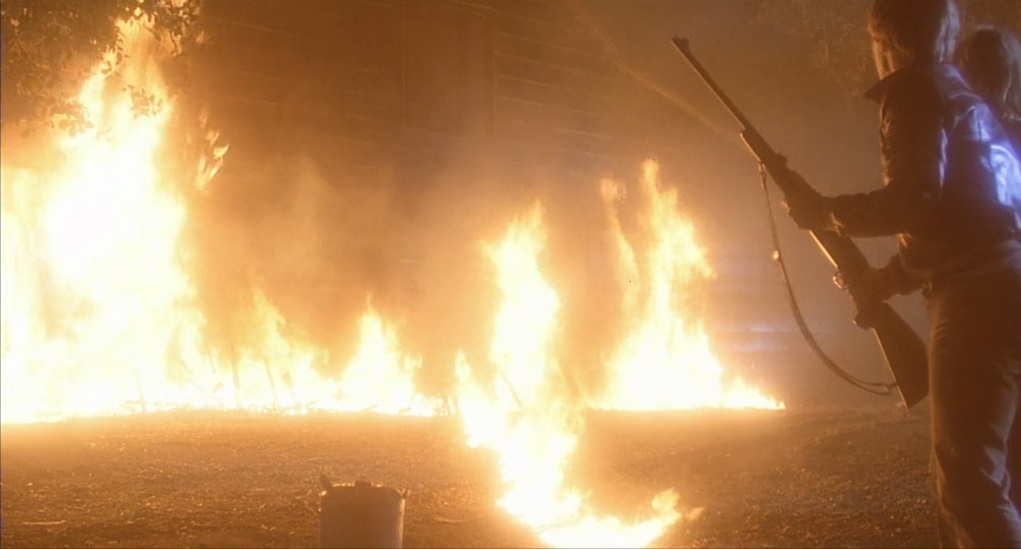
Along with increasingly frustrated vegetarian / health nut husband Bill (Wallace's late real-life husband Christopher Stone), Karen goes to the secluded Northern California commune, which she and hubby soon discover is populated by a bunch of eccentric, though seemingly harmless, kooks. They're introduced to some of their new neighbors at a nighttime beach bonfire where bitchy nymphomaniac Marsha (Elisabeth Brooks), who makes her attraction to Bill blatantly clear, and old timer Erle Kenton (John Carradine), who attempts to commit suicide by jumping into the fire because "I've gotta burn!," make the biggest impression. Later that night, a near-constant howling coming from the foggy forest proves to be the perfect soundtrack to accompany Karen's recurring nightmares. So much for rest and relaxation.

Dealing with the oddballs at The Colony, plus all of the howling and eerie noises coming from the woods, prompts Karen to want to head back to the city. Before that can happen, Bill is attacked and bitten by something in the forest. Dr. Waggner advises no travel until he's fully healed. Shortly thereafter, Bill develops a craving for meat and sudden disinterest in his wife; shrugging her off and instead sneaking into the woods late at night to meet up with the sultry Marsha.


Back in L.A., Karen's colleagues Chris (Dennis Dugan) and Terry (Belinda Balaski) are busy working on a new TV special tentatively titled "The Mind of Eddie Quist." This leads to the morgue where Eddie's body has mysteriously disappeared and then a trip to (the very funny) Dick Miller's bookstore for werewolf literature. After receiving a frantic phone call from Karen about Bill being bitten by a wolf, Terry decides to pay a visit to The Colony herself and soon regrets her decision. That's because the entire place is a haven for werewolves. And Karen ending up there herself is no coincidence.


Among other things, The Howling continues to serve as a good example of how to make a horror-comedy the right way. First and foremost, while the entire movie has a self-aware and satirical edge and is filled with humor, sight gags and inside jokes, much of that is kept on the periphery as not to be intrusive to the actual story. Clips of The Wolf Man are seen on a TV set, most of the characters are named after famous werewolf movie directors (which was clever in 1981 but not so much now because everyone does it) and you can spot all kinds of wolf-related references all over the place, from a framed picture of Lon Chaney in the doctor's office to a copy of Allen Ginsberg's "Howl" on a desk. Yet none of that diminishes the horror content in the least. When this wants to be creepy or scary, it is, especially a long sequence of Balaski's character being stalked through the woods.


Like many other Dante films, the cast has been chosen specifically to please genre fans. In addition to those already mentioned, we also get fun roles for Kevin McCarthy (TV station director), Slim Pickens (friendly local sheriff), Noble Willingham (cattle rancher) and Kenneth Tobey (cop). James MacKrell has a funny part as a newscaster (a role he'd reprise in Dante's Gremlins a few years later) and Don McLeod is memorable as Marsha's "part bloodhound" brother. Also showing up in uncredited cameos, are writer John Sayles (morgue attendant) and art director Robert A. Burns plus Roger Corman (seen outside a phone booth), Forrest J. Ackerman (seen holding a copy of Famous Monsters in a bookstore) and Jonathan Kaplan (gas station attendant).


Another obvious highlight are the make-up effects. While Rick Baker received a supervisor credit, Rob Bottin (an assistant to Baker at the time) was the main man in charge of the fx. A lengthy man-to-wolf transformation scene continues to impress today and his wolf designs themselves remain some of the most menacing and effective in any werewolf film all these years later. Other fx contributions come from Doug Beswick (mechanical fx), David Allen (stop motion), Greg Cannom and Roger George. Outside of a brief but silly-looking cartoon werewolf sex silhouette, the effects have held up very well. Pino Donaggio also contributes a good score with echoes of some of the music he'd previously done for Brian De Palma movies.


Though some character names and the basic plot outline come from the 1977 Gary Brandner novel of the same name, the film itself doesn't really have much to do with that mostly humorless book. That has a lot to do the screenplay going through a number of hands, including Jack Conrad and Terence H. Winkless, before John Sayles was brought in to do the same Sayles magic he did with ALLIGATOR (1980) and his previous Dante collaboration Piranha (1978). The closest adaptation to the novel is actually the third sequel - HOWLING IV: THE ORIGINAL NIGHTMARE (1988). All other sequels in this long-running series credit one of three, or all three, of Brandner's Howling novels as a basis though they too have little, and sometimes absolutely nothing, to do with anything Brandner wrote.

★★1/2
Related Posts Plugin for WordPress, Blogger...