.
.
.
Showing posts with label Ida Lupino. Show all posts

Tuesday, April 12, 2016

Food of the Gods, The (1976)

... aka: Die Insel der Ungeheuer (The Island of Monsters)
... aka: H.G. Wells' The Food of the Gods
... aka: La plaga asesina (The Killer Plague)

Directed by:
Bert I. Gordon

H.G. Wells' 1904 novel The Food of the Gods and How It Came to Earth was divided into three different books and followed a group of scientists who invent a substance called Herakleophorbia IV (or “Boomfood”) that accelerates growth in plants, young animals and human children; eventually turning insects and our four-legged friends into large killer beasts and the kids into 40-foot giants more than willing to use their size to their advantage once they reach their early adult years. This film adaptation uses material from just the first section of the novel, though it doesn't stick all that closely to it aside from some of the same characters, the farm setting and, of course, the giant animals. There aren't any over-sized plants in the one and also no giant kids but that's because Mr. B.I.G. had previously already filmed the kid part as Village of the Giants back in 1965. It too was loosely adapted from just a portion of the book and didn't follow it all that closely. Most disappointingly omitted from the book for this film version are gigantic chickens attacking a small town. I'd have loved to have seen them try to pull that off.


“My father used to say, 'Morgan, one of these days the Earth will get even with man for messing her up with his garbage. Just let man continue to pollute the Earth the way he is and nature will rebel. It's gonna be one hell of a rebellion.'” Professional football player Morgan (played by former “Miracle Child” kid preacher / faith healer Marjoe Gortner), who narrates, his teammate Davis (Chuck Courtney) and overworked PR man Brian (Jon Cypher) decide to get away for a few days go to a barely-populated Canadian island (accessible only by ferry) to ride horses and hunt. Davis chases after a deer and is found dead by his friends; his face hideously pink and swollen. Morgan goes to look for help, stumbles upon a farmhouse, enters the barn and is attacked by a giant rooster. After killing it with a pitchfork, he goes to the home and meets the paranoid, God fearin' country bumpkin Mrs. Skinner (Ida Lupino), who greets him with a shotgun. Morgan and Brian return to the mainland and get the medical report back on their dead friend, with the coroner estimating he'd been stung by 250 wasps. In fact, it was actually just one giant wasp that did all of that damage.


The following day, asshole industrialist / chemist Jack Bensington (Ralph Meeker) and his assistant, bacteriologist Dr. Lorna Scott (Pamela Franklin), show up at the Skinner farm to make Mr. Skinner (John McLiam) an offer on some milky white substance they found leaking out of the ground near their home. Before getting devoured by a slew of giant rats, the farmer had given the substance to his chickens and, while it had no effect on the adult birds, their offspring grew to giant size. Other animals, includes wasps, worms and rats also got into the substance and have grown and now lurk around the island. Morgan and Brian return to avenge their friend's death by blowing up the wasp nest, while Thomas (Tom Stovall) and his very pregnant girlfriend Rita (future Joe Dante staple Belinda Balaski) end up in the middle of things after their RV breaks down. Eventually, everyone holes up in the farmhouse, board up all of the doors and windows and try to survive a giant rat attack.


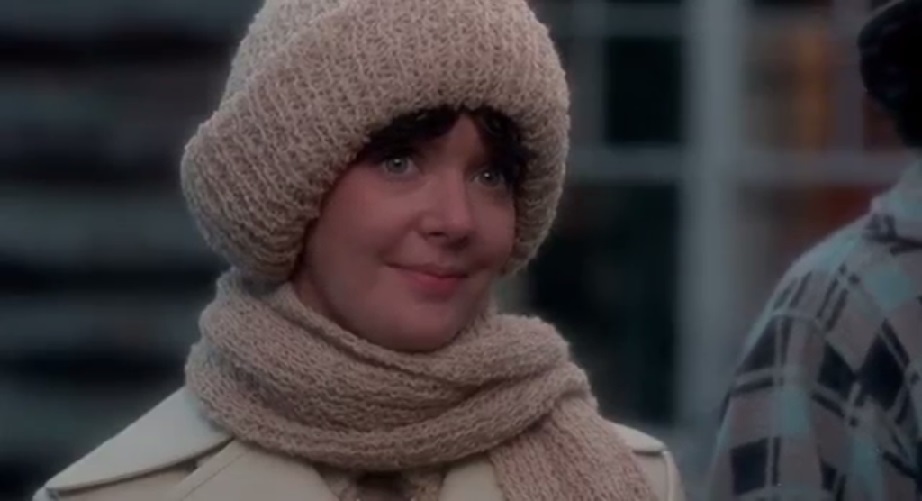


There was definite potential here for a fun B movie, but it's pretty much all botched due to poor writing, some truly awful dialogue, dull one-dimensional stock characters, too much emphasis put on the rats (personally I'd have much rather seen more of the chickens, worms OR wasps) and special effects that were hokey even back in 1976. Hell, I could have lived with the fx, a mixture of rear projection, optical trickery, superimposition, split screen and cute stuffed model rats, as is if nearly every other component wasn't bad, but that's not the case. Completely stripping away the science elements from the source material and giving the substance a more natural origin actually wasn't a bad idea but they don't do anything interesting with that concept either. There's also a distinct lack of humor and if any movie could have used a few laughs, intentional or otherwise, it's this one. The only amusing bit occurs at the very end. The picturesque British Columbia locales, which look better than ever on the Blu-ray now distributed by Scream Factory, are a plus / minor diversion.


Despite generous use of red paint blood during the attack sequences and one bit where a head appears to have been eaten off (a young Thomas Burman was in charge of the make-up effects) this got a PG rating. Gordon not only directed but also wrote the screenplay, produced and was in charge of the visual effects. His wife, Flora M. Gordon, was the assistant director and unit production manager and Rick Baker supposedly also worked on some of the fx sans credit.

The first and one of at least three comic book adaptations of the novel.


This was the last theatrical feature for the talented Franklin (it's no wonder she bowed out of show business soon after if this was the best she was being offered) and second-to-last film role for pioneering female filmmaker Lupino.


Food was both a Saturn nominee for Best Horror Film and a winner of the prestigious “Worst Rodent Movie of All Time” award in Harry and Michael Medved's book The Golden Turkey Awards. Samuel Z. Arkoff was the executive producer and presenter. Of the 25+ films released by his company A.I.P. in 1976, this actually made the most money. As a result, they not only backed Gordon's big bug follow-up Empire of the Ants (1977) the following year but also sunk 6 million into the Wells adaptation The Island of Dr. Moreau (1977). The belated sequel GNAW: FOOD OF THE GODS II (1989) is actually a lot more fun!

1/2

Saturday, February 14, 2015

Outrage (1950)

... aka: Nice Girl
... aka: Nobody's Safe

Directed by:
Ida Lupino

Outrage was one of the first American films to ever seriously tackle the subject of rape from a female perspective, but its journey from the page to the screen proved to be a censorship battle for director / co-writer Ida Lupino and Co. that was full of unfortunate compromises. After the script (written by Lupino, her then-husband Collier Young and Malvin Wald) was completed, it was submitted to and initially rejected by the PCA (Production Code Administration), an organization in place to enforce the days' strict Motion Picture Production Code (or Hays Code as it would later be called). So what did they object to exactly? For starters, the fact the entire film centered around rape was deemed "unacceptable." And then phrases like "sex maniac" and "sex fiend" and any allusions to what they considered sexual perversity were a no-no. And finally, the word "rape" itself was used far too many times for their liking in the initial script draft. To "soften" the film, the script then had to have all of the more direct wording removed before filming could commence. Paying careful attention to the film, you'll realize the word "rape" isn't uttered a single time. Instead, they had to refer to the act as "a criminal assault" or "a criminal attack."


Secretary / bookkeeper Ann Walton (Mala Powers) has fallen in love with Jim Owens (Robert Clarke), an auto parts supplier. He's just gotten a huge raise (10 bucks a week!) and now feels secure marrying Ann, moving in together and starting a family. Ann even somehow manages to get her mother (Lillian Hamilton) and stern professor father Eric's (Raymond Bond) approval, even though he's not too happy that Ann never went to college to become a teacher. Life's starting to look up for her, but Ann has unknowingly caught the eye of an unwanted admirer in the process. A food truck worker, who sells coffee and desserts outside the factory Ann works, has recently been hitting on her and making her feel uncomfortable with complements about her beauty and inquiries about her love life. He also doesn't seem too happy she's about to be married. Ann's forced to walk home late one night after a long day at work, the man follows her on her walk home and begins pursuing her through the empty streets. Ann's screams and attempts to make noise with a car horn fall on deaf ears, she's cornered in a truck yard and then "criminally assaulted."


Dirty, bruised and in a state of shock, Ann returns home, but the assault itself turns out to only be the beginning of her horrors. The crime is reported and a detective (Hal March) and a policewoman (Lovyss Bradley) show up to get information but, in order to cope, Ann's blocked out the incident to the point where she can't even remember what the rapist looked like aside from him having a deep scar on his neck. After spending some time holed up inside, she decides to return to work and try get back to her normal life. Unfortunately, all she sees on the outside is cruelty and a lack of empathy from a society out to demonize her as if she was the rapist. The assault has made the local newspaper and now everyone knows. Gossipy women point, stare and whisper. People cross the street to avoid her. Casual pats on the shoulder and gentlemanly escorts by the arm from even friends and co-workers cause her to flinch and she now can't go through with her marriage to Jim because she feels so filthy and dirty, so she calls the whole thing off.


Feelings of fear, guilt and shame, rejection from her small town and the internalization of her trauma lead the increasingly more paranoid Ann to run away from it all. She buys a one-way bus ticket to Los Angeles and makes it only so far before hearing a radio broadcast about her disappearance and then fleeing once again in the night. While walking alongside the road, she sprains her ankle and collapses. When she awakens, she's at the Harrison Ranch. an orchard / plant run by Tom (Kenneth Peterson) and his wife Madge (Angela Clarke). where she meets the compassionate reverend and doctor Bruce Ferguson (Tod Andrews) and tells everyone her name is "Ann Blake." After being offered a job there as an orange packer, she proves herself to be a hard worker and moves her way up to bookkeeper, but is so skittish and secretive about her past she begins arousing some suspicion. Eventually, another would-be rapist (Jerry Paris) sends her over the edge and a violent retaliation and trial follow.


After the erosion of the Hays Code in 1968, movies that were allowed to actually pointedly address and visualize rape usually fell into two categories: revenge fantasies and courtroom dramas. Rape was also used as a throwaway plot device simply to up the nudity / sexploitation, ensure gory mayhem and / or to titillate those into 'rape fantasies.' I've noticed in a surprising number of films, the rape itself is even frequently just brushed off by the victim as if it's no big deal. Outrage is not one of those movies and is an earnest attempt to be a thorough account of the crime, the aftermath and, finally, the acceptance and healing process. It not only condemns the act itself but also condemns a society that turns around and victimizes the victim by shaming them into silence simply because they don't want to have to acknowledge the issue. The film is also concerned with the psychological toll on the victim caused not only by the rape itself but also society's warped perception of rape.


Though it veers toward sentimentality at the end and elements are certainly dated (some viewers may even be annoyed by the lead character's lack of fight and resiliency), this still works as a fascinating time capsule view into how a more conservative era dealt with an uncomfortable topic. It's well-made on a shoestring budget, the acting is good (particularly Powers in the challenging central role) and there are some interesting directorial and editing choices here and there capturing the hysteria and delirium of the victim. It was one of several joint ventures between Lupino, Young and Wald's company The Filmakers and RKO, who'd also collaborate on Beware, My Lovely (1952) and THE HITCH-HIKER (1953).

Related Posts Plugin for WordPress, Blogger...