.
.
.

Saturday, April 23, 2022

Telaga Angker (1984)

... aka: Lake Eerie
... aka: Telaga Maut (Lake of Death)

Directed by:
Sisworo Gautama Putra

In less then one minute, and before the opening credits even begin, we get not one, but two, distinctively Asian ghost sightings. The first is the leyak (sometimes spelled leák), which is also called a krasue or a penanggalan or a palasik or an orp or an arb or a manananggal or a number of other names depending on which part of Asian we're talking about. While the names may be different, the ghost itself - a flying woman's head (or skull) with attached entrails - is essentially the same. The second is the sundelbolong, which is the ghost of a scorned woman, often (but not always) a former prostitute, who's usually been murdered or has died during childbirth. This ghost is pale, has sunken-in eyes, is dressed in a long, flowing white gown and has a secret (a giant hole on her back) that's hidden behind her long black hair. Iconic Asian horror star Suzzanna is the headliner here, which should automatically be putting this on your radar. The Queen of Indonesian Horror had already played the sundelbolong at least once before in, you guessed it, SUNDELBOLONG (1981), and here she is at it again. Even the opening credits want you to recall her famous previous role in that hit film, with her before-the-title star credit announcing "Suzzanna Sebagai Sundelbolong Dalam ("Suzzanna as Sundelbolong in...").

Well, Suzanna's character isn't really Sundelbolong here. It's Anita and she's a wealthy, very pregnant housewife who lives in a remote mansion with her loving husband Robby (George Rudy), monster magazine reading young son Sandy (Sandy Taroreh) and sister-in-law Lenny (Nina Anwar). Everything's going well until the family go to a park to hang out and Robby comes across some hooligans; one of whom "accidentally" bumps into him and snatches his wallet. Robby chases the man down, beats him up during a fight and is given his wallet back. However, some of the other thugs have already taken all of his cash out of it, so Robby does what no one else on the face of the Earth would do in his same situation: He angrily throws his wallet back in the guy's face and then walks off! Hey man, replacing your driver's license and the rest of your cards will probably cost you more money than what you just lost. Plus you just gave some low life criminals your home address!


Soon after, and while only the ladies are home, the thugs break in. Not wanting any trouble, Anita gives them a key to their safe and instructs them to take all of the cash they have and then leave, but the men aren't satisfied with just that and decide to gang rape Lenny while they're at it. Anita attempts to break it up by smashing a chair over one of the guy's backs but is forced to flee when they come after her. She locks herself in an upstairs bedroom, ties a sheet to the balcony, climbs down, makes it to her car and takes off. The men stab Lenny to death, then jump in their vehicles and catch up with Anita. After forcing her off the main road, they push her car into a lake. A very deep lake. This sequence is actually very well done and surprisingly haunting as there's an eerie synth score to accompany the sight of the car slowly sinking and turning as it approaches the bottom and the panicked Anita drowning.


While Lenny's body is discovered when the rest of the family returns home and is laid to rest, Anita's never is. Because of that, the thugs try to extort ransom money out of Robby by claiming they're holding her hostage. So, it goes without saying that everyone's surprised when Anita miraculously returns home one evening. However, she's not quite the same. She's despondent, monotone, a little cold and has a slight echo to her voice, plus her visit turns out to be short-lived. It's just her ghostly way of saying her final goodbyes to everyone. After both the dad and son (whose constant whining and crying wears out its welcome real quick) experience ghostly phenomena (a photo of Anita cries, heavy breathing is heard, a disembodied living head is seen in a toilet...), Anita vanishes yet again.

Determined to get to the bottom of things, Robby ducks into a discotheque (yes, we get some great dancing to flashing colorful lights, plus a fantastically cheesy disco song to boot!) and spots a woman who's a dead ringer for his late wife. She claims her name is Suzanna but she's actually just Anita in sundelbolong form out to raise a little hell. Instead of the mature homemaker she used to be, "Suzanna" is a bubbly airhead with pushed-up cleavage who wears a lot of pink clothes, pink boas, pink hair bows and giant pink flowers in her hair. She kills a young couple screwing in the woods, buys a vendor's entire stock of rice cakes and scarfs it all down and then steals the man's baby, breastfeeds it (!) and leaves it on her former husband's porch.


Meanwhile, Robby attempts to track down the killers, starting with the people who had stolen his wallet. After trailing one of the men to a massage parlor (which has posters for Suzzanna movies on the walls!), he chases the man to some loading docks and ends up getting himself killed. Anita / Suzanna then finally decides to track these goons down and kill them all off. She just waits too damn long as two of the main bad guys manage to kidnap her son first. Anita's uber-religious brother Wijaya (Rukman Herman) comes to help.


After an almost entirely serious first 40 minutes, the middle portion is filled with comedic scenes that completely mess up the tone. Most of these feature Dorman Borisman performing music in a three piece amateur band that includes a fat shirtless guy playing a tambourine. He also attempts to feel the ghost up and reaches his hand all the way through her back hole. Indonesian comedian Bokir is also featured in a few comedic bits as some kind of incompetent / phony spiritualist or exorcist.

Despite the tonal issues, this is pretty fun overall and it certainly helps a lot that Suzzanna seems to be having a ball playing what amounts to three different roles (mother, bimbo and ghost). She gets shot and run over, turns her head around backwards, flies, cackles, snarls, glares, insults people, smokes cigars, rides a tandem bike all by herself, wears HUGE white and black gowns that look like circus tents, shoots lasers out of her eyes to blow up a boat, throws a guy from a tree top until his brains are popping out of his head, impales a guy with a sharpened bamboo pole and, during the most memorable bit, drives a huge bulldozer (!) and uses it to lift a guy off the ground and then smash him! She also appears as a green ghost with a skull face and laser eyes and the leyak / krasue makes a welcome second appearance.


Like Sundelbolong, this was a big box office hit in Indonesia and was the fourth highest grossing film of its year. It's never been released outside of Asia and has yet to be available in an English friendly version. The only home video releases I could find were old VCDs. Someone out there needs to save the entire Suzzanna collection so she can become the worldwide cult star she deserves to be!

★★1/2

Friday, April 22, 2022

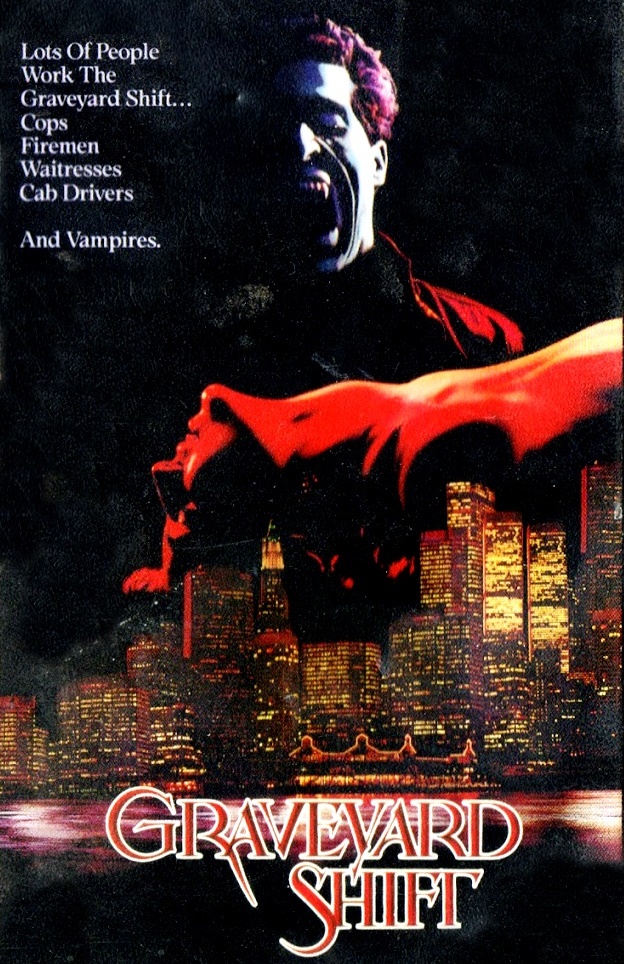
Graveyard Shift (1986)

... aka: Central Park Drifter
... aka: Nachtschicht (Night Shift)
... aka: New York Vampire
... aka: Noites Macabras de Nova York (New York Macabre Nights)
... aka: Turno de noche (Night Shift)
... aka: Upíří krev (Vampire Blood)
... aka: Verivuoro (Bloodshed)

Directed by:
Gerard Ciccoritti

Usually after I finish writing a review, I'll read other reviews because I get a kick out of seeing how my opinion matches up to other opinions. Sometimes we agree. Sometimes we don't. And it's all good. Still, I noticed something that annoyed me: the word "dated." Now, not the word in and of itself. I use it at times. But the word being used as if it's an insult. That's the primary recurring "criticism" I've seen for this particular film and it's a recurring "criticism" I've seen time and time again for many older films. Yes folks, a film made in the 1980s is going to look and feel like a film made in the 1980s. A film made in the 1980s is going to have hair styles and clothing and vehicles and music that are reflective of that time. I can't understand why reviewers constantly cite a film's age as if that's an automatic debit. Someone needs to explain to me what's so great about a "modern" look? What's so great about most movies being shot on digital? Do people really like how today's B movies look like they were shot with a cell phone camera, when they used to be professionally shot on 35mm? When did the general consensus decide that digital was a superior look to 35mm? Or 16mm. Hell, I'd even be willing to go as far back as Super 8 OR shot-on-VHS as those formats both have some character to them. 

If being "dated" is such a bad thing, why does every other indie movie try to emulate the style of older films? Why are there so many remakes? Why do directors constantly try to add fake film grain and other imperfections and distortions in post to try to give their digital films texture? Why do reviewers so often praise a new film for being "70s style" or "80s style" or "retro" or "throwback" and then go back and criticize the original films more harshly; films that, for the most part, weren't slavishly trying to emulate the exact look and feel of films from previous decades?


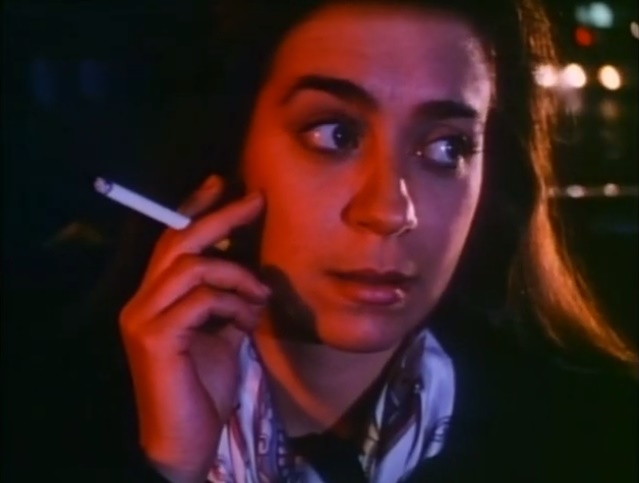
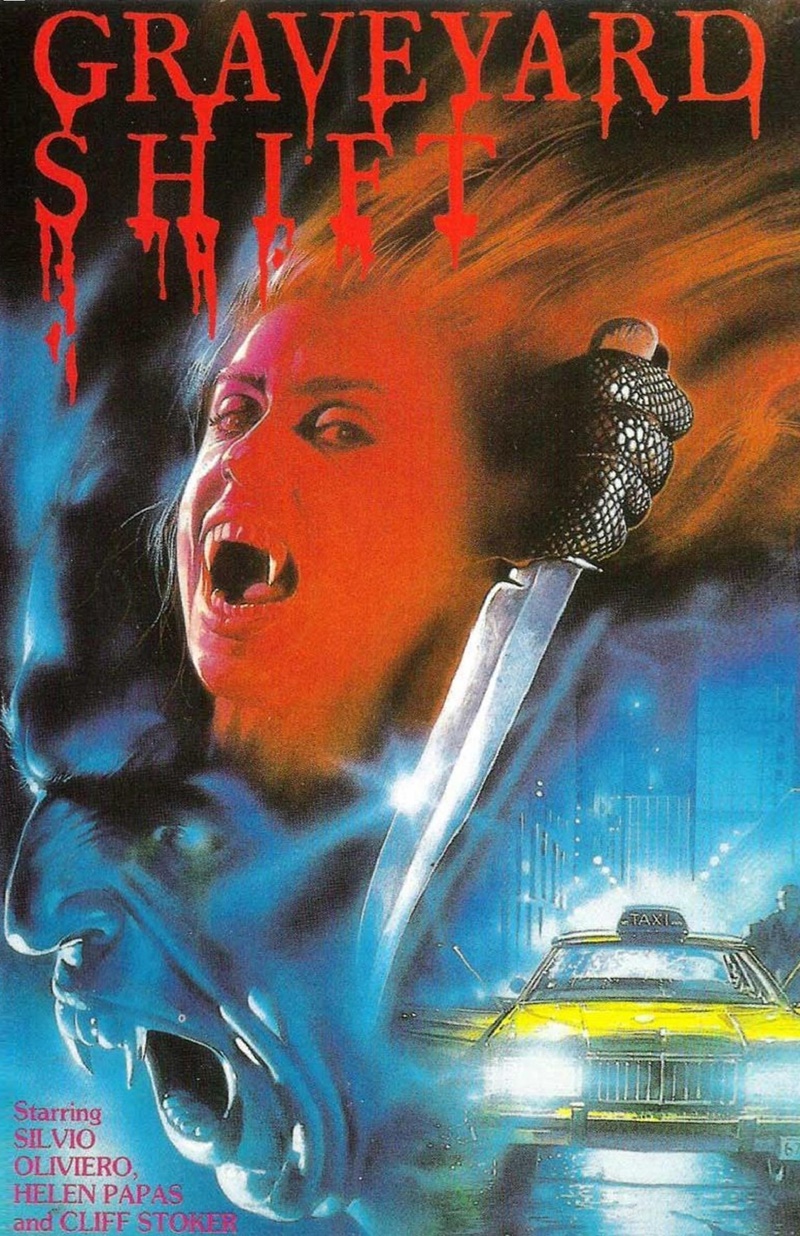
After being slightly miffed by all those "dated" comments, I went back and re-watched the opening ten minutes of this for some perspective. They're actually quite excellent. There are numerous beautifully and carefully composed, lit and photographed shots that bring us into the world of tired, soft-spoken, centuries old vampire Stephen Tsepes (Silvio Oliviero), a taxi driver obviously working the night shift in New York City. The rain-slicked streets reflect dots of white and green light from skyscrapers, colorful neon signs, the taxi and other things. Strong backlighting pours through trees to dress up what would otherwise be dull shots of car driving around. The color blue is prominently used when the vampire and his latest victim, Suzy (Kim Cayer), are getting acquainted in the back of his cab, but switch to red when it's feeding time. This colorful film even names one of its supporting characters Mario Bava (at a time when few were actually championing that director's work) as its obvious visual reference. But, let's just stop for a moment and admire how gorgeous some of the shots (which aren't even from a restored, widescreen version of the film, mind you) are...


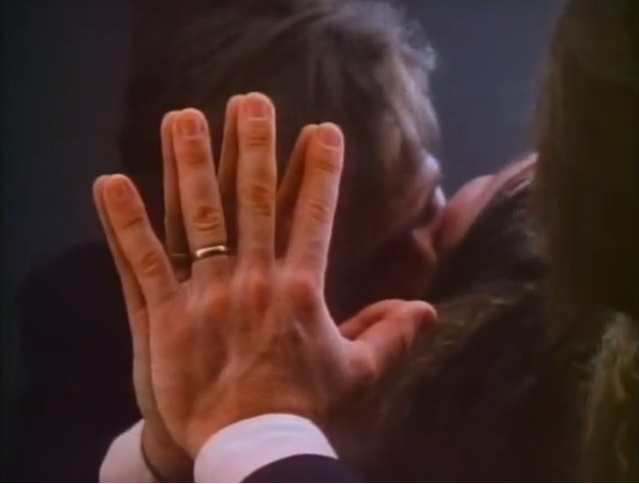
Not only that, but these scenes also showcase some very slick scene transitions (panning down a kissing couple into darkness and then descending upon the same couple doing the same somewhere else; a drawn black curtain leading us into the next scene), plus offbeat but effective editing choices. Even the basic idea of a having the vampire work as a taxi driver is smart. A random person is going to hop into a random cab with a random driver and it's all rather arbitrary and insignificant and not something someone's going to be announcing to the entire world. So what if one of countless nightly customers happens to not make it to their destination every now and again? Furthermore, working the late night shift gives access to certain types of people; those who perhaps intentionally choose to be awake when most of the rest of the city sleeps, many of them on the vulnerable side: sex workers, vagrants, criminals, drug addicts and, in Suzy's case, a suicide waiting to happen. The quiet solitude that the night provides is a great place for the damaged to dwell.

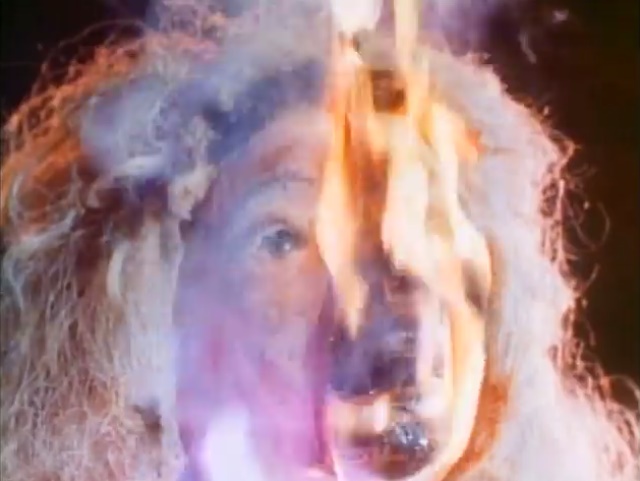
Just from the opening set piece alone, we can tell this is going to be visually stylish in a neon-soaked 80s kinda way, plus it has a clever premise and potential for great things within that premise. Unfortunately, the movie itself proves to be a very bumpy ride with both high highs and low lows. In fact, this is one of the most uneven films I've ever seen! Some of the acting is good and some of it is abysmal. Some of the dialogue is well-written but, at other times, terrible. Some of the scenes are effective, others are clumsy and don't work at all. Sometimes the editing choices are great, at other times inept. And sometimes the make-up fx are passable and at other times you have to pretend like a flaming plastic dummy head is a creature of the night exposed to direct sunlight.


Michelle Hayden (Helen Papas), a thirty-something music video director, has become bitter and depressed about her life. She's been hard at work on pop musician Gilda's (Dorin Ferber) latest video, which has the plug pulled on it prematurely. Just another career setback of which there have apparently been many. Michelle's husband Eric (Cliff Stoker, which I highly doubt is this actor's real name!) doesn't respect her and thinks nothing about ruining an important shot by barging into her studio just so he can sneak into the dressing room for a quicky with Gilda, which is shown in quick flashes and finally settles on his wedding band-clad hand resting on a mirror. Not that Michelle isn't aware of what he's up to. She is, but their marriage has basically deteriorated into her acceptance of his casual adultery. And, if things couldn't get any bleaker, Michelle has recently gotten word she has terminal cancer and has as little as two months left to live.

All it takes is two brief cab rides, with sparse but meaningful dialogue and lots of unspoken looks, for the vampire and Michelle to connect and become drawn to one another. He finds his lovers when they've entered "the cycle of death" and gives them a renewed lease on life... at least until they start becoming more difficult to control. She's backed into a corner via her shaky career and a degraded marriage, yet decides to finally listen to her instincts when mortality starts rearing its ugly head. The film is at its very best during the scenes with Stephen, who's tired of life yet afraid to die, and Michelle, who had resigned herself to death yet is invigorated by her newfound love for Stephen, and does a very fine job establishing the attraction between the two. However, the more somber, subdued and thoughtful tone present during these bits is at odds with some of the other flashier and noisier material thrown in here.


Stephen's until-now fruitless quest for love with a series of troubled ladies has led to a number of big-haired vamp-chix prowling around the city. These women seem to have a telepathic link to Stephen, are jealous any time he pursues another and each finds a way to lash out. It's an ever-accumulating army of bitter, angry, cast-off ex-lovers, except these ladies refuse to ever leave his life for good; talk about a curse! At the Pink Pussycat strip club, a huge-haired, athletic-looking stripper played by one Sugar Bouche (whose last name MAY be pronounced "Boosh" but I wish it to be "Boo-Shay" so let it be) puts on a dominatrix act and then retreats to the back alley with a male admirer, whom she promptly slashes up with a straight razor so she can drink his blood. A sultry blonde in furs and pearls (Jessie Taylor) seduces a guy into a swimming pool and slits his throat, Suzy goes after a porn mag reading goober in a junkyard and there's also an Amazonian policewoman, Officer Arbus (Lesley Kelly), who's keeping her toothy proclivities a secret from her fellow officers and ends up a raving lunatic in a jail cell feasting on her own blood.


The second half isn't as interesting as the first, with pacing, editing and continuity issues, clunky, awkward dialogue scenes delivered amateurishly by the secondary actors and the script's lack of focus taking the film down a notch. Other characters get a little screen time that only detracts from the main story, including a pair of obnoxious police detectives (John Haslett Cuff and Don James) who make some tasteless comments about murder victims on the slab, an annoyed coroner (Martin Bockner) and a very poorly-established, cross-wielding Van Helsing type (Dan Rose) who makes an eleventh hour appearance. The big finale (which is a horribly-edited mess for the most part) features an attack by a bunch of "vampirettes," a head pulled off, vamps bursting into flames and customary stakes-through-the-heart, and takes place on a graveyard set at the production studio. There's an amusing twist at the very end, though.


The acting is extremely uneven, though the main roles are effectively played for the most part. Oliviero has a good look for the urban vampire role (gaunt and with sharp lines on his face yet also kind of handsome) and gives a decent performance, though some of his line readings are a little wooden. However, Papas (who bears a slight resemblance to Stockard Channing) is easily the standout here. This unknown actress (who previously only had a small part in the same director's Psycho Girls) has a slightly deep, soothing voice, a mature and likably pensive presence and can handle the dramatic demands of this character, which makes it a shame that she disappeared from film after appearing in this.


Due in no small part to the high amount of T&A and erotic scenes on display, this became a very big hit on home video and late night cable in the late 80s, which prompted the follow-up THE UNDERSTUDY: GRAVEYARD SHIFT II (1988) from the same director, who eventually moved on to a very successful career in television. The sequel again featured Oliviero, who started professionally using the name Michael A. Miranda in 2003, as a vampire, though a different character than what he plays here. Edited versions of both films aired frequently on the USA Network's much-missed Up All Night program. Though there have been several DVDs (starting with the Shriek Show release in 2001), to my knowledge all of these have been full screen presentations and the film has yet to receive a decent restoration.

★★1/2
Related Posts Plugin for WordPress, Blogger...