.
.
.

Saturday, March 8, 2014

A Rose for Emily (1983)

Directed by:
Lyndon Chubbuck


The short story "A Rose for Emily" turned up in a 1930 issue of the magazine Forum, making it the first widely-read short story from acclaimed writer William Faulkner, who'd go on to win a Nobel Prize for Literature, two Pulitzer Prizes and numerous other prestigious awards. Throughout his career, Faulkner would also dabble in TV and film writing, often taking no credit for doing so. After being called hundreds of miles away from home to a movie set only to be fired by MGM for no real reason shortly after arriving, he'd understandably become a little disillusioned with Hollywood... and he was never was all that interested in fame in the first place. In real life, the author much preferred the quiet, rural life; referring to himself in his Nobel Prize acceptance speech as "... just a farmer who likes to tell stories." His most famous cinematic work was helping to script the Bogart / Bacall film noir classic The Big Sleep (1949) for director and close personal friend Howard Hawks. In fact, most of his credited jobs as a screenwriter were for Hawks. Faulkner's stories and novels, perhaps most especially his more acclaimed works, do not lend themselves well to cinematic adaptation. Few directors have tried and most have failed. "A Rose for Emily" is an exception, perhaps because the entire story is only about 5 pages long, but it's a vivid and busy 5 pages that has no issue filling out this 26 minute short subject.


Anjelica Huston stars as Emily Grierson, whose deteriorating mental state we follow from young adulthood until her death. In her early years, she was at the whim of a controlling, domineering father (John Randolph). After he passes away, the virginal Emily is left the home and a faithful servant in Toby (David Downing)... but not much else. Having not had much of a chance to actually live her life or make any kind of lasting or real relationships, Emily falls in love with the first guy who shows her any attention: construction foreman Homer Barron (Jared Martin). Unfortunately, he doesn't seem to be taking the whole thing all that seriously, while she is out buying him monogrammed silver, a wedding dress, a tuxedo... and some arsenic. After finishing up his job, Homer disappears from the small town. Soon after, a bad smell begins seeping into the neighborhood from Emily's home, but the townspeople spread lime around and forget all about it once the smell disappears after a week or two. As the years pass, Emily grows into a reclusive, gray-haired, disheveled spinster who is seen less and less as the years go by, becoming almost an eccentric landmark of the town. After she passes away and relatives show up and begin exploring her dusty home, a grisly and perverse secret is revealed.


I re-read the story in preparation for this review, so I can say without doubt that this adaptation (by H. Kaye Dyal) is perfectly faithful; seldom deviating from its source material. That's both a good thing and a bad thing; good in that it stays true to its source, and is thus respectful to it, and bad in that it adds nothing of note to something that simply works better - and more compactly - on paper. This is nicely-shot and the acting and production values are decent, but there's no real depth to the characters, no element of surprise and the whole thing is extremely predictable. The themes deal with the psychological damage of isolation and loneliness and - most markedly - the dangers of clinging to the past. It's narrated by John Houseman, who reads a good deal (but not all) of the story throughout. Also showing up in small roles are John Carradine as town mayor Colonel Sartoris, Bert Williams as a coroner, Perry Lang as a lazy deputy, Frances Bay as a crazy aunt, James Murtaugh as a pharmacist, Aaron Norris (younger brother of Chuck) and a barely-seen Sally Kirkland as a town gossip. For some reason it's dedicated to the memory of actor Will Geer, who passed away in 1978.


The only official home video issuing that I'm aware of is on the Pyramid Home Video label out of Russia, but a nice quality copy is currently available for viewing on Youtube.

★★1/2

Wednesday, March 5, 2014

Mortuary (1983)

... aka: Embalmed
... aka: Hall of Death

Directed by:
Howard Avedis

When child / teenage stars are best-known for starring in a family friendly TV show, oftentimes they'll intentionally sully their own squeaky clean image in an effort to be taken more seriously as an actor. One of the most notable and high profile examples in recent times was Elizabeth Berkeley's bizarre career trajectory; playing a proper, straight-laced brainiac on the corny TV series "Saved by the Bell" one day and giving NC-17 lap dances as hot-blooded Vegas stripper Nomi Malone in Paul Verhoeven's notorious Showgirls (1995) the next. In the early 2000s, Jessica Biel caused a mild uproar when she went from the virtuous WB series "7th Heaven" to a sexy spread in Maxim Magazine. After the Maxim exposure, playing a voracious college student in The Rules of Attraction (2002) and filling out a pair of ass-hugging jeans to in the gory Texas Chainsaw Massacre remake (2003), her "good girl" image became a thing of the past. It's gotten to the point now where people don't even really raise an eyebrow at Disney stars Selena Gomez and Vanessa Hudgens headlining Harmony Korine's Spring Breakers (2012). None of the above-mentioned actresses were exactly trend-setters, though. They were just following familiar Hollywood protocol. Mortuary perhaps is one of the earlier examples of a G-Rated TV good girl taking a walk on the R-Rated wild side in an attempt to branch out. It stars Mary Beth McDonough, then-known for the wholesome, long-running and extremely popular TV show "The Waltons," which began in 1971 and lasted for an entire decade. The same year the show ended and the same year Little House on the Prairie star Melissa Sue Anderson was seducing boys and then shoving shish-ka-bob spears down their throats in HAPPY BIRTHDAY TO ME, Ms. McDonough appeared in the R-rated exploitation film Lovely But Deadly and this slasher flick, which was actually filmed in 1981 but not released until two years later. The role required a nude sex scene and a nude-while-lying-on-a-slab scene and, though she ultimately ended up using a body double, this material was still a clear departure from the moral values being eschewed up on Walton's Mountain.


McDonough plays traumatized college student Christie Parson, who found her dad dead in their swimming pool a month earlier. Though it's been written off as an accidental death, she suspects otherwise and may have even seen the murder, but is currently blocking everything out. Ever since the "accident," Christie's become increasingly paranoid, suffers from frequent nightmares and sleepwalking episodes and starts to suspect her own mother Eve (Lynda Day George) may have somehow been involved in her father's death. It doesn't help matters when Christie's boyfriend Greg (David Wallace) sneaks into a warehouse one day with a friend and catches Eve involved in some kind of black mass ceremony being conducting by shady neighborhood mortician Hank Andrews (Christopher George). Hank isn't a very nice man ("Get out of here before I embalm you!") and even threatens to kill Greg if he doesn't stop snooping around. Hank's wife supposedly committed suicide and his son, Paul (Bill Paxton), is a weird-o being forced into the family trade against his wishes. Paul was also a former patient of Christie's late psychiatrist father, who'd recommended the boy be put in a psychiatric hospital before being killed. Hank refused and ever since his son has developed some kind of fixation on Christie because she's always been kind to him.


Someone wearing a white latex face mask (which looks kind of like Pazuzu) is running around killing people with an embalming trocar (needle) and stalking / attacking Christie. Whoever it is drives a black mortuary station wagon, is wearing a black robe identical to the ones worn by Hank and his cultist followers and seems to get some sick sexual satisfaction out of the murders as judged by a scene where they repeatedly poke a nightgown-clad victim with their needle while moaning in ecstasy. Is Paul an unhinged psycho who should have been committed like Dr. Parson recommended? Does Eve have the best interests of her daughter in mind, or is she trying to drive her crazy? Is Hank hiding some deep, dark secret about his mortuary business? Has Christie lost her mind after he father's untimely demise? All of the above questions are eventually answered, albeit in a pretty predictable fashion.


While nothing special, Mortuary basically gets the slasher job done with a minor mystery, chase scenes, a little nudity, some violent / gruesome moments and a twist ending. Director / producer / writer Avedis and his wife Marlene Schmidt (who co-produced, co-wrote and appears in a small role) had been making exploitation flicks since the early 70s so they pretty much knew what they were doing by this point. The cast is pretty appealing and the acting is a notch above average. As with most other similar flicks, there are some incredibly stupid moments in here, though. During one scene, Christie is attacked at her home by the killer and a window gets busted out in the process. So what do Christie and her mother do? Call the police? Go to the hospital for the cuts on Christie's hand? Nope. A minute later they're laughing and then just go upstairs and go to sleep. I don't know about you, but I'd have a difficult time nodding off knowing some psycho was just there and there's a window busted out downstairs. And I certainly wouldn't be sleeping with my door left unlocked afterward! Needless to say, the psycho returns, Christie manages to run outside... but then she goes back to her house where the killer is just waiting on her. If you can overlook a few dumb moments like those, then this isn't too bad.


Gary Graver shot the film and does a typically nice job of it; giving this a soft, sometimes hazy dream-like texture along with some bold coloring for the occult scenes. For some strange reason, Michael Berryman appears in the trailer as a grave-digger but does not actually appear in the film itself. The U.S. theatrical poster was also pretty misleading and featured a hand bursting out from a grave; clearly insinuating this will feature zombies, which needless to say isn't the case. The UK release (under the title Embalmed) took it a step further by featuring an actual full zombie on the cover and warning us to "... beware of the LIVING DEAD!!" 


Questionable marketing aside, Mortuary was a success in theaters on a limited release and managed to make 4.3 million domestically on a 250,000 budget. While that may not sound like much, it was enough to out-perform the likes of The Evil Dead, Videodrome and Pieces - another slasher starring Christopher and Lynda Day and also released by Film Ventures International - by several million dollars. The film was released to VHS in 1984 on the Vestron label and made its DVD debut in 2012 through Scorpion Releasing, as part of their "Katarina's Nightmare Theater" collection.

★★1/2

Monday, March 3, 2014

Legend of Boggy Creek, The (1972)

... aka: Legend of Boggy Creek: A True Story, The
... aka: Tracking the Fouke Monster

Directed by:
Charles B. Pierce

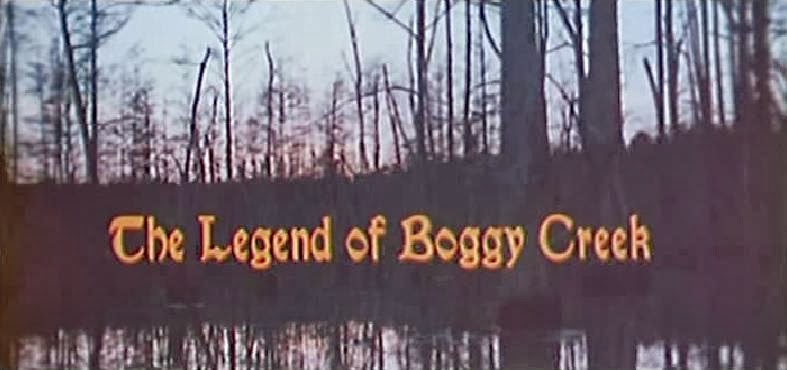
Perhaps never quite given its full due, The Legend of Boggy Creek is notable for many different reasons. For starters, it was an early independently-produced success story the likes of which we seldom see, made in a land far, far away from Hollywood. Years before Halloween and the Elm Street films were smashing box office records for independent productions, Boggy Creek (which was made for a little over 150,000 dollars) was packing drive-ins and movie houses to astounding figures. As a matter of fact, the film managed to pull off the near-impossible by surpassing the 20 million dollar mark, which was enough to make it the 7th highest grossing film of its year. It also awakened a huge interest in Bigfoot and similar-style creatures, which resulted in too-numerous-to-mention low-budget films hoping to capitalize on the 70s craze. All that can be traced right back here. The presentation of the material is also genuinely clever and inventive. It's fashioned as a "true story" pseudo-documentary complete with narration, eyewitness interviews and reenactments of various encounters people have had with a hairy creature that is said to stalk the marshlands of Southwest Arkansas. Finally, this is better-made than it is ever really given credit for. It not only evokes rich local color, but the quiet autumnal nature photography manages to make still, overgrown fields and simple forests seem like eerie places. That's all enhanced by the disquieting, ominous use of natural sounds and various animal noises.


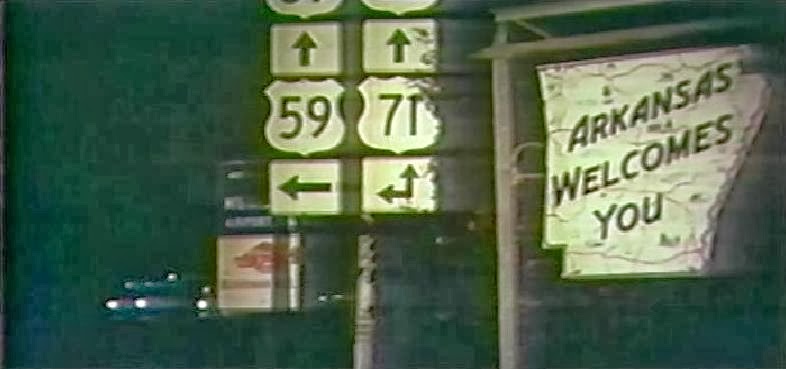
The setting is the small town of Fouke, population 350, which is located on the corner of the state right where Arkansas meets with Texas and Louisiana. The area is filled with farmers and ranchers, hunters and fishermen; all living is densely forested areas along the twisting and turning Boggy Creek. As our narrator (who had a childhood encounter with the monster) tells  us, "Fouke is a right pleasant place to live... until the sun goes down." And when the sun goes down, various citizens have spotted a hairy "Bog Man" lurking around in the woods that the newspaper quickly dubs "The Fouke Monster." It's said to have a coat of reddish-brown fur, makes loud wailing noises and may be responsible for killing animals in the area. Willie E. Smith and John P. Hixon both claim to have seen it on their property and taken shots at it, and two of John W. Oates' prized pigs were supposedly murdered by the beast, which managed to easily lift the 100+ pound animals up over a fence. As a counterpoint, teenage outdoorsman Travis Crabtree goes to visit old timer Herb Smith, who's lived in a shack in the Fouke woods for over 20 years but has never seen or heard the monster. He seems to be in the minority.


Many others will have encounters with the "Fouke Monster." Both James Crabtree (Buddy Crabtree) and his nephew Fred (Jeff Crabtree) spotted it while out hunting. It paid a visit to teenage student Mary Jane Searcy's (Judy Baltom) house late one night and scared her kitten to death. After a local boy shoots at it and a posse of men are organized to hunt it down, the beast retreats deep into the forest and isn't seen or heard from again for eight long years. Perhaps because of loneliness or curiosity, it again resurfaces in the area and more encounters follow. Lots of animals mysteriously turn up dead, a young couple out driving at night claim to have spotted it running across the road and a man finds the creature's distinctive three-toe footprints in a bean field on his land, prompting nationwide news coverage. The creature scares a young mother and her three kids shitless and ruins poor Nancy's trailer slumber party. The longest story of the bunch centers around two young couples; Don (John Wallis) and his wife Sue (Bunny Dees), and Charles (Dave O'Brien) and his wife Ann (Sarah Coble), each with a small child, renting a new home, and having several "hair-raising" nighttime encounters with the beast.


Not everyone is going to like this one, and that's perfectly understandable. I can especially imagine many young modern viewers, who are more accustomed to fast-moving action-horror flicks, being downright bored by this slow, leisurely, G-rated film. The cast is comprised of complete amateurs giving amateurish performances, the narration is sometimes extremely corny and there's a lot of basic nature photography, with lots of long, loving shots that linger on the scenery just long enough to show just how in love the director is with the area. Pierce shot the film on 35mm in Techniscope and Technicolor and the photography overall is actually quite nice. He also makes the wise decision to never really show the monster in its entirely. We only get to see its silhouette off in the distance, or close-ups of its arms and legs, which builds up a certain backwoods mystique for the elusive beast and invites the audience to try to picture just what the thing actually looks like. For me, this was more enjoyable as a slice of Deep South Americana as it is a monster-horror movie, though people who saw this during its initial run were apparently horrified by it.


There are two songs on the soundtrack; a title track (sometimes referred to as "Lonely Cry" or "This is Where the Creature Goes") and "Nobody Sees the Flowers Bloom but Me" (sometimes called "Hey There Travis Crabtree") which are often mocked for their straight-forward and simple lyrics. However, both songs have a folksy, haunting quality to them that's a perfect reflection of the backwoods town this film is set in and the people who populate it. The music also greatly contributes to the atmosphere and authenticity of the film, which are two of its greatest strengths.


Boggy Creek's success led to a handful of offshoots. Return to Boggy Creek (1977), starring Dawn Wells of "Gilligan's Island" TV fame and the ill-fated Dana Plato of "Diff'rent Strokes" TV fame, was an unrelated kid's movie directed by Tom Moore. Pierce himself made the "official" sequel Boggy Creek II: And the Legend Continues (1985), which was later ridiculed on a popular episode of "Mystery Science Theatre 3000." Neither managed to match the success of the original, and neither did Pierce's other forays into the genre, such as The Town That Dreaded Sundown (1976), which was based on a real-life serial killer who terrorized Texarcana in 1946, and The Evictors (1979), a haunted house tale. A few independent producers have recently tried to cash-in with movies like Boggy Creek: The Legend is True (2010) and The Legacy of Boggy Creek (2011; which was originally called The Skunkape Story).

★★★
Related Posts Plugin for WordPress, Blogger...