.
.
.
Showing posts with label Thailand. Show all posts

Saturday, December 3, 2022

Phi Song Nang (1989)

... aka: ผีสองนาง
... aka: 菩薩咒
... aka: Heavenly Devil
... aka: Heavenly Spell
... aka: Pu sa zhou
... aka: Two Ghosts

Directed by:
ฤทธิรงค์ (Rittirong) (credited on Thai version)
On Ma (credited on HK version)

Depending on the source you consult, this film was first released in either 1987, 1989, 1990 or 1991 and you'll also notice completely different actors listed as being the stars and as many as five different directors credited with making it! That's not too uncommon with Asian co-productions or films made in one country and then released in another, though. Often times these movies had their titles and credits completely changed to give the impression someone else had made it or that it's a homegrown production and not one from a neighboring country. At other times, the original film was re-edited and had new scenes shot with new actors for release in certain markets. Sometimes the same film was essentially made twice, with parallel productions shot simultaneously with different actors speaking different languages. And then there were the times that films were indeed co-productions between two or three countries, but completely different edits were made and completely different footage used. This understandably leads to a lot of disinformation being spread around online that blogging film nerds like me have to try to clean up.


Best I can figure with this one is that it was either a solely Thai production or a Hong Kong / Thai co-production. The latter seems more accurate judging by the mixed cast, though the film is based on a famous folklore tale that I believe is specific to Thailand. The earliest release I could find for this one was a 1989 Thai theatrical release under the title ผีสองนาง, which translates to Two Ghosts. This was released in Hong Kong two years later under the new title 菩薩咒 / Pu sa zhou, which translates to Bodhisattva Mantra. A bodhisattva is a being who has achieved a high level of enlightenment in their quest to achieve complete Buddhahood. Since that would have no meaning to most non-Buddhist Western audiences, the English title used on the HK poster is Heavenly Spell. I took a look at both the Thai language VCD release and the Mandarin language HK DVD release and the two cuts of the film are identical.

As for who actually directed this, the Thai print credits ฤทธิรงค์ (Rittirong) while the HK print credits On Ma (who is called "Gon Man" on IMDb and several other names on several other websites). Many of the same people involved in this were also involved in another obscure film called Curse of the Zombi, which was also filmed in Thailand for the same producer and features many of the same actors. The two were likely shot back-to-back.


Considering how frustrating it was trying to make heads or tails of the cast and crew and dig up additional background info on this title, that wasn't anywhere near as annoying as actually having to try to sit through the film itself! Yikes. Just half an hour in, after the hundredth new character was introduced and the multiple dead end story threads started piling up, I was praying that everything would eventually start making sense. An hour later I was hoping for the exact same thing. It just never happened.


While passing through the woods with some treasure, noblewoman Fang (Siu-Yin Tsang) and her unnamed sister (Wasidtee Srilofung, a Miss Thailand finalist), plus their entourage, are attacked by a group of bandits while the theme music from Halloween plays. A villager named Shao-jun (played by former Shaw Brothers stable actor Siu-Kwan Gau) tries to come to their rescue but is only able to save one of the sisters after they fall into a river. The other sister drowns, as does a servant girl (Sasimaporn Chaikomol, another Miss Thailand runner-up) who was pushed in. Apparently none of these chicks can swim the ten feet necessary to make it back to the shore. Shao-jun brings Fang back to his home, where she's visited by her sister's weeping ghost, who promises to help take care of and protect her. And that she does whenever the main bandit, Xing (Kawee Sirikhanerut), shows up there looking for her. While Shao-jun and Fang are set up as primary characters early on, they're curiously dropped from most of the rest of the film.


The locals all worship and pay daily reverence to a female spirit called the "River Goddess," who's played by some unbelievably gorgeous yet unknown actress who may have been plucked from the pageant circuit herself. She has a shrine built by the river and, if anyone doesn't show their respect when passing it, the angry ghost lures them to their doom. A teenage girl named Jiao, daughter of district officer Bing (Paen Pleumsachai), is one such victim. After she's coaxed to the river and promptly vanishes underneath the water, Jiao's parents seek the help of young wizard Master Ling-hua (Bin Banleurit), a powerful practitioner of white magic. With help from an old witch, they're able to track Jiao's location down. Ling-hua jumps into the river and does battle with a pair of sea monsters, which look huge and amazing on the Thai poster up above but small, pitiful and strangely like plastic Chinese New Year dragon heads fastened to rubber tubes in the film itself. Jiao is located tied up underwater and, after Ling-hua and a monk plead with the River Goddess, the young girl is revived.

However, the River Goddess was injured in the fight and now needs to replenish herself. She pops up in the woods in her snake-dragon form, bites and kills a man, which angers his witchdoctor mentor (Suchao Pongwilai) and their other followers, who vow revenge. The witchdoctor seeks advice from a talking skull (?!) that tells him he has to combine a snake staff he's already in possession of with a "Yang element" before he can do battle with her. And then the wizard and his followers curiously disappear from the rest of the film never to be seen again. Not enough useless characters for your tastes? Well, you ain't seen nothing yet! The film also cuts back and forth between these three plot threads and some old man in the village rehashing all of the things we're watching to two other guys.


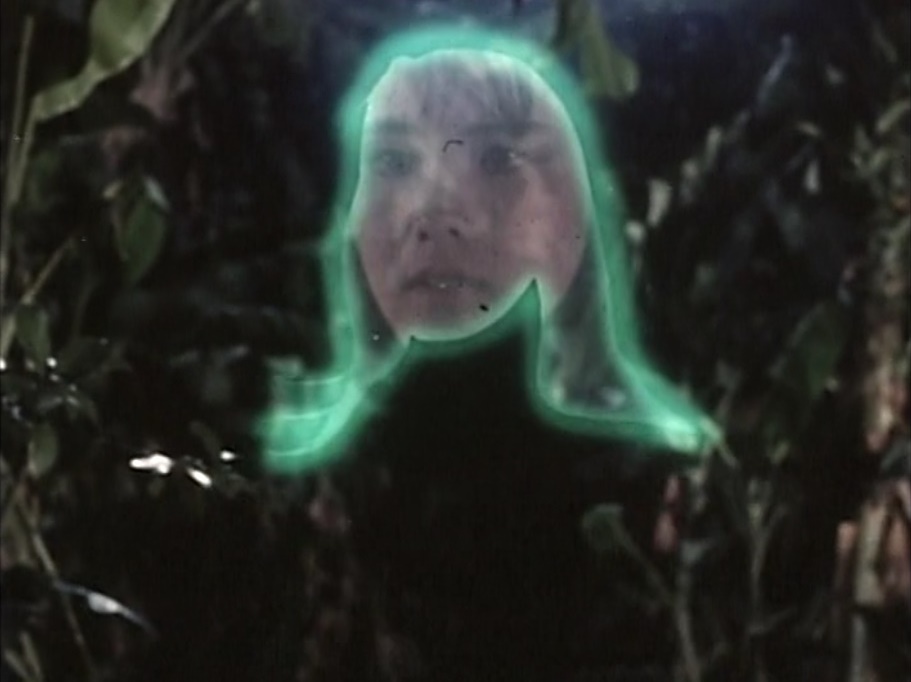

There were a number of things that left me scratching my head here, including whether or not these storyteller bits were meant to be set in the present day while the other stuff (or at least SOME of it) is in the past. The folk tale this is based off of is set the early 1800s, yet most of the other trappings seem pretty modern. Speaking of the folk tale, major liberties were clearly taken with it here. The original story has two murdered sisters haunting the lake. In this one, only one sister dies yet there are two dragon-snake monsters so we're to assume the River Goddess has transformed the dead sister into one of her minions or something. And then a second helper of the River Goddess, who appears to be the ghost of the servant of the drowned noblewomen, shows up toward the end. It's basically impossible to keep up with any of this!

Since apparently there wasn't enough going on already, we then next meet another evil black magician named Master Mao (played by director / writer / production manager Ma), who is actually an underling of yet another evil black magician called Grand Master (Tse-Lin Yang) and they are all somehow in cahoots with both the River Goddess and the group of bandits. Two remote magic duels take place; one between Mao and Ling-hau, and a second between Grand Master and Ling-hau, which include a flying cardboard bat monster, cobras, whipping, arrows, someone eaten alive by piranha and lots of laser lights shooting out all over the place. Most of the fighting is over a treasure chest filled with jewels that had sunk into the river.


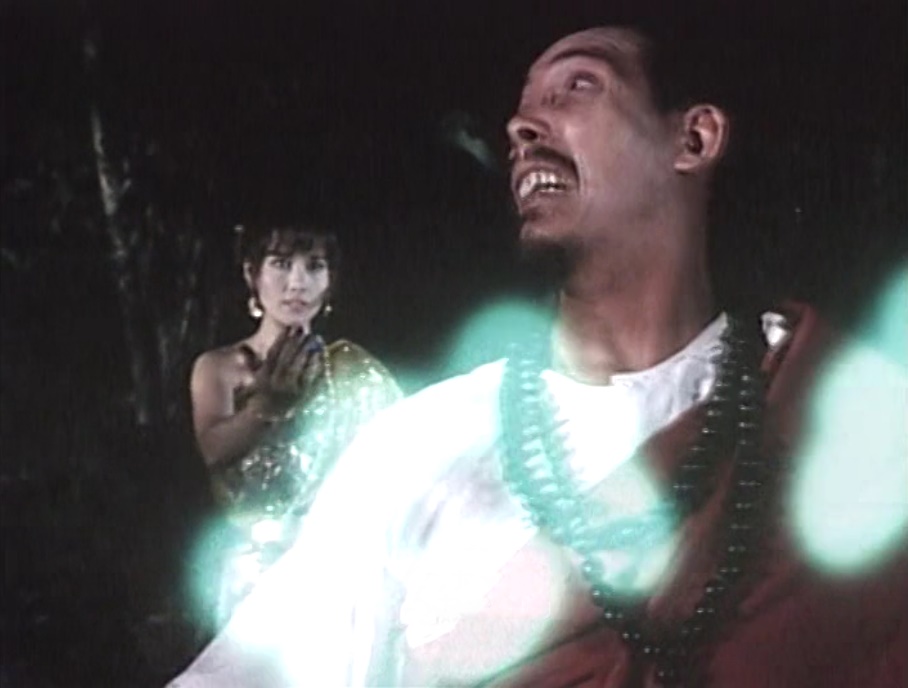
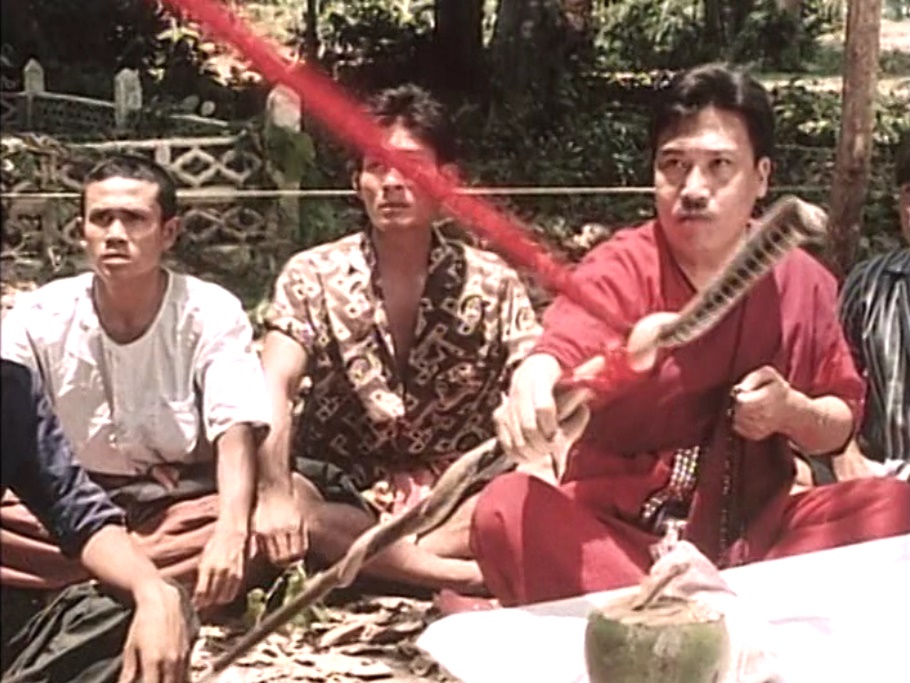


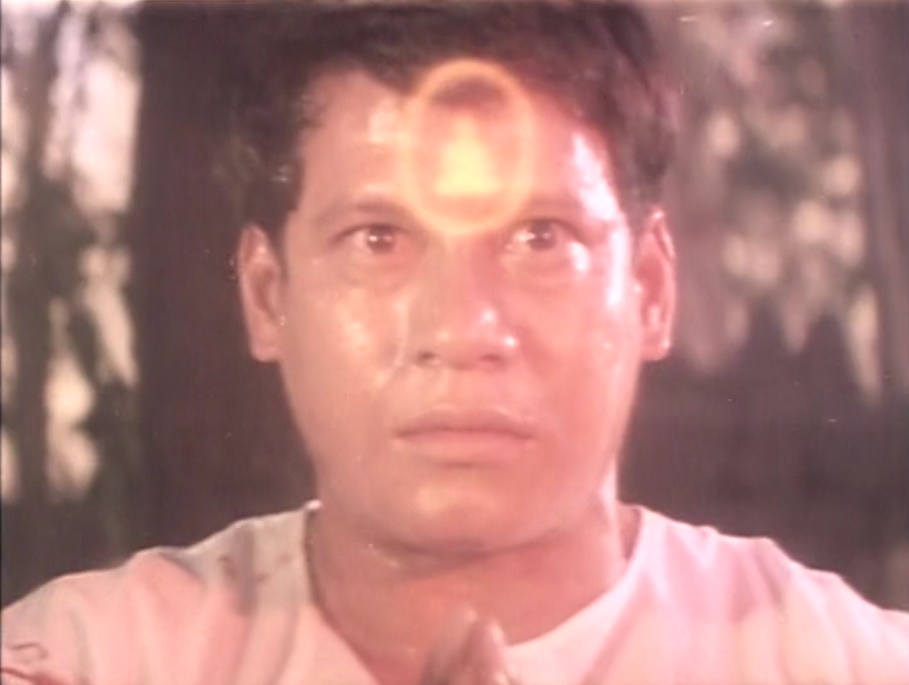

There have been multiple VCD and DVD releases for this one. The Taiwanese DVD from Scholar comes with English subtitles. There was also a full screen, VHS-transfer Malaysian DVD release from YesAsia which is the one I viewed. It comes with English, Malay and traditional Chinese subtitles. Amazing how a film filled with things you should like, and usually do like, can end up being so tedious, isn't it?

1/2

Saturday, November 5, 2022

Krasue Sao (1973)

... aka: กระสือสาว
... aka: Ghost of Guts Eater
... aka: Krasue Girl
... aka: Will-o'-the-wisp

Directed by:
S. Nawaraj (Sanit Kosaroth)

One of the only fully surviving pre-80s Thai genre films, this has been preserved for posterity thanks to a couple of enterprising men in Sweden who traveled to Thailand right at the dawn of the home video revolution, acquired the rights to a handful of films not released anywhere outside of the country and then issued them to VHS in the early 80s. The original Thai language soundtracks were retained but the films were given new English titles and hard coded Swedish subs. These acquisitions, less than 20 in total, were then distributed through two different labels: HB Video-film Norrköping and Video World. Ghost of Guts Eater was sadly the only horror movie of the lot and the rest appear to be action films. Because the same VHS-sourced copy has been bandied around so much in recent years (the quality is dark / poor but it's surprisingly in widescreen), the most common print you'll now find has American subtitles on top of Swedish subtitles on top of smaller Swedish subtitles!

The film centers around a well-known ghost in Thailand called a krasue. This same ghost has equivalents with different names depending on the Southeast Asian country you're in, but the spirit is usually the same: a detached, flying woman's head with internal organs (heart, stomach and a lump of intestines) dangling beneath that has a taste for flesh and blood, typically that of fetuses and babies. There are dozens of films involving this creature, which are still being made regularly to this day, and this appears to be one of the earliest films of this type.


One of the titular creatures is terrorizing a small village, scaring the bejesus outta everyone and slaughtering chickens. The ghost has taken possession of an old woman named Chim (Sulaleewan Suwanthat, who's also featured prominently in the Italian exploitation classic MAN FROM DEEP RIVER) and, having used up her body for all its worth (one of the unfortunately side effects of such a possession), is about to pass itself onto a new carrier. Thankfully Chim's syrupy sweet granddaughter Bua Klee (Pisamai Wilaisak) happens to be living with her. Prior to passing, Chim gives Bua Klee a ring, but only under the condition she promise to never take it off. She also insists Bua Klee cremate her body immediately and not tell anyone about her "murder." Bua Klee's boyfriend Boon Muang (Sombat Metanee, who passed away this past August) and his best friend Phi Chood (Choomporn Theppitak) happen by their hut just in time to help. They also must help Bua Klee fend off the unwanted advances of the thuggish arse Chatr (Man Teeraphol), who also has romantic designs on her.

Bua Klee (now pregnant) and Muang get married but their wedded bliss doesn't last too long, nor does the newfound peace and quiet in the village. The ring Bua Klee now adorns houses the spirit of her krasue-possessed granny... and she's hungry! Now possessed by the spirit herself, Bua Klee's head occasionally pops off and flies around the village late at night looking for grub. Several villagers i.d. the floating noggin as belonging to her and rumors she's a vampire rapidly spread. An exorcist, Doctor Prasit (Tat Ekathat), is called in to help. He gives the skeptical Muang a "holy rod" and instructs him to beat his wife with it. You'd think this would cause some friction in their marriage, as suddenly whipping your wife without explanation is sometimes known to do, but Bua Klee just brushes it off with a smile: "No matter what, I will forgive you! I love you so much! Please love me long!"


Seeing how the beating does not reveal any kind of evil spirit, Muang goes back to Dr. Prasit and punches him out, which prompts the exorcist to plot revenge ("Your vampire wife will die!"). However, his attempt at calling forth a demon backfires when it kills him, captures his spirit and takes him to hell. With things rapidly going downhill for them in their village, Muang, Bua Klee and Chood flee to the country to stay with Muang's uncle, Chaeng (Sawin Sawangrat), but the seclusion ends up not offering up any protection.

In a scene that sounds much better than it actually is, another old krasue lady lives nearby, which leads to a krasue v. krasue catfight over an animal carcass that concludes with Bua Klee biting the other krasue's guts. That prompts the injured krasue and her hubby (some kind of flying "demon") to get revenge, which they plan on enacting whenever Bua Klee gives birth to her baby so they can steal it and eat its heart. But that's not all!


When Muang travels back into the village to make a deal with wealthy trader Kamnan (Chao Klaewklong), he strikes the fancy of the man's spoiled daughter, Madua (Metta Roongrat), who herself is already being pursued by Chatr (the same guy who was trying to get into Bua Klee's pants earlier in the film). Chatr attempts to kill Muang, but only shoots him in the arm. After spending a few days nursing him back to health, Madua declares her devotion to him ("You know I love you so much!"). Him being married and already having a child isn't of any real concern to her. She just uses love spells to make him fall for her. The father then catches them in bed together and forces them to get married.

Meanwhile, a desperate Bua Klee is trying to find a way to get her man back. She learns of a treasure by some old ruins that's supposedly guarded by a giant. As for how to break the curse, it involves finding some fire and then stripping naked next to it. She attempts this (showing off her bare ass in the process) but is denied the treasure because she's yet to atone for her sins. A plan is hatched to break the love curse against Muang, which causes things to spiral out of control. Many people get killed.


While it may seem hard to believe by today's standards, this was a major release and a hit film in Thailand at the time, with many top box office draws in the cast and special effects work (including some brief, crude stop motion) that was considered elaborate and revolutionary by early 70s Thai standards. It was also shot on 35mm during what was considered the Golden Age of cinema in the country, so the production values are somewhat better (though still low!) than much of what came later. Starting in the second half of the 80s, similar films would be cheaply and carelessly shot on 16mm, bogged down with childish slapstick comedy, not even feature much in the way of special effects and be marketed almost exclusively to rural audiences. The films were not well-made or sophisticated enough to cut the mustard in larger urban areas and were mostly ignored there.


Running 105 minutes, this almost seems like three different movies mashed into one. It's episodic and melodramatic, sometimes tediously so. The pacing is horrendous, the soundtrack is comprised almost exclusively of overbearing (stolen) music and it ends up sidelining the very creatures we came to see in favor of the alternately mushy and messy relationship drama. That would perhaps be easier to take had we not been saddled with a lead female character who's insufferably whiny, pathetic and weak. Sometimes this hits on the right side of weird but the highlights are sadly few and far between.


The credited director is ส.เนาวราช, which is translated to either S. Naowarat or S. Naowaratch on most websites (the Swedish subs call him "S. Nawaraj"). Doing a little digging around and connecting of some dots, I was able to find out who this guy really is and about some of the other players involved. The real director is สนิท โกศะรถ, or Sanit Kosaroth, who was best known as a crime fiction writer and magazine publisher. The Naowarat / Naowaratch alias was a pen name he frequently used. He passed away just two years after this film was released at the age of just 45. The film was financed by บันลือ อุตสาหจิต / Banlue Utsahachit, who owned his own publishing house that frequently employed "Naowarat" as a writer. It's based on a graphic novel series by ทวี วิษณุกร / Thawee Witsanukorn, which was published by Banluesan Publishing House.

★★
Related Posts Plugin for WordPress, Blogger...