.
.
.

Saturday, October 7, 2023

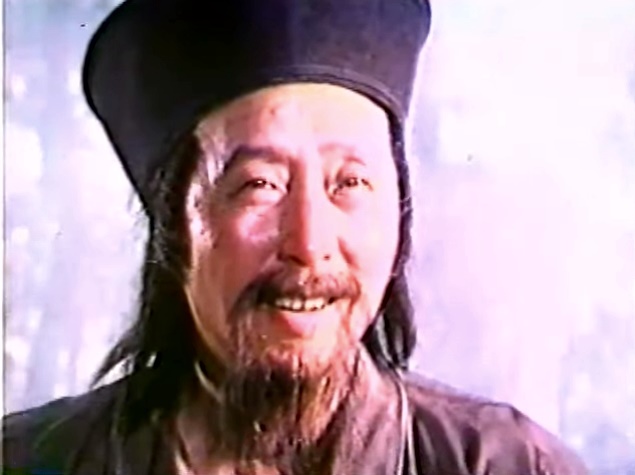
Yu huo fen qin (1979)

... aka: 慾火焚琴
... aka: House of the Lute
... aka: Yuk feng fai kam

Directed by:
Shing-Hon Lau

It's always strange whenever a film is a critic's darling one day and then seemingly vanishes the next, as if it never even existed. Someone thought highly enough of this at one point to get it into competition at the Chicago International Film Festival, the Toronto International Film Festival and numerous other festivals in 1979 and 1980, but then... nothing. Despite its limited North American theatrical run, there was no video or DVD here. Actually, I could only find evidence of a single official home video release: an old Pearl City VCD released in Hong Kong. There also had to have been a VHS release there as well since the version I viewed had plenty of tracking issues and picture rolls on it, though I was unable to locate an actual VHS box scan. As of this writing, this VHS quality print, which at least has English subs and is available online, is about the only way you're ever going to see this unless you happen to catch it at a revival. The Hong King Film Archive, for instance, had dusted it off for a special screening in 2017, but most of us aren't going to be able to attend something like that.

I have no clue why this was allowed to fall into obscurity, or why there's no restored DVD or Blu-ray release yet. Is the movie overrated? Hard to pigeonhole? Limited appeal? Too "dated"? Too "arty"? Caught up in copyright limbo? Or is this just an unfortunate case of a good or even great film lost to the sands of time for no good reason? The fact it was an independent production, and not a major studio film, likely has something to do with it, but doesn't tell the whole story here.


With his fisherman father falling ill and no longer able to support the family, naïve, uneducated and immature 19-year-old Ah Shek Cheung ("Yum Dah Wah" / Simon Yam), who's never held down a job aside from helping his father nor been away from home, has been upgraded to the family breadwinner. As luck would have it, his dad had previously done some business with the extremely wealthy Mr. Lui (Hoi-San Kwan), who now happens to be hiring a second servant at his sprawling, secluded mansion. The job seems easy enough, pays well (I'm assuming 500 bucks a month was good back then!) and comes with free room and board. Shek is to do some gardening, help the crippled Mr. Liu get around, give their elderly Amah / maid ("Chan Lup Pun" / Lap-Ban Chan) a hand and assist his much-younger trophy wife, Kit-Mun (Becky Lok), with shopping and errands.

As with most things that appear too good to be true, so is this situation. Mr. Lui, who spends most of his time writing pretentious "Zen poetry," playing games and strumming a lute, is a man of complete leisure and laze, but can also be something of a tyrant. He won't let anyone have a TV set because he hates noise, demands already-spotless rooms be cleaned again, drinks too much and expects everything to be done when and how he wants it, right down to hand cleaning his dentures every single night. In other words, he's the master of his domain and damn well knows it, while everyone else is essentially a slave. People aren't human beings with desires and feelings, but tools to be used to enable him to do as he pleases. He's even assigned his wife the task of taking care of the business; collecting monthly rent from farmers and fishermen who are utilizing their land and ponds.

It comes as no surprise then that Mr. Lui has zero sympathy for the poor villagers renting his land. When bad weather keeps them from earning much and they ask for a deferral on their rent payments, he refuses, tries to have Shek throw them off of his property and then has them arrested for fighting.


The Lui marriage is a sexless one with zero signs of affection, as well as separate beds, and Mr. Lui just smirks, shrugs and flips over at the sight of his beautiful nude wife. But she has her needs, too, and decides to liven up her dreary life by subtly flirting with Shek. That leads to more overt seduction attempts, like opening her robe and exposing herself to him. Before long the two are sneaking off to have sex, get to know each other better and fall in love. Not that Kit-Mun ever actually loved her husband in the first place. She was working as a prostitute prior to meeting him and allowed herself to be entirely purchased as an easy segue into a more "respectable" life, which she's since realized was a huge mistake.

Things take a darker turn after Mr. Lui finds out about the affair and attempts to fire Shek, but he has his claws too firmly embedded in the home to willingly go away.  Shek refuses, and he has Kit-Mun's full support. She knows her husband can't function without her and uses that, and her husband's disability, to her advantage. The two young lovers start being very open and casual about their relationship in front of both the impotent husband and the maid. However, jealousy, madness, violence and death soon rock the house. Shek, who's shown signs of not being entirely right in the head prior and the insanely jealous type, gets angry and carves his name into his lover's arm, while Kit-Mun keeps having visions of bloody dentures all over the house after her husband is presumed dead and buried. Has her spouse somehow managed to survive? Is he now a vengeance-seeking ghost? Have the young couple both gone mad? Or is something else afoot?


While I can't say this is some lost cinematic masterpiece, it IS good enough to merit a second chance at life. It really stands out from the pack when compared to other 80s HK genre films, which became less and less serious as the decade progressed. While there's some comedy, it's slier and more satirical in nature, and overall this is a sober, serious effort. It's recommended mostly to patient viewers who appreciate well-drawn characters, intelligent writing with lots of subtext (mostly critiquing elitism) and an hour of build before it reveals its more disturbing and horrific content. To the director's credit, he's able to generate some genuine intensity at the climax and the film is consistently interesting and well made, with nice camerawork, a unique score punctuated by atonal plucking of the titular instrument and a perfect (and very amusing) twist at the end.


Despite amassing nearly 500 acting credits from 1949 to 1990, unheralded veteran character actress Lap-Ban Chan was the go-to old lady to play grannies, servants and various spiritualists and psychic mediums in 80s Hong Kong genre films. Usually, she'll pop in for a scene of two to brighten things up with her amusingly grumpy on-screen persona, so it's nice to see her here in a much larger role than usual. Her character is all business in front of the boss, but behind closed doors she loves Bruce Lee, rock music and gossip magazines, and adds a new 22-inch color TV to her nightly prayer list. Likewise, veteran actor Hoi-San Kwan does a fine job essaying the incredibly self-centered husband and is somehow able to keep from turning this character into a one-dimensional monster by tapping into his more pitiable qualities. Despite a long and proven career, Kwan would be reduced to appearing in sleazy, lower grade genre offerings toward the end of the 80s.


Of course, Yam would be the big success story here. After having already made a name for himself on television, he then branched out into film and this was one of his first starring roles before becoming one of his countries biggest stars, also having some crossover success here in America. He can also be seen in a number of other genre films, including HE LIVES BY NIGHT (1982), The Devil's Box (1984), the TV movie Female Butcher (1991) and Dr. Lamb (1992), among others. The acting weak link here is Lok in her film debut. She was probably some kind of model or something prior to landing this gig. While she looks great and spends much of her screen time sans clothing, her inexperience shows in the more dramatically demanding moments. To my knowledge, she never appeared in another film.


The director also made the action films The Head Hunter (1982), starring Chow Yun-Fat, and Heroes Three (1983). Apparently, none of his movies were all that successful as he wouldn't direct again until 1999, and only made two more films then.

Thursday, October 5, 2023

Lao Shan gui lian (1984)

... aka: 嶗山鬼戀
... aka: Love with the Ghost in Lushan

Directed by:
Fong Pau

Liaozhai zhiyi (English title: Strange Tales from a Chinese Studio) is a collection of allegorical ghost / supernatural tales compiled by Songling Pu over a forty year period, starting in the 1670s up to the turn of the 18th century. The collection features around 491 stories in total, was first published in 1766 and is now seen as a classic, influential work of Chinese literature. There have been a number of films adapting some of these stories going all the way back to the mid 1920s. Included among those are the Shaw Brothers productions THE ENCHANTING SHADOW (1960), The Enchanted Chamber (1968) and The Ghost Story (1979), Taiwanese director Feng-Pan Yao's ALL IN THE DIM COLD NIGHT (1974), The Blue Lamp in the Winter Night (1974) and Ghost Under the Cold Moonlight (1975), and the acclaimed hit A Chinese Ghost Story (1987). That covers only about 1% of all of the films that are either direct adaptations or clearly took ideas and inspiration from the collection.

This one opens with a little biographical information about the author and his work and tells us the movie we are about to see is based on just one of the book's chapters. When I glanced back over at my review of the same director's THE PAINTED SKIN (1966), his only other genre effort, I realized he began that film the exact same way and it's also based on another of these stories.


Wanting to take advantage of the breathtaking scenery, artist Jiang Yu (Henry Fong) travels to a remote mountainous region of China to work on some drawings for wealthy client Mr. Wu (Ming Chiang). Upon arrival, he sees a female figure in white disappear behind some trees. He then hears a woman's cries for help. Following her voice, he sees a few brief flashes of the figure and then some smoke being sucked into cracks between rocks. Shrugging off the incident, a local foodstall owner (Kwai-Ping Wong) informs him of a free place to stay while he's in the area; a long-ago abandoned temple formerly used by Taoists, which is currently occupied by an old drunk (Jing Ping Wu). His first night there, he again sees the figure in white, only this time accompanied by footsteps forming on the ground all by themselves and then the same young woman being beaten by a woman before they all suddenly disappear.

The following day, Jiang once again spots the girl running around in the mountains, only this time she leaves behind a slipper a la Cinderella. (For the record, the origins of the Cinderella story predate Liaozhai zhiyi by 1500+ years). The girl - Shiu Sen (Fay Yu) - later returns to the temple to retrieve her shoe. Jiang inquires about her peculiar behavior and she tells him a sad story about how her abusive stepmother (there's that Cinderella nod again) had sold her into slavery. She pleads with him to take her away from there, even promising to become his servant for life if he does. However, he's just a poor artist, feels he doesn't have much to offer and sends her on her way.

As soon as the mysterious young woman vanishes, yet another mysterious young woman arrives. She - Hung Yu (Bing-Hsin Hsia) - claims to be Shiu Sen's stepsister, though she's much more heavily-made up and expensive in dress than Shiu Sen, who wears peasant's clothes. Hung Yu wants to commission him to draw a picture of her. However, she wants it done immediately and he must be finished before the sun rises to collect his gold. As soon as he begins, the woman strips off her dress and comes on to the outraged artist. When he attempts to kick her out, she suddenly transforms into a blue-faced vampire and attacks, though Jiang manages to escape shaken but unscathed.


While fleeing down the mountainside, Jiang ducks into a cave, discovers Shiu Sen's grave hidden inside (revealing to him that she's actually a ghost) and is almost grabbed by zombie hands that emerge from the ground. It's then that he realizes that someone has stolen all of his drawings, so he's forced to return to the haunted village to retrieve them. In his absence, the seductress ghost has killed a wandering swordsman (Pei-Wen Hou). Luckily, he runs across Shiu Sen before he does her sister. A good ghost, Shiu Sen, further explains her predicament: She's trapped at the mercy of an old mistress who sends her and Hung Yu out to seduce men so she can drink their blood. His only hope may be convincing the old drunk, a former Taoist, to get sober long enough to help banish the evil spirits. After doing so, or so they think, Jiang retrieves Shiu Sen's bones and plans on giving them a proper burial so that she can finally be at rest.

Returning home to his grandmother (Ping Qiu) and kid brother, Jiang realizes he's now late on delivering Mr. Wu's artwork. He asks for a few more days, in which time Shiu Sen pays him another visit (he still has her remains so no rest just yet) and helps him with his artwork, which is a rousing success. She brings additional pieces to him during her late night visits and the two begin to fall in love. While it seems like a doomed relationship if there ever was one, hope is found through the possibility of revival if he can feed her enough of his own blood. Complications ensue thanks to Mr. Wu's daughter, Su Jin (Kong-Nam Ha), who has also fallen in love with Jiang, and a rival artist who is himself in love with Sun Jin and jealous of Jiang's sudden success. And even more complications ensue than that when those mountain ghosts find their way there looking for revenge.


Not every movie needs to reinvent the wheel. Some are just perfectly nice examples of what they are, and that's basically what we get here. The director deftly mixes horror, fantasy, drama and romance, and does just enough stuff differently, to land this firmly in hidden gem territory. And when I say hidden gem, this really is one, unlike any of the titles you'll find listed in books like Fangoria's laughable 101 Best Horror Movies You've Never Seen or highlighted on one of those awful countdown specials like 50 Best Horror Movies You've Never Seen. Good luck finding any information online for this one. Almost no one has even heard of it, or watched it, and it doesn't even have enough votes to register a score on any of the major movie websites.

Among the more novel touches here is how it handles its main characters. The artist is kind and a genuinely nice guy, but he's also a bit squeamish and has a bad habit of either running off or passing out whenever things get to be too much. In other words, he behaves like the vast majority of real people would in similar situations! With our nominal hero proving to not be much use in tackling the evil threats, this hands the reigns over to the drunken Taoist and the good ghost girl. We assume from the beginning that the former is going to be utterly useless, but he proves to still have some tricks up his sleeve, while the latter starts the film as your standard weepy / tragic figure but proves to be the most courageous character in the entire movie, not to mention the most talented artist!


In addition to a likable cast of characters, this offers up some really beautiful outdoor locations in the first half, fine art direction, nice camerawork with lots of tracking, crane and POV shots, some good, though sparsely used, make-ups and visual effects, and fine production values all the way around. There are also some interesting things plot-wise to spice things up, like a poisoning victim being resurrected to get revenge on their killer, a man emerging from a painting and a blessed bag that acts as a ghost vacuum to suck up spirits.

Currently, the only available print is a bad pan-and-scan VHS copy with some jagged editing, a large logo blur on the top right corner and cut-off English subtitles, meaning this also gets added to the list of films in desperate need of rescue. Sadly, in this case, that's not likely to happen. Since this was made by the Feng Huang Motion Picture Company, which was later dissolved into the Chinese-government-run Sil-Metropole, what we have now is likely the best we'll ever be getting. Feng Huang was known for making social issue films with a left wing political stance, meaning it wouldn't be one bit surprising to learn that China destroyed its entire catalogue of films upon acquisition.

Related Posts Plugin for WordPress, Blogger...