.
.
.

Saturday, March 25, 2023

Haplos (1982)

... aka: Caress
... aka: House in the Woods, The

Directed by:
Antonio Jose Perez

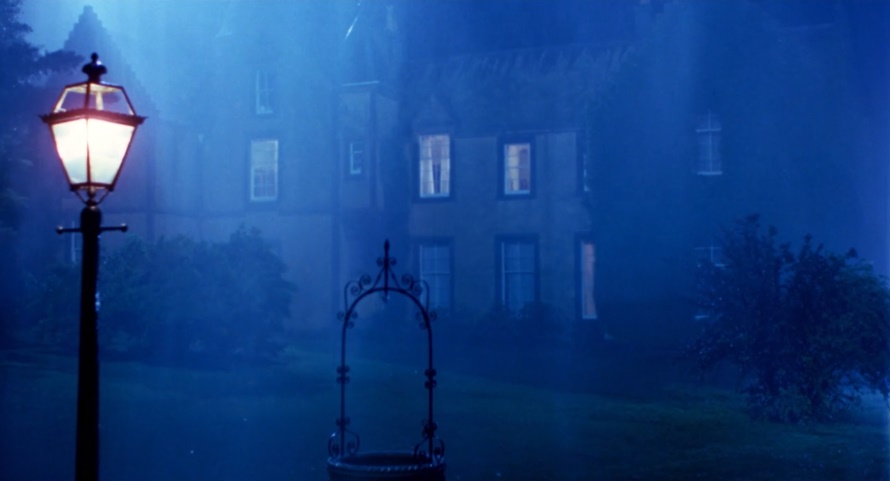
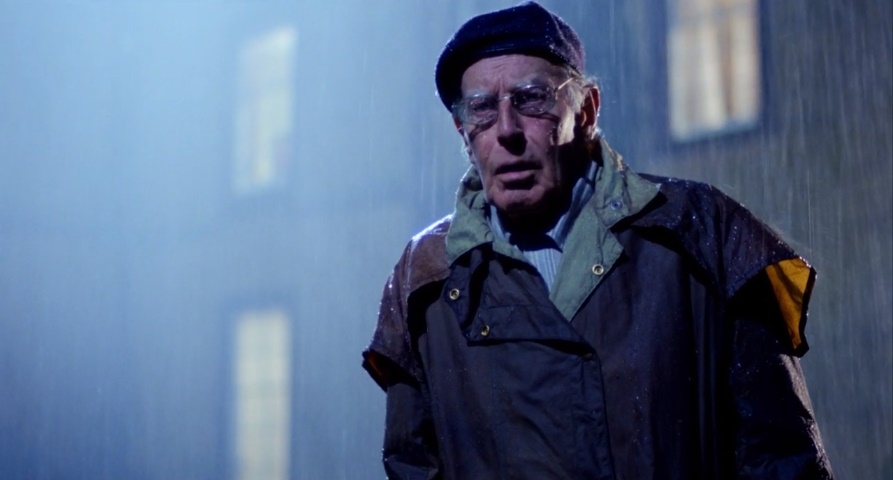
Away in Saudi Arabia for years working as an engineer, Al Katigbak (Christopher De Leon) arrives back in his small hometown of Buendia to visit his estranged mother's grave and take care of some other family business. The mother has left behind a dark, gloomy house, which Al moves into, and an ice plant that he now has to decide what to do with. The once-thriving business has taken a big financial hit since most people in the city now have refrigerators, the price of oil needed to run the machinery has skyrocketed and many of the customers live deep in the dangerous jungle, which is patrolled by soldiers but still filled with rebels and terrorists, and Al is considering just closing it down. He befriends Goryo (Rez Cortez), the guy who's been managing the plant in his absence, and tries to get settled back into life in the Philippines. Of course, since the singles scene in ultra-conservative Saudi Arabia is pretty much nonexistent and he's not getting any younger, finding romance is high on his agenda. Thankfully, some options soon present themselves.


Al reunites with Cristalina Nieto (Vilma Santos), a former childhood friend who's now working for the government agency POPCOM (Commission on Population and Development) running a family planning center in town, though only on a temporary basis. She invites him to her home for dinner so he can meet her widowed mother, Gloria (Delia Razon), and local priest and family friend Father Ocampo (Jaime Fabregas). While Ocampo is incredibly progressive and open-minded for a priest, her mother is old-fashioned and superstitious, talks to her dead sister and doesn't quite understand the younger generation's approach to relationships and sex, nor is she fully behind her daughter's line of work. She also doesn't try to hide the fact she'd prefer Cristy hook up with army lieutenant Jaime Alvarez (Juan Rodrigo) instead of spending time with Al.

Cristy is so popular she even has a third admirer who has yet to make themselves known. Unfortunately, that one's a pervert who likes making obscene phones in a dead end subplot that feels completely superfluous. While she has her options, Cristy is extremely independent and goal driven, not in any hurry to settle down and likes her job because it gives her the ability to travel. Winning over her affections and getting her to stay put won't be easy, but Al is determined and manages to get his foot in the door pretty quickly.


Though Cristy makes a living educating people about safe sex and birth control, she ends up getting caught up in the heat of passion and has unprotected sex with Al. Even so, she's not entirely set on him as a boyfriend just yet. Instead, she dives headfirst into her work. Deciding to stay in the area for awhile and expand her outreach program to remote areas on the outskirts of town, she enlists the aid of Basilio "Ilyong" Valdemor (Eddie Infante), a former zarzuela (musical comedy) actor turned town drunk after the love of his life was massacred by Japanese soldiers during the WWII occupation, to help spread the message to locals using bawdy comedy sketches. Al is supposed to help them out, but finds himself swept up in something else instead...

Returning to his mother's grave, Al runs across a demure, pretty young woman named Auring (Rio Locsin) visiting her parent's gave. Though she's hardly an open book and offers up few insights into her life, he becomes immediately infatuated with her. She claims to live by herself in a nearby house in the woods, which instantly piques his interest because the area is so obviously dangerous. What is a girl like that doing in a place like this all by herself? The two spending several nights together naturally doesn't sit too well with Cristy, who's since decided that she's also in love with him (and is also now carrying his baby), which sends the film into love triangle territory, only with one of the participants obviously being a ghost.


I couldn't quite figure out the what the primary intent of this film was but it's at least thoughtfully-scripted by Ricardo Lee. The narrative frequently contrasts how things currently are vs. how things used to be. It's probably no coincidence that Al's romantic choices are an outgoing, ambitious career woman who has a short haircut, wears pants and has a modern, realistic outlook on sex and dating, and a meek, subservient and traditionally ultra-feminine (long hair and gowns) woman from the past who's content to just stay at home all the time. The film really doesn't side with one option or the other as being the ideal (well, aside from one of the participants technically being dead!), and treats the older characters, who've either adapted to modern times (like the priest) or are trapped in the past (like the mother or Ilyong), in about the same way. No one's necessarily bad or wrong. Everyone's just different.

This also frequently alludes to WWII traumas that still haunt the country forty years later. There's mention of American forces killing 30 children after accidentally bombing a school (which I wouldn't be surprised to learn was something that actually happened), and Japanese forces are the ones responsible for creating the ghost girl in the first place (she was raped and then murdered by Japanese soldiers during the occupation). Remaining remnants from the Spanish colonial period (which ended around the turn of the 20th century) are also heavily focused on, including much use made of a very old (and very cool-looking) Spanish era cemetery.

Being made during an uncertain time in Filipino film history when they were still working out their artistic freedom bugs after a long period of censorship adds some additional interest. This has allowed some flexibility in regards to portraying a more permissive style of church. The priest in this film is shown to be an important, entrusted pillar of the community yet he's also surprisingly non-judgmental and accepting of changes in societal norms; feeling these have no real bearing on one's faith. He's also in favor of birth control to held curb overpopulation and thus curb poverty in rural areas, despite some opposition to this from the mainstream Catholic church.


However, despite all of the interesting stuff lurking in the script and the fact this is generally well-made and acted (great locations, too), it's not entirely successful. Horror fans should take note that this just barely qualifies as a genre film. Sure, there's a ghost, a haunted house, a few mildly eerie moments and a few other genre trappings, but there's also no action, excitement, scares or suspense and the ghost here is tragic, not evil nor vengeful. While that isn't a debit to the film itself per se, the fact this ghost bothers to return for seemingly no other reason than to take part in a weepy doomed love triangle before exiting stage left seems rather silly. It also leaves the film without any sense of immediacy or narrative drive as it trudges along.

Depending on what kind of viewer you are, the unsure depiction of the supernatural here can be quite irritating as well. The ghost's home, for instance, had been burned down by Japanese troops in the 1940s. Now it's sometimes there and sometimes not, and sometimes visible to the naked eye and sometimes not, and only visible to certain characters but not others and for seemingly no reason at all aside from the fact it needs to be, or not be, for the convenience of the plot. If the ghost can control who sees her and her home, then why on Earth would she allow her love rival to even come there in the first place? The home even burns down a second time toward the end (which may just be a hallucination) yet is back again just a few scenes later despite the fact the ghost has already been vanquished.


There's another scene toward the end where Al gets to witness what Auring went through back in the 1940s though I wasn't sure whether he was hallucinating it, she was gifting him the vision, it was being reenacted in present day with terrorists subbing for the Japanese soldiers or if she briefly transported him back the 40s. Who's controlling all of this?! Is it even real? Is there some kind of lapse in time or space? None of it really made much sense. The film is also very talky and runs for over 2 hours. While this gives the filmmakers some breathing room in regards to developing the characters, the film still feels sluggish much of the time and the last fifteen minutes, where Al falls into some kind of post-ghost despondent state, feels both pointless and anticlimactic.


Though an official entry in the 1982 Metro Manila Film Festival, this did not receive international distribution to my knowledge. It's finally been given a digital restoration and subtitles though, making it one of the few Filipino genre films from this time to be made available in decent quality for English-speaking audiences. Alas, there remain tons of seldom-seen Filipino genre films from the 50 through the 80s which have yet to receive a similar release.

1/2
Sunday, March 19, 2023

Next of Kin (1982)

... aka: Akumu no keifu (Genealogy of Nightmares)
... aka: Angustia a Flor de Piel (Anguish to Flower of Skin) (?)
... aka: Fatal Terror
... aka: Hell House
... aka: Mais Próximo do Terror (Closer to Terror)
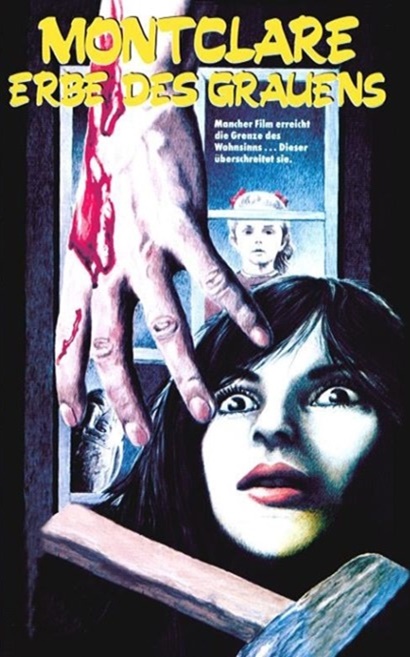
... aka: Montclare - Erbe des Grauens (Montclare: Legacy of Horror)
... aka: Montclare - Haus der Schreie (Montclare: House of Screams)
... aka: Ondskapens hus (House of Evil)
... aka: Paluu Menneeseen (Back to the Past)

Directed by:
Tony Williams

In Australia, Next of Kin (an Aussie / New Zealand co-production) came and went in theaters without much fanfare or critical acknowledgment and was likewise mostly ignored on the global home video market despite being released in dozens of countries. Not even a Best Editing nod for Max Lemon from the Australian Film Institute, nor Williams winning a Best Director award at the Sitges - Catalonian International Film Festival in 1982 (even beating out Sam Raimi for The Evil Dead in the process!), nor it winning a Special Mention award at Mystfest in Italy in 1983, nor it receiving a cover story by the widely-read Aussie film mag Cinema Papers, seemed to help this film's plight any. I used to own tons of horror reference books and magazines back in the day and don't recall any of the reviews for this film being particularly glowing.

However, a funny thing happened decades later: It was one of many titles highlighted in Mark Hartley's Not Quite Hollywood: The Wild, Untold Story of Ozploitation! (2008) documentary, which featured Quentin Tarantino drawing comparisons between it and The Shining, calling it one of his three favorite Aussie films of all time and otherwise singing its praises. Then, as it so often happens with films that receive the QT stamp of approval, many folks started running around championing the film as some kind of unheralded forgotten classic. While I find Tarantino being treated as the ultimate, infallible, final authority on all horror and cult movies a bit ridiculous and tiresome, I remain intrigued by how one man's opinion somehow manages to completely alter initial perceptions and transform a film that had received a lukewarm reception up until the chosen one's re-appraisal into a sudden classic. That's some Jim Jones style shit right there!


You know what's really fascinating to ponder? Granted this is as good as people are now saying it is, how could it have possibly fallen between the cracks like it did and stay there for decades without anyone ever saying anything about it? I'd understand if it was nearly impossible to get your hands on all those years, but it wasn't. Despite what revisionist reviews are now claiming, it still wasn't. I just glanced at the opening paragraph of an essay on the film where the author makes the claim that it wasn't "given the chance back in the day" due to it "languishing in obscurity," which I find an interesting comment directed toward a movie that was widely distributed throughout Europe, Asia, North and South America and elsewhere. Literally millions of people viewed this film prior to Tarantino's endorsement and it hadn't managed to build up any kind of reputation whatsoever in all that time. 

I can't help it, this kind of stuff automatically brings out the cynic / skeptic in me, yet I was hoping this would at least somewhat live up to the hype. Instead, it ended up becoming my biggest disappointment of the year thus far. But, hey, the year's still young!


Following her mother's passing, Linda Stevens (Jacki Kerin) returns to her tiny home town in central Victoria for the first time in many years to take possession of the family mansion, which has been converted over to a elderly care facility called Montclare Retirement Home. Though she has the expertise of veteran nurse Connie (Gerda Nicolson), who practically ran the place by herself when the mother grew ill, at her disposal, it's still a big responsibility to take on for a 24-year-old. Linda isn't quite sure just what to do; sell the place or make it her permanent home / job. Seeing how it's been in her family for generations and she has already-established relationships with some of the staff and patients, there's a definite pressure to keep it. For the time being she'll stay, but doesn't want any new residents brought in on the chance she changes her mind. Staying also gives her a chance to rummage through her late mother's belongings, which include an old diary that she starts thumbing through page by page every night.


Since she's back, Linda decides to reconnect with an old fling named Barney (a wasted John Jarratt, of later Wolf Creek fame), who seems mostly interested in late night wham bam specials, drinking and partying, which probably also explains why he doesn't have his driver's license and has to be chauffeured around everywhere by a woman named Carol (Debra Lawrance), whom he appears to be dating. Also showing an interest in her is the more mysterious Kelvin (Robert Ratti), the son of one of the residents, Mrs. Ryan (Bernadette Gibson), who seems to be following her around.

There's a certain mystery surrounding Linda's mother's death, with chief physician Dr. Barton (Alex Scott) claiming that anxiety and high stress over money and the future of the facility led to her untimely passing. Still, no clear cause of death is offered up to her when she asks, and the doctor and Connie seem to be hiding things from her. Even stranger still, she has an Aunt Rita whose whereabouts are unknown. Linda is told by some of her acquaintances that she's passed away but that she's still alive by others. Barton's explanation is that she became dangerously mentally ill, was sent to live in an asylum and died there.


The entire first hour of this film deals almost exclusively with faintly odd, seemingly minor things that may or may not be supernatural / ghostly in origin, like windows being left open, lights going out, taps being left running, strange noises, etc., plus long time resident Lance (Charles McCallum) going to get in his bath and discovering the bloated corpse of another resident; the shock of which gives him a minor stroke. Linda notices a shadowed figure standing around watching her on several occasions and is haunted by slow-motion flashbacks / nightmares involving a little girl holding a red ball, which turn out to be her as a 4-year-old discovering, you guessed it, another drowned body in the bath. Seems there was an epidemic of similar deaths years earlier.

When it comes to the technical aspects of filmmaking, at least the aesthetic and sonic ones, this is strong on many fronts. There's really smooth Steadicam work and clever shots throughout courtesy of Gary Hansen, an interesting synth score from Klaus Schulze, who also did the memorable score for Angst (1983), effective sound design, decent art direction, moody lighting, etc. So at least you know you're in professional hands and this looks and sounds good most of the time. But technical proficiency is only part of the battle. We the audience need to feel something, which is where this almost completely fell flat for me.


The screenplay, co-written by the director and Michael Heath, is one filled with plot points that are often only partially explained, if they're explained at all, one where we're never quite sure if things are fantastical or conspiratorial and one where all of the principal characters behave in a secretive, suspicious manner, which sometimes makes sense in regards to the plot and sometimes doesn't and is simply used as a means to distract. That's all by design in an obvious attempt to create an air of distrust and paranoia around our heroine, but what's lacking here is a central focus of interest to bounce all of this stuff off of. Instead we're left with a bunch of cold, stiff, vague, lifeless and one-dimensional personality voids and a cast, many of whom are obviously talented, saddled with a script that refuses to humanize any of the characters they're playing because doing so would jeopardize the script's stubborn ambiguity.


Comparisons to Kubrick's previously-mentioned film are wishful thinking at best and, quite frankly, outright misleading at worst. While there are a couple of vague similarities, this isn't nearly as visually accomplished nor is it the least bit shocking, creepy or scary. I've also seen this compared to the works of Argento, Bava and Polanski which, again, are massive exaggerations. While this is stylish at times, it's nowhere near as stylized (or color-saturated) as the films of Bava or Argento. Similarities are mostly the director stealing imagery from their films, like the little girl with the ball (Kill Baby... Kill!) and the foot suddenly hitting a submerged corpse (Inferno). As far as Polanski is concerned, he could make ambiguous, multi-layered thrillers with not only complete precision but also with fully-realized characters, which is not at all what we get here.


The elder-heavy supporting cast turns out to be an apt one as the only thing that moves around slower than they do is this film's pacing. The term "slow burn" gets thrown around a lot these days to describe a film that's methodically sedate and restrained for the duration as a build up to surprise revelations near the end. The "slow" portion should be building up plot intrigue, suspense, atmosphere, characterization and / or tension until the release, but this doesn't quite hit the mark on any of these fronts. In fact, the content in the build portion is so muddled, bland and uninteresting that by the time action, plot twists and reveals come flying fast during the last 20 minutes, many people will have stopped caring. As for those final 20 minutes, while they're livelier and more entertaining than the preceding hour+, there's really nothing there most horror fans haven't seen elsewhere. Well, except for the sugar cube pyramid. That part was pretty sweet.


Though I'm not sure if this ever played in American theaters in the 80s or not, there were at least two VHS releases, from Media and Virgin Vision, and this was very much a video store staple here in the U.S. for decades. Recently, many companies have jumped at the chance to give it a restored Blu-ray release after its stock started rising, so now there are pristine copies available from companies like Umbrella, Second Sight, X-Rated Kultvideo and Severin. Many of these come with director, cast and crew commentary. The film is also sometimes screened on the Criterion Channel and is (at least currently) on Tubi TV to watch for free. 

Though you very well may enjoy this more than I did, I'd still absolutely recommend giving it a trial watch prior to purchasing. I almost blind bought due to the hype. Now I'm glad I didn't.

Related Posts Plugin for WordPress, Blogger...