... aka: Dogs
... aka: Stray Dogs
Directed by:
Dmitriy Svetozarov
The Aral Sea, located between Kazakhstan and Uzbekistan, once covered over 26,000 square miles (making it the fourth largest inland body of water in the entire world), was home to over 1,000 small islands and was a thriving central point for all manner of agriculture, industry and fisheries... and then the Soviet government (led by Nikita Khrushchev) decided to pollute, pillage and tinker around with the ecosystem, resulting in one of the worst ecological disasters of all time. Thanks to the redirection of rivers, poorly-constructed irrigation dams, canals and reservoirs, industrialization, the introduction of invasive species from other parts of the world into the waters, careless dumping of deadly agents at bioweapons labs, wide scale pollution from canning and cotton factories and overuse of chemicals and fertilizers in and around the lake, the Aral Sea was doomed. Even Soviet scientists predicted a disaster from very early on, yet they still kept going anyway, which is depressingly similar to how the world at large is currently reacting to the dangers of manmade climate change.
Starting in the 1960s, the lake began to shrink at an alarmingly consistent rate. The once vast body of water then split into smaller lakes and those smaller lakes either shrunk considerably or completely dried up, leaving vast, dusty deserts behind. Now without a large enough volume of water to dilute all of the chemicals that had accumulated over the years, these toxins became concentrated in both the soil and remaining water. That in turn rendered much of the area unsuitable for farming or fishing, with farmers having degraded soil and fresh water shortages to contend with and fishermen dealing with an increase in H2O salinity, which killed off all of the fish, even driving some species to extinction.

The already-shrunk Aral Sea three years prior to the release of Psy vs. the Aral Sea today.
As for the humans who remained in the area through all of this, they've had numerous other problems to deal with other than having their livelihoods destroyed. They've also had to deal with poverty, the ensuing extreme weather conditions (hotter summers and colder winters) and a host of health problems caused by frequent dust storms spreading hazardous chemicals around. With the Aral having now receding miles away from the once-thriving villages that sprung up there during its industrial heyday, rusted out old ships and abandoned buildings and factories now blot the dry, desert terrain. Seeing how the area is basically one big, self-contained catastrophe in and of itself, can you imagine a better setting for a post-apocalyptic movie?


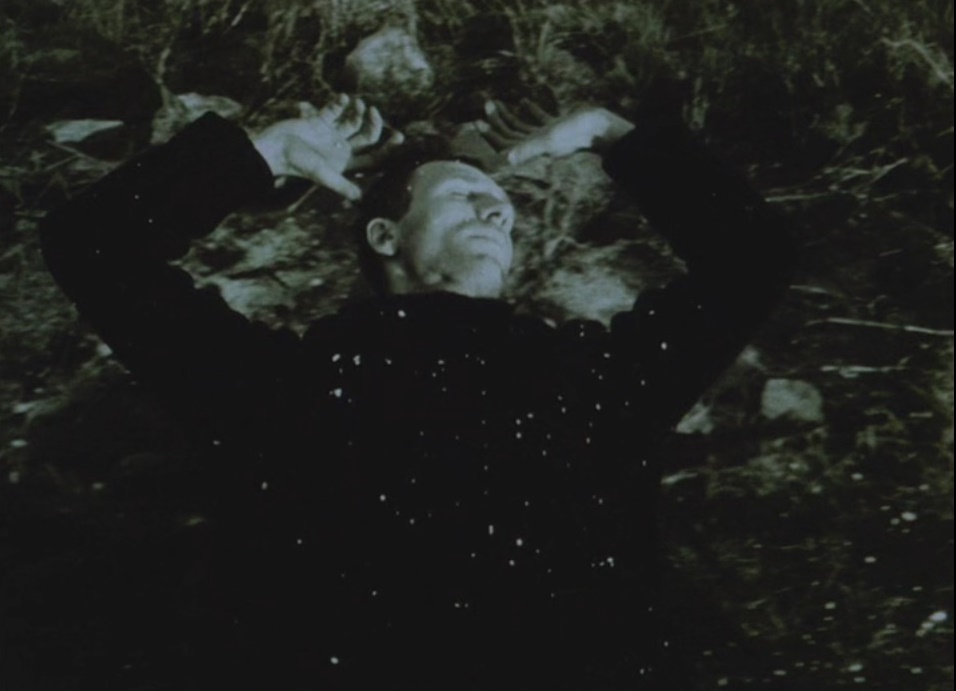
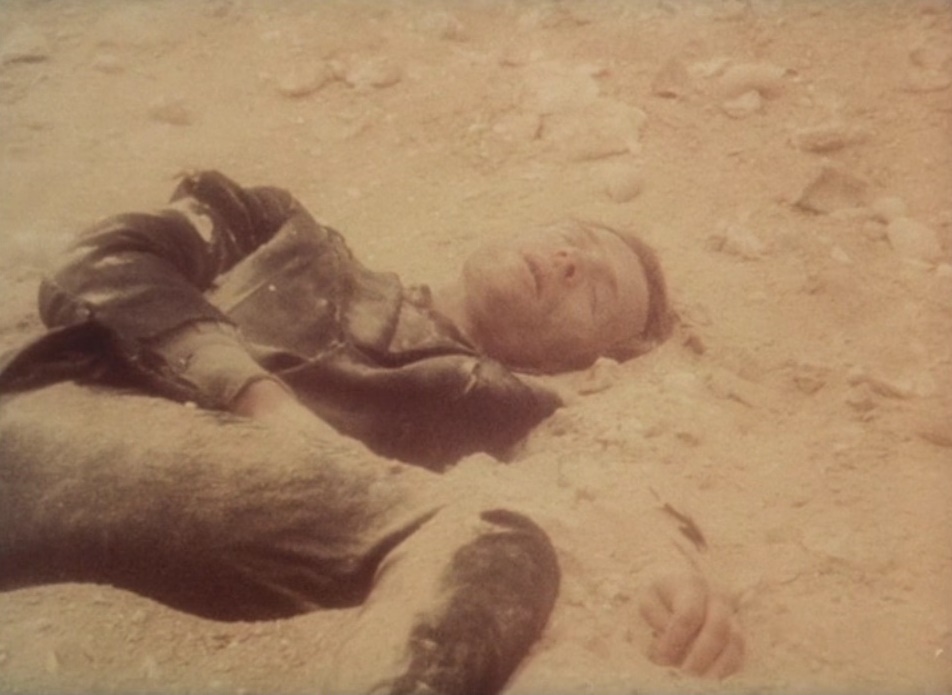
Mutilated, half-eaten corpses have been turning up in and around a near-vacant "dead city" out in the desert, but these attacks have been slowly creeping in toward more populated areas. In order to keep this menace at bay, a government agent organizes a top secret mission. He brings in former army civil engineer Ivan Maksimchuk (Yuriy Kuznetsov), who was directly involved in some of the projects that have wreaked havoc on the environment in the first place and now has something to prove to himself, and tasks him with putting together a team of six skilled hunters and outdoorsmen to go into the desert wasteland and exterminate what they believe to be the culprit: wolves. Strangely enough, this elusive pack of animals have somehow managed to escape previous attempts to snipe them from helicopters. They have the miraculous ability to vanish soon after they've been spotted.


The eventual team gathered is a ragtag, Dirty (half) Dozen-esque bunch of down-on-their-luck has-beens and eccentrics of varying degrees of sanity, though in this world that's probably about as good as one can hope for. Mikhail Zhigalov plays a never-named former DOSAAF (paramilitary sporting organization) champion and man of very few words who now works as a manager of a shooting range. Boris Grigoryevich (Sergey Kokovkin) is an impoverished, unemployed, poetry and philosophy-spouting drunk stuck at home with a nagging wife and constantly-crying baby. Hired to be their guide is ex con Egor Manikin (Aleksey Krychenkov), who used to live in the dead city back when it was a lively, thriving, seaside town and hopes to do some looting while he's in the area. Viktor Utekhin (Andrey Krasko) is a nihilistic, anti-Semitic, gung ho hunter, while Innokentii Fursov (Aleksandr Susnin), a military vet with previous animal extermination experience, will be their driver. The team load up their transport van with supplies and they're off.
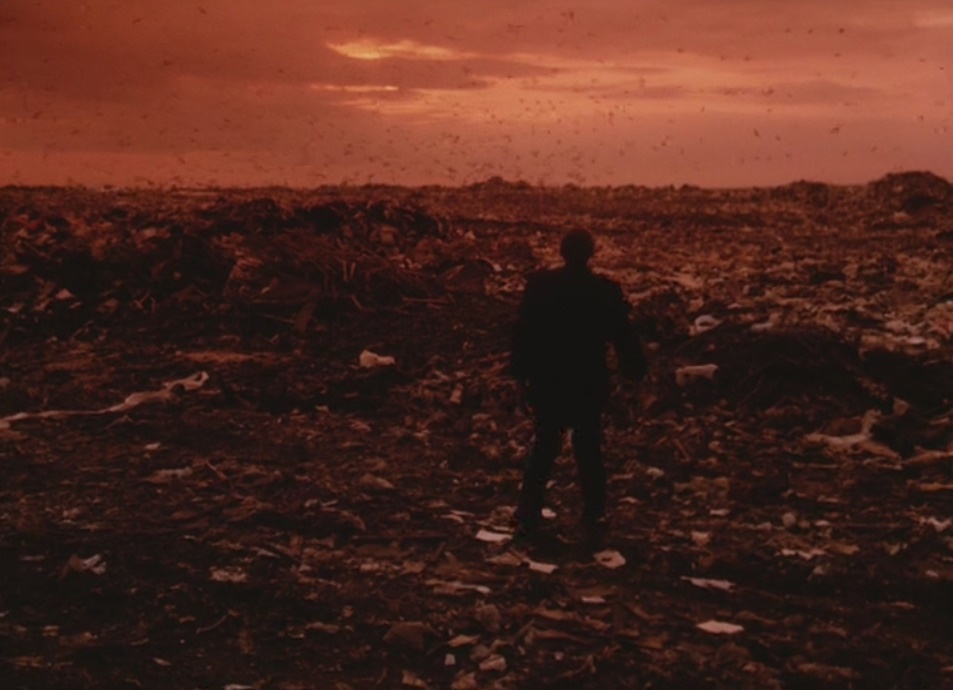
The desert terrain proves to be a harsh and unforgiving place. The torturous heat is suffocating, available water is in extremely limited supply, the sands are filled with potentially deadly sinkholes caused by the disappearance of stabilizing ground water and there's nary a patch of lush green vegetation anywhere in sight. It's all sand, dust, heat and the occasional piece of rusted out car, boat or heap of half-buried scrap metal dotting the landscape. They finally make it to their "dead city" destination and, to their horror, discover there aren't really any rampaging wolves. Instead, the area has been overtaken by vicious feral dogs with a taste for human flesh. Like the now-severe environment, the once passive pups represent nature (deservedly) turning against man.


The few human interactions the group have are limited to a young marauder (Andrey Nikolaev) who ends up stealing their van, effectively stranding them there, and a couple who live in an abandoned lighthouse hauntingly sitting right in the middle of the desert where water should be. (Ironically, they're now forced to collect snow in the short winters to get them through the rest of the year.) The husband, Pakhtusov (Nikolay Ispolatov), is a hydrologist and convinced that man can some day find a way to restore the lost sea. At least he's telling himself that. The wife, Saira (Rajhan Ajtkozhanova), tosses on a monk-like robe and sneaks out every night to kill dogs as an act of revenge for them killing their one and only child. Hopelessness, insanity and death follow for all.


Conspicuously missing from most nature-runs-rampant and killer dog film lists (a Top 10 on Screen Rant has some worthy titles like White God, Cujo and Baxter yet leaves this one off in favor of obvious filler), this deserves to be much better known. Unlike most other films in this category, which are usually schlocky botched attempts at seriousness or intentionally played for laughs, this is dark, dirty, grimy, bloody, completely serious, multi-layered, well-made and frequently quite disturbing. With its unforgettably bleak atmosphere of actual anthropogenic decay, Svetozarov's film is a stark reminder of what effect man's devastation of the planet has on all lifeforms.
As a warning, dog lovers may have a difficult time stomaching all of the yelping, whimpering, whining and obvious fear / distress of the dogs in certain scenes, not to mention seeing the cast casually machine gunning down their canine co-stars. There's also the question of whether or not some of these dogs were actually harmed or even killed in the film, as they're seen limping, falling over, suddenly being jolted, etc. I suppose it's possible that squibs hidden under patches of fake fur could be attached to trained dogs and set to explode to provide some of the gunshot effects seen here, though we're never quite so sure just how they pulled some of this stuff off. In fact, the dog carnage is so convincing that I honestly don't fully believe the disclaimer in the end credits that claims no animals were harmed in the making of this.


The performances are all very strong, there's good use made of slow motion and the long-standing Russian rock band Mashina Vremeni ("Time Machine") provides an excellent, eerie score. Sadly, this has never been officially released here in the U.S., though there have been several DVD releases in Russia, though they're full-screen, could use a remaster and none come with English subtitles. However, fan-made subs exist and are easy to find online, along with the film itself.
★★★1/2