.
.
.

Thursday, May 5, 2016

Horror (1963)

... aka: Blancheville Monster, The
... aka: Démoniac
... aka: Edgar Allan Poe: Horror
... aka: Edgar Allan Poe's Horror
... aka: Horror: The Blancheville Monster
... aka: Le manoir de la terreur (The Mansion of Terror)

Directed by:
"Martin Herbert" (Alberto De Martino)

A week before her 21st birthday, Emilie De Blancheville (“Joan Hills” / Ombretta Colli) returns to her family castle in England for the first time in many years, bringing along her best friend Alice Taylor (Irán Eory), who she met in college in America, and Alice's brother John (“Richard Davis” / Vanni Materassi). Since her father was burned to death in a fire while she was away, or so she's been told, Emilie's brother Rodéric (Gérard Tichy) has taken over and there have been a number of big changes made in the interim. For starters, all of the staff members Emilie remembers from her childhood are gone and they've all been replaced by a mysterious and shady new group of servants. The new housekeeper is Miss Eleonore (Helga Liné) who, despite being gorgeous and not the old crone usually seen in these films, is so solemn and sinister she manages to give Emilie a fright by just standing there, and new butler Alistair ("Frank Moran" / Paco Morán) isn't much better. The family physician, who'd treated the past three generations of the De Blancheville family has also been replaced by a newer / younger model in Doctor LaRouche (Leo Anchóriz).


During dinner, the visitors hear some strange noises that Rodéric tells them are dogs. Later that night, Alice wakes from her sleep to go on a midnight stroll, only to stumble upon some strange goings-on in the tower involving Eleonore, a syringe and a wailing, disfigured “monster.” Alice passes out, wakes in her bed and is told it was all in her imagination. Later, Rodéric gathers everyone together and finally spills the beans. The father wasn't actually killed in the fire; only severely disfigured and turned into a raving maniac in need of constant sedation. After Alice interrupted Eleonore giving him his treatment, he escaped into the woods and is now haunting the grounds. Carved on the headstone of the family tomb is a prophecy that states that the De Blancheville bloodline is set to end during this generation when the last female descendant reaches the age of 21. Now that her father is a grotesque madman, some believe he'd like to make the prophecy come true.


A search party is organized to scour the woods looking for the father but they can find no trace of him. That night, he pays a visit to Emilie, hypnotizes her and leads her outside to the family tomb and tries to temp her to crawl into her grave to experience “the sweetness of death.” Luckily for her, both the butler and the doctor saw her leave the castle and followed them there, which sends the father running off before he can complete his task. The next day, Emilie wakes up with a muddy nightgown feeling very peculiar, disoriented and with no idea what had happened the night before. She's not quite the same after that, starts having fainting spells and falls into a depression. Alice and her brother John (who's fallen in love with Emilie) attempt to find out just what's going on. Is her father really lurking around trying to fulfill the family prophecy? Is she being driven mad? Is she being slowly poisoned? Is someone making good use of Franz Anton Mesmer's book Hypnotism and Magnetism?


I consider myself a pretty patient person, but this dreary little mystery takes so long to really kick into gear it's going to make most people check out long before any of the better sequences even occur. Instead of the moody Gothic horror we all came to see, for a good hour we are treated to something more akin to a Gothic soap opera. It's talky, set bound and filled with the usual shady characters played by actors attempting to give off an ambiguously suspicious vibe. The numerous romantic entanglements get to be a bit much as well. Of course, Emilie and John have their thing but then we have the doctor falling in love with Alice who's already in love with Rodéric who already has a thing going on with Eleonore who's also got something going on with... Yeah, you get the picture.


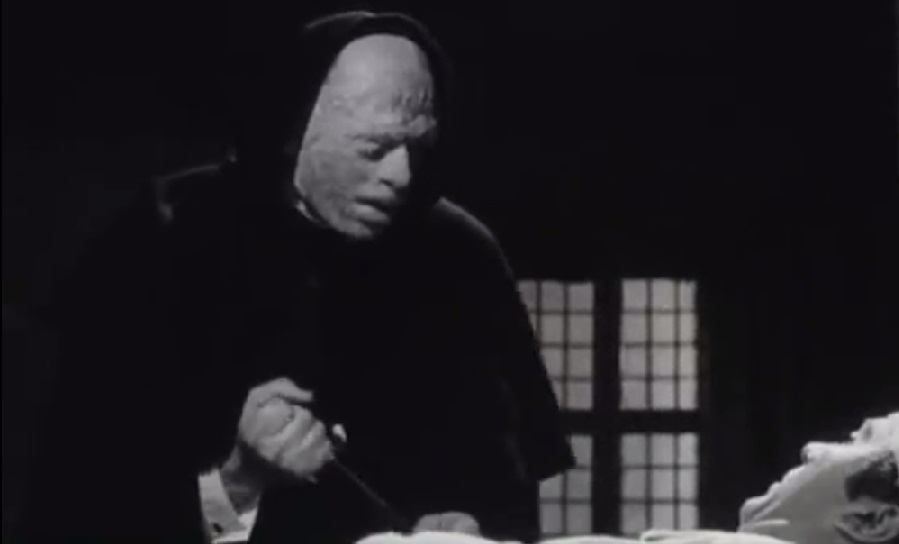

Not that this doesn't have its moments. There's good, high contrast, shadow-filled black-and-white photography courtesy of Alejandro Ulloa, decent art direction, lots of candlelit strolls down dark corridors and all of the expected atmospheric Gothic accoutrements. At around the hour mark, there's a pretty good Corman-esque nightmare sequence shot on blank sets with lots of fog and use of superimposition. The last fifteen minutes are pretty solid, with all of the story threads getting adequately tied together. It helps that some of these later scenes take us outside the dreary castle to an amazing old crumbling church that looks identical to the main shooting location used in the first Blind Dead film. Hell, it may even be the same exact location. That place is far too cool not to show up in other horror films shot in Spain.

Shades of Edgar Allan Poe abound, as this pinches ideas from several of his stories, most obviously The Fall of the House of Usher, but also a little Premature Burial toward the end. Interestingly, Poe's name is nowhere in the film's actual credits but was used extensively in the advertising, with many posters placing his name right above the title.


The cast is fairly decent in this one and there are a number of lovely actresses on hand. Former beauty queen Eory (who was born Elvira Teresa Eory Sidi and took her stage name from her country of birth) and Colli, a frequent presence in peplum and sci-fi films for a number of years before becoming a singer and eventually a politician, are nothing to sneeze at. Hell, Colli even does the late night corridor shuffle at one point clad in a sheer nightgown that doesn't leave much to the imagination. However, it's the presence of a completely buttoned-up Liné (in her first genre role) that garners the most attention. Like Barbara Steele, this woman was absolutely perfect for these kind of films so it's no wonder she landed many other similar roles throughout her career. She's pretty much matched in the sinister department by Anchóriz in what was sadly his only horror role. How this man never got cast as Satan at least once in his career is beyond me.


Though a cut English-dubbed version was distributed by AIP for TV showings, this took forever to get a home video release here in America. That wouldn't occur until a rather shoddy print (the same dubbed AIP-TV cut) popped up on numerous cheap sets distributed by Alpha and Mill Creek in the mid 2000s. There are differences between the various releases but only minor ones, including a different opening sequence depending on which version you see. The British theatrical cut (which has the alternate opening not seen in the U.S. version) was made available on DVD by Retromedia in 2013, which was the best-quality version of the film up to that point. In France, they got a sepia-tinted VHS release in the 80s under the title Démoniac (Delta Video) and, in 2015, a widescreen remastered DVD under the title Le manoir de la terreur. Unfortunately, the latter doesn't come with an English option but the Retromedia release was just fine by my standards.

Wednesday, May 4, 2016

Godaan Siluman Perempuan (1978)

... aka: Siluman Perempuan (Demon Woman)
... aka: Temptation of the Demon Woman

Directed by:
Ackyl Anwari

Here's some more ultra-obscure Indonesian weirdness. This one's based on a ghostly figure in Southeast Asian folklore called Penanggalan / Penanggal; a word that literally means “detach,” which are also referred to as Hantu Penanggal (or “detached ghost”). These bloodsucking creatures are typically created via black magic spells and curses and appear to be normal human females during the day. By night, however, their heads detach from their bodies, complete with stomach and entrails dangling beneath them, and fly around causing havoc. This being is common throughout Asian folklore and is known by many different names and with slightly altered mythology depending on the region in question. Elsewhere in Indonesia it is called a Leyak or Palasik. In Thailand it is called a Krasue. In Cambodia it's an Ap. In Mayalsia it's a Balan-balan. It's the Philippines it's a Manananggal. The two best known films (which aren't well known at all unless you're a big cult movie fan) featuring these creatures are the Indonesian production Leák aka MYSTICS IN BALI (1981) and the Hong Kong / Taiwan co-production The Witch with Flying Head (1982). There have been some more recent offerings as well, like the Thai productions Krasue aka Demonic Beauty (2002) and Krasue Valentine (2006).


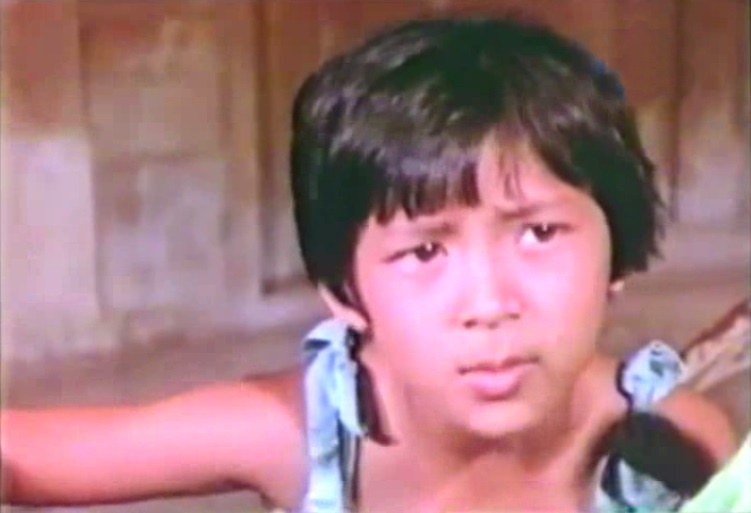
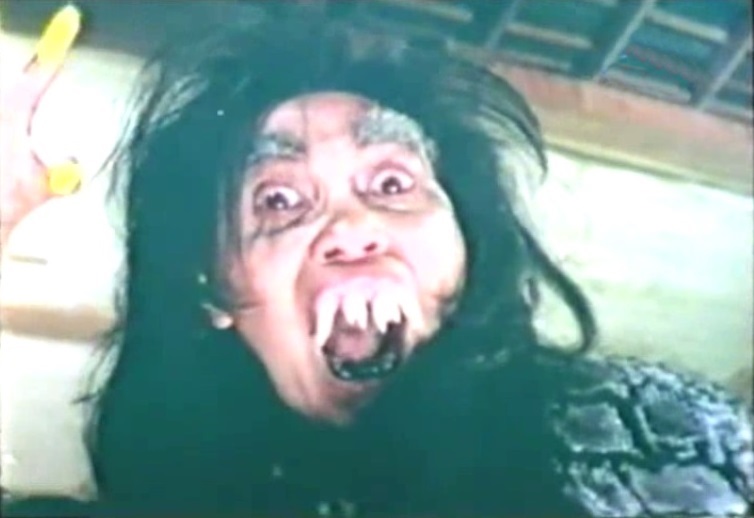
The wonderfully animated Sofia W.D. (who went on to play the Leák Queen in the aforementioned Mystics in Bali and also appeared in the Suzzanna vehicle Queen of Black Magic) stars as an old, ugly Penanggalan named Siluman (a word that translates to “demon”). Siluman is an extremely powerful, entirely evil, cackling, fetus-feasting witch with crazy hair and over-sized plastic fangs. Not only can she detach her head and send it after people (notably pregnant women whose fetuses she sucks directly out of you-know-where), but she can also shoot out her eyeballs to spy on others from afar, make animals do her bidding, disappear and reappear at will and transform into a younger, beautiful woman. The immature and non-religious Ban (Fadly), who lives on a modest, secluded farm with his pregnant wife Karta (Rina “Hassim” / Hasyim) and their young daughter Marni, sets out on foot for the local village to get some food. Siluman, who's been spying on his family and wants their upcoming baby to “be my dessert!” transforms into the lovely young Sumirah (Doris Callebaute). Sumirah calls forth her legion of cobras to attack her so that she can meet Ban when he rescues her.


After laying a sob story on the naive young farmer about how she's been kicked out of her former home, Ban agrees to let her stay in a shack on their property. With a wave of the finger, Sumirah transforms the shack it into a luxurious, fully-furnished home and later turns it into a heated pool and even a disco club! It doesn't take much effort on her part to entrance and then seduce the family man, which leaves his perplexed wife wondering why he's not returning home at night. Sumirah starts out nice, giving Ban medicine for his wife, having sex with him, helping him win money and saving him from thugs who attempt to beat him up, but that soon changes when she starts planting ideas in his head and possesses him. She convinces him that his wife and brother-in-law Mario (El Koesno) are conspiring against him and plotting to poison him. In an enraged trance, he smacks his wife around and tries to stab Mario with a knife, so they cut a chicken's throat and dribble fresh blood into his mouth to break the spell. Things only get worse from there.


Gradually, Ban is transformed into a drunken, wife-and-child beating brute with sometimes green, glowing eyes who pukes up maggots and bloody worms, pushes villagers around and bites off bottle caps with his teeth! When his wife catches him with Sumirah, the two ladies get into a hair-pulling cat fight and Ban ends up taking his new mistress' side. He demands a divorce but his brother-in-law won't hear of it, especially since he and Karta are living on his family's land. After conveniently running into a white-robed shaman who exorcises the demon from within, Ban returns home with a clear head and catches the witch doing a little maintenance on her “pretty” head that was scratched during the fight with the wife. Now wanting to get back on the path of the Lord, Ban seeks out the shaman, who gives him a necklace that he's supposed to hang on his door for seven days and nights to keep the witch away. Unfortunately, Siluman is able to send a raven to remove the necklace, sneaks in, sucks out Karta's fetus and then kidnaps Ban and takes him back to the shack. Having finally gotten her “dessert” why she continues to terrorize the family is pretty much anyone's guess.


The shaman then sends Karta to see a crippled old beggar (“H. Sjamsuddin Sjafei” / Syamsuddin Syafei) who's actually some kind of witch doctor. Before he'll help her, he insists that she first take a bite of his wounded, maggot-infested leg (!!) Why? Well, it comes in handy later on when Siluman scratches her husband's chest and she pukes up green slime that instantly heals the wound. The wife and the beggar / witch doctor manage to chase the witch off, but she has other plans in store for the family. First, she turns Mario's wife (“Waty Siregar” / Emawati Siregur) into a cat and impersonates her. After unsuccessfully attempting to seduce Mario, she transforms back into the ugly witch, shoots him with her fingernails and then turns him into a goat. The beggar and Siluman then square off for the final battle which includes lots of cheap laser effects, fire, nets, a giant butcher knife, hair used as a rope and the witch's fingernails growing about five feet long and catching on fire. With the evil defeated, the shaman shows up to deliver the moral of our story: “If you embrace religion, this kind of thing will not happen again.” Ha!


This horribly edited, ridiculous yet never boring horror-fantasy schlock also features music stolen from numerous other films (including The Omen and The Visitor), tambourine-playing drag queens instigating a fight at a gambling parlor, two men forced to punch each other out because of a spell, sped-up fight sequences, someone really getting bitten by a snake and noodles being turned into worms. Unfortunately, there's also cruelty and death dished out to several animals. In one scene, a poor tailless cat gets snatched up, smacked in the face repeatedly, waved around and then thrown right onto the floor. During another overlong scene, the witch doctor unleashes his mini-army of mongooses onto some cobras, who proceed to chew them to bits. Those scenes are anything but fun to watch and put a damper over what is otherwise a pretty amusing and silly film.


Also in the cast are S. Parya (who also did the special effects), Baun Gazali, Karsiman Gada, artist Bokir and comedic actor Darto Helm (from Tuyul), who is prominently featured on the posters despite only appearing briefly as a drunken gambler. Naturally, this never saw the light of day here in the U.S., nor in most of the rest of the world. It's so obscure it's currently not even listed on IMDb and I could find no DVD, VCD or VHS covers for it. The version I saw was recorded from a broadcast on the Indonesian UHF station Surya Citra Televisi (SCTV) some time in the 90s.

★★
Related Posts Plugin for WordPress, Blogger...