.
.
.
Showing posts with label Suzy Kendall. Show all posts

Tuesday, April 8, 2014

L'uccello dalle piume di cristallo (1970)

... aka: Bird with the Crystal Plumage, The
... aka: Bird with the Glass Feathers
... aka: Gallery Murders, The
... aka: Phantom of Terror, The
... aka: Point of Terror

Directed by:
Dario Argento

After serving as a newspaper columnist, film critic and screenwriter (most notably of spaghetti westerns like the Sergio Leone-directed classic Once Upon a Time in the West [1968]), Argento borrowed around 500,000 dollars from his well-to-do father, film producer Salvatore Argento, to make this: his feature film debut. Bird ended up becoming a huge success; doubling its budget in Italy alone and also doing well in numerous other European countries, which ensured more of the same for the father / son team throughout the decade into the 80s. Bird is also noteworthy as being one of the establishing films in the subgenre of giallo, stylish and violent Italian murder-mysteries heavily influenced by a successful series of German mystery-thrillers called krimi, which were usually based on the writings of Edgar Wallace and themselves heavily influenced by such precursors as Robert Siodmak's The Spiral Staircases (1945), Henri-Georges Clouzot's Les diabloques (1955), Arne Mattsson's MANNEQUIN IN RED (1958) and numerous Alfred Hitchcock films. While Bird had been preceded by well over twenty other Italian films of this same type - most notably Mario Bava's THE GIRL WHO KNEW TOO MUCH (1963) an BLOOD AND BLACK LACE (1964) - its international success helped ensure a massive Bel Paese output of similar films, which had a particularly strong run from 1971 until 1975.


Tony Musante (who passed away late last year) stars as Sam Dalmas, an American writer staying in Rome  who's just finished a book on birds, collected his paycheck and is about to head home to the states. As he's walking home, he passes an art gallery and notices two figures; a woman and a man dressed in a black hat, gloves and raincoat, in the middle of a struggle. The woman - Monica Ranieri (Eva Renzi); co-owner of the gallery along with her husband Alberto (Umberto Raho) - is stabbed, stumbles down the stairs and lies bleeding on the ground. The man in black then runs off. When Sam attempts to rush to her aid, he becomes trapped inside two large glass doors and must wait there until he's able to flag down a pedestrian to phone the police. Inspector Morosini (Enrico Maria Salerno) and the rest of the police show up, Monica survives the attack and is taken to the hospital and Sam is taken to the station for questioning. Morosini promptly takes Sam's passport. You see, he's an important witness, the only witness, so he isn't going anywhere for the time being, especially since whoever attacked Monica may have also been responsible for at least three previous murders. After Sam leaves the station, the same black-clad attacker surprises him on the street; taking a swing at him with a large knife before fleeing into the night.


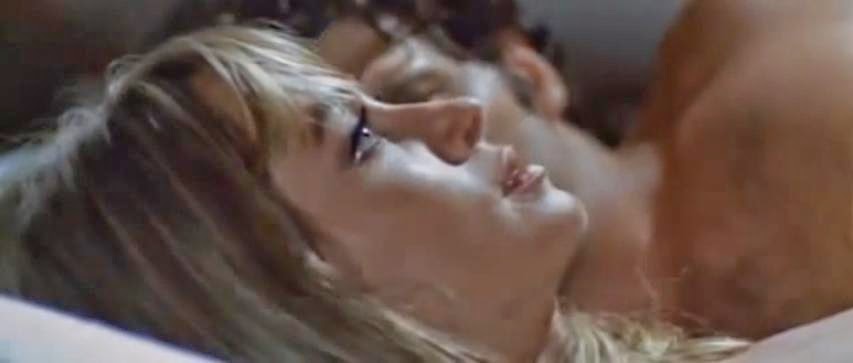


Sam's had quite the day. When he finally makes it back to his apartment, he recounts things for his model girlfriend Julia (British actress Suzy Kendall): "I just witnessed an attempted homicide, was given the third degree by the police, had my passport confiscated so now we can't leave and, uh, just now I had my head nearly decapitated by a meat cleaver. You know, the usual." He will also have quite the mystery on his hands to solve in the upcoming days and it'll need to be solved quickly before he (or Julia) become the latest victims. In the meantime, the killer keeps claiming new victims. Sam's dangerous quest to find out what's going on - which is actually encouraged by the police - leads to a stuttering incarcerated pimp (Gildo Di Marco), a flamboyant antiques dealer (Werner Peters), a yellow jacket wearing assassin (an unbilled Reggie Nalder), a goofy informant (Pino Patti), a reclusive, eccentric, cat-eating (!) artist (Mario Adorf) and others. Everything seems to be tied to a macabre painting depicting a woman being attacked and the killer, disguising their voice, taunts both the police and Sam with frequent threatening phone calls.


Bird is not the sex-and-violence sleaze-fest the later films would soon become. There's very little blood or violence, no sex and only one instance of partially-concealed nudity (a woman in a sheer nightie). In fact, this initially received a GP rating here in the U.S. The good news is that it doesn't need any of that to be perfectly entertaining and the direction and screenplay (which Argento based loosely on Fredric Brown's novel "The Screaming Mimi") are superior to most of what would come later. The actors play off each other well, the characters are enjoyable, the haunting score (composed by Ennio Morricone and conducted by Bruno Nicolai) is superb, there's a sense of humor that doesn't lessen the suspense or creepy moments and both the development of the mystery and the juggling of the red herrings are competently handled. It also manages to avoid crossing over into the realm of the ridiculous like most of the later films. All that said, this is neither inventive (conceptually, stylistically or otherwise) nor original enough to be the genre masterwork some make it out to be. It is simply a solidly-crafted, entertaining and above average film of its type.


The cast also includes "Raf Valenti" / Renato Romano (who appeared in many other gialli), "Rosa Toros" / Rosita Torosh as one of the victims, Fulvio Mingozzi and Giovanni Di Benedetto. The close-ups of the killer's hands are Argento's. UMC released a dubbed version in the U.S. in 1970 and it was later reissued under the title The Phantom of Terror by 21st Century in 1982. In Germany it was called Das Geheimnis der schwarzen Handschuhe ("The Secret of the Black Gloves"). There have been numerous VHS and DVD releases through the years and, in 2008, a Blu-ray from Anchor Bay.


Along with the follow-ups The Cat O' Nine Tails (1971) and FOUR FLIES ON GREY VELVET (1971), Bird comprised what would later be called Argento's "Animal Trilogy." Afterward, he worked on four episodes of the short-lived TV series "La porta sul buio" (filmed in 1971; released in 1973), then achieved even more commercial fame with Deep Red (1975) and Suspiria (1977).

★★★

Sunday, November 6, 2011

I corpi presentano tracce di violenza carnale (1973)

... aka: Bodies Bear Traces of Carnal Violence, The
... aka: Carnal Violence
... aka: Torso
... aka: Torso - Carnal Violence

Directed by:
Sergio Martino


With such good efforts as THE STRANGE VICE OF MRS. WARDH (1971), ALL THE COLORS OF THE DARK (1972) and YOUR VICE IS A LOCKED ROOM AND ONLY I HAVE THE KEY (1972) already behind him, this is something of a disappointment for director Martino. And yet strangely enough, it's probably his most popular horror film; perhaps because it received better circulation than his others over the years (possibly due to the fact it starred then-popular British actress / sex symbol Suzy Kendall), or perhaps because it's more of a standard slasher flick than his previous giallo. Either way, it's nothing to write home about. After appearing in some kind of lesbian porn photography session, one of the stars, university student Florence (Patricia Adiutori), is strangled to death with a red-and-black silk scarf and then gets her torso sliced open. The killer (who wears a ski mask) also slashes her boyfriend's throat and has visions of a child's hand slowly reaching for a doll. Next up is Carol (Cristina Airoldi), the other woman who appeared in the photos and also a student. She accompanies two guys to some kind of hippie-drug party, smokes weed and burns one of the guys with a lit cigarette for feeling her up. Deciding to leave early, she encounters the masked psycho while walking through a muddy forest, who repeats the strangulation / defilement of the corpse routine on her; taking it one step further by poking out her eyeballs with his fingers.


A handful of Flo and Carol's other classmates, all of whom are taking an art course taught by Professor Franz (John Richardson), also become targeted for one reason or another. Daniela (Tina Aumont) remembers seeing someone wearing the same style of scarf that was used to kill the previous two women, but can't quite remember who was wearing it. When the killer catches wind of this, he calls Dani at home and threatens to kill her. Immediately after, her uncle (Carlo Alighiero) flatly states, "Try and control yourself my dear. Find some way of getting your mind off it all." Hey pops, just seconds ago a psycho who has just murdered two of my friends revealed that he knows who I am, knows where I live and has just told me that I'm next... Calm down, my ass! Her uncle suggests she split town for awhile and go to their isolated villa; a huge and hard-to-access mansion located on top of a mountain overlooking a small village. Just the kind of place you want to be when there's a nutjob stalking you, right? Daniela invites three of her girlfriends; American transfer student Jane (Kendall) and lesbians Katia (Angela Covello) and Ursula (Carla Brait), to accompany her. Soon after they leave, the vendor (Ernesto Colli) who sold the killer his scarves has his head smashed again the side of a building by a car. It's the killer trying to cover his tracks, and now the last track he has to cover is Daniela.


Nearly all of the leering male characters from the city, whom the director has tried to set up as possible suspects at various points in the film, show up in the village to reaffirm their status as red herrings. The primary two are Roberto (Luc Merenda), a handsome doctor spotted both around town and on the girls' train trip over to the village, and Stefano (Roberto Bisacco), a student. The director really tries to shine the spotlight on Stefano's weirdness in particular. He's frequently seen sitting in his car staring at the girls, is obsessively in love with Daniela (who wants nothing to do with him) and can't perform for a prostitute so he starts strangling her after she suggests popping in a Swedish porno to help him along. Stefano is painted as so weird throughout that you pretty much know it's not him doing the actual killings. Martino does what most other filmmakers in this style do by randomly pulling the psycho out of the giallo playbook i.e. making it a seemingly incidental side character with minimal screen time until the big 'reveal.' Said reveal actually doesn't have any kind of and giving them a silly motive stretching back to a traumatic moment in their youth.


Aside from many beautiful actresses on hand and an abundance of nudity (though top-billed Kendall and Aumont get to leave their clothes on), the best moments here occur about thirty minutes before the actual finale. Our heroine Jane, who has injured her leg after falling down the stairs, finds herself alone in the villa with the killer. The catch is that the killer doesn't know she's there. While hiding just feet from the corpses of her friends, Jane has to watch as each gets dismembered with a hacksaw. She then goes upstairs, tries to quickly and quietly make it look like her room hasn't been used and finds herself getting locked inside the room. But never fear, town gossip leads the killer back to the villa to try to cover his tracks... once again. These scenes are fairly suspenseful and well-done but they aren't enough to make up for the rest, which is pretty lackluster in both story and style. The last ten or so minutes pretty much suck, too.


I often see Torso cited as being a chief influence on the late 70s / early 80s slasher movie cycle, and find that a bit of an exaggeration. As a singular entity, it's no more influential than most in its sub-category. And it certainly didn't have the impact of films such as BAY OF BLOOD (1971), BLACK CHRISTMAS (1974) or The Texas Chainsaw Massacre (1974).

★★

Monday, November 3, 2008

Circus of Fear (1966)

...aka: Circus of Terror
...aka: Psycho-Circus
...aka: Rätsel des silbernen Dreieck, Das
...aka: Scotland Yard auf heißer Spur

Directed by:
John Llewellyn Moxey

If you can make it past the shaky, badly edited opening sequence featuring a slew of criminals robbing an armored truck of a quarter of a million pounds and then escaping in a speedboat, then you may enjoy the rest of this Edgar Wallace adaptation (it does pick up soon after). Cranky Sir John (Cecil Parker) sends police Inspector Elliot (Leo Genn) undercover as a professional photographer to investigate a string of murders at "Barberini's Circus." Among the suspects are Christopher Lee as Gregor the Great, a hooded lion tamer who never shows his face, Suzy Kendall as his faithful assistant, Anthony Newlands as the cigar-chomping owner, Heinz Drache as the ringmaster, Maurice Kaufman as a bad-tempered knife-thrower with an unfaithful girlfriend (played by Margaret Lee), Skip Martin as a sneaky, blackmailing dwarf, Eddi Arent (once again used as comic relief) as the prank-playing book keeper and many more. Klaus Kinski (one of the robbers from the opening sequence) also shows up acting weird and 'looking for work' (actually the loot that was stolen at the beginning). Victims end up with knives in their backs, some find the missing money and hide it and there are enough assorted secret agendas, double crosses, back-stabbings, blackmailing, jealousies and rampant criminal activity to keep this interesting enough. It was filmed at Bray Studios in England and features a pretty good blues score from Johnny Douglas.
.
A terrible print of the film became a fixture on all those cheap, public domain DVD multi-packs (distributed by companies like Alpha and Brentwood), but Blue Underground eventually released a better quality copy of the film. It was also part of the four film box set "The Christopher Lee Collection."

Score: 5 out of 10
Related Posts Plugin for WordPress, Blogger...