... aka: Fish with the Eyes of Gold, The
... aka: Fish with the Golden Eyes, The
Directed by:
Pedro L. Ramírez
The name Waldemar Wohlfahrt may not mean much to you (it didn't to me either prior to viewing this), but this flash-in-the-pan minor 60s / 70s celebrity has an interesting story that's worth telling. Long story short, in 1966, the blonde-haired, blue-eyed German-born playboy from Stuttgart found himself accused of being a serial killer targeting young ladies along the Autobahn! As for hard evidence that implicated him, well, it basically boiled down to his love of travel (he divided his time between Germany and Spain) and the fact he happened to own a red Mercedes sports car. And that's about it! Wohlfahrt ended up getting arrested and was slandered mercilessly by the tabloid press, whom he later successfully sued after it turned out he wasn't even in the same country at the time of one of the murders. I'm not sure if the real killer was ever apprehended or not, but Wohlfahrt decided to parlay his press notoriety into a show business career. He first released an unsuccessful album, posing on the cover with his red sports car and using the name "Waldemar the Vampire" (!)
While he made mention in the press that he'd also been eyeing an acting career and stated he'd love to play a 007-style secret agent, there would be no James Bond level films for Wohlfahrt but instead stuff like The Horrible Sexy Vampire, The Lustful Amazons and Virgin Killer. But them's the breaks, especially when you're not much of an actor to begin with. His film debut, which he himself financed with his lawsuit earnings, was the 1969 sleaze-horror film El vampiro de la autopista; a title directly alluding to the Autobahn serial killer the Spanish press had once insisted was him. The film, which wouldn't be released until two years after it was shot, had absolutely nothing to do with the killer nor the star's life. The Spanish murder-mystery El pez de los ojos de oro on the other hand does actually seem to be sometimes commenting about Wohlfahrt's celebrity and contains a few direct references.


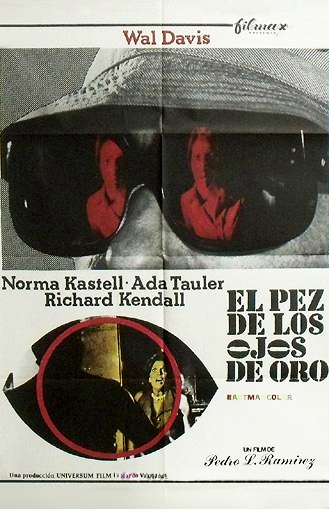
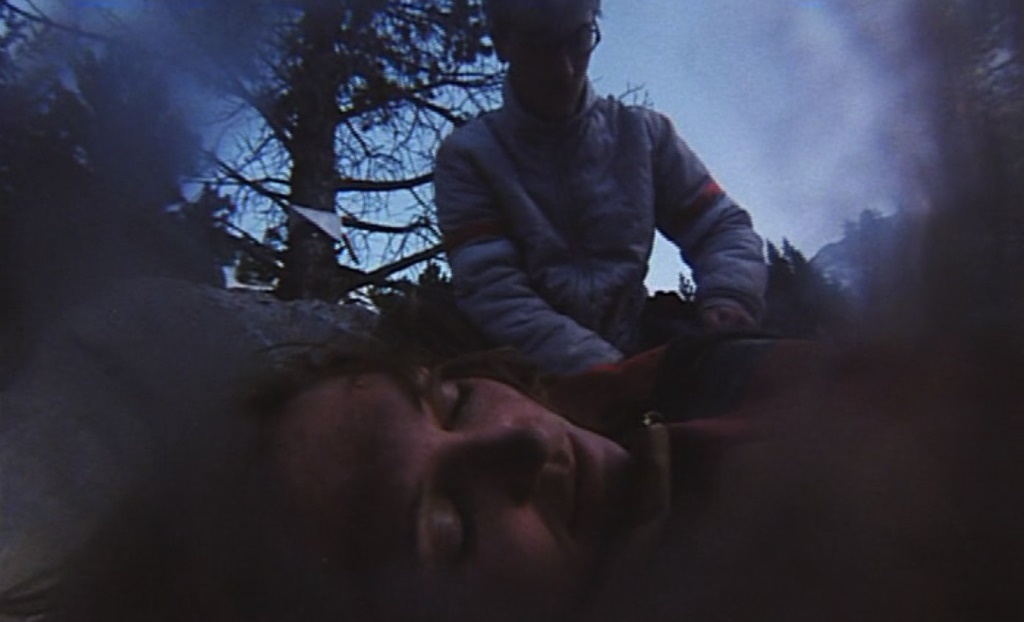
Wohlfahrt (billed as "Wal Davis") stars as a bellbottomed "Englishman" record store employee named Derek, who's hitchhiking through Spain on his way to visit a couple of friends for the holidays. As he's standing on the street trying to thumb a ride, he spots Mónica (Montserrat Prous) and Marco (Rex Martín) having a heated argument. She immediately jumps into her red convertible, spots Derek, picks him up and takes him back to her apartment for an off-screen revenge fuck. Later that night, Derek awakens to find her bloody corpse lying in bed next to him. She'd been stabbed to death and the killer has been kind enough to leave the murder weapon lying right on the floor. After touching her body, thumbing through her purse and doing everything else to ensure his fingerprints are all over the place, Derek then flees in the woman's car.
Instead of going straight to the police, Derek goes to visit his friends, artist Zachary Kendall ("Richard Kendall" / Ricardo Vázquez) and his sculptress wife Virginia (Norma Kastel). There, he learns there's a serial killer on the loose in the area. In fact, Zachary himself had previously witnessed the scuba gear-clad killer stab Belgian tourist Hildegard Aaron (Susana Taber) to death on an inlet. He also has visions of a child seeing their father stab the mother to death as a fishbowl gets knocked over. It's likely no coincidence then that the killer seems to be set off by images of fish. The Belgian girl had been killed while lounging on a fish beach towel, while Mónica was wearing a fish necklace when she was murdered. The killer had even stolen the pendant after killing her.


Zachary and Derek decide to go to a police commissioner (Barta Barri) to report their experiences and are shocked to find themselves the two key suspects in the killings. I mean, that's pretty understandable though, right? One claims to have directly witnessed a killing and the other had somehow managed to sleep right through a murder being committed right next to him and it's all just an "odd coincidence." The inspector obviously isn't buying it. The fishiness (har har) continues with the introduction of Marina (Adela Tauler), who's a student studying under Zachary and the daughter of the ultra-strict Pedro (Víctor Israel), who happens to run an aquarium. While Marina fancies a job as an artist, her demanding father is always nagging her to feed the fish. He also talks to the fish and claims they're his loyal friends. Despite Marina being an adult, Pedro tries to forbid her from dating, so he's none too thrilled to find out that his daughter has recently started seeing Derek.

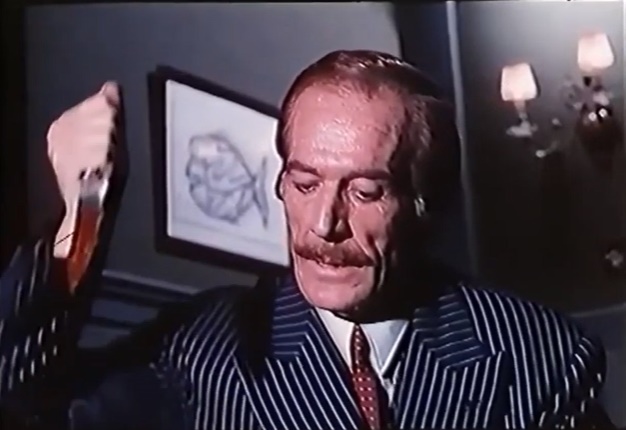


It's revealed that the neglected Virginia is having an affair with sleazy gigolo and con artist Marco and is currently working on a fish sculpture herself. She claims to have gotten the design from somewhere else, perhaps from a local goldsmith named Miguel Toledo (Gustavo Re) who is, in turn, making golden-eye fish pendant necklaces like the one Mónica was wearing. However, he hasn't put them up for sale yet and had only given one to Marco to give to Mónica as a gift. The investigation turns up that Marco has been sexually involved with not only all of the victims thus far but also at least one of the suspects. That man really gets around. However, he's soon strangled to death so that checks him off the list. Meanwhile, Zachary starts his own affair with Nurse Tessi (María Elena Arpón) and she moves into his home. A few more murders follow.


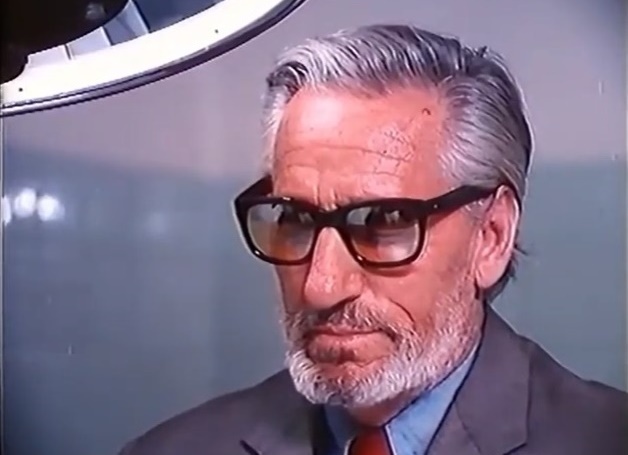


Sleep with the fishes you cheap, bland, subpar film! This is talky and tame, with zero suspense, a poorly structured and surprise-free mystery, annoying cheat scenes, comically bad dialogue, horrible editing and mostly bad acting. There's also a curious lack of exploitative elements. Most of the kills are bloodless and there's no nudity in the 80 minute version I watched despite there being ample opportunity for such and a cast of performers who were certainly not shy in most of the other films they appeared in. One random bird who has nothing at all to do with the plot is even introduced just long enough to be stabbed to death in the shower, yet they show nothing. However, the hatchet job editing indicates the version currently floating around has been cut and is likely derived from a heavily-censored, Franco-approved Spanish release. That said, I could find no evidence this was ever released outside of Spain so a "continental" version may no longer even exist.
As for ole Waldemar, he's strictly of the deer-in-headlights school of emoting, though his hilariously unsubtle facial expressions at least elicit a few laughs. Tauler, who plays his romantic interest, was also his real-life girlfriend (eventually wife). The two appeared in no less than seven films together and she even wrote a vehicle just for him to star in. Co-star Ricardo Vázquez was also the executive producer and one Ricardo Vázquez Jr. is listed as being the assistant director. The director only made on other genre film: the mediocre though slightly better SCHOOL OF DEATH (1975).
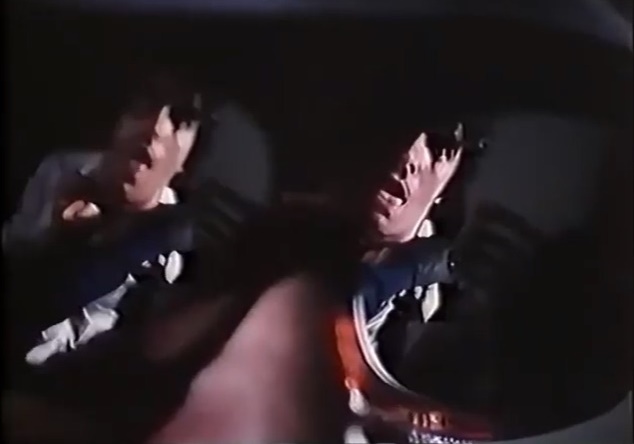


The only legitimate home video release I'm aware of was a 1984 Spanish VHS release on the Videotel label, which uses a drawing of a screaming Carroll Baker stolen from the Spanish poster for Detrás del silencio / Knife of Ice (1972) for the box. Some bootleg dealers now carry it on DVD though the same exact VHS print is used for all of these as no official or restored version of the film has ever been released.
Edit: Since I've reviewed this, there's been a new Blu-ray release for this title from Vinegar Syndrome, as part of their "Spanish Blood Bath" set. It's paired with Jess Franco's NIGHT OF THE SKULL (1974) and Jorge Grau's Violent Blood Bath (1974), and the full running time is 84 minutes.
★1/2