.
.
.
Showing posts with label hippie cult. Show all posts

Monday, July 7, 2014

Avere vent'anni (1978)

... aka: Being Twenty
... aka: To Be Twenty
... aka: Twenty Years Old

Directed by:
Fernando Di Leo

"I was 20. No one can ever tell me it was the best time of our lives." ~ Paul Nizan, French philosopher and writer

I sought this out because for a long time it was listed as a horror film on IMDb. It's really not, but does boast a super shocker of an ending right out of Last House on the Left, so I guess in that regard it qualifies. In either case, this is much better than the other films I've seen from director Di Leo, who also made the senseless sexed-up giallo SLAUGHTER HOTEL (1971) with Klaus Kinski and Rosalba Neri and the Last House-inspired 'terror' flick VACATION FOR A MASSACRE (1980) with Joe Dallesandro. Doe-eyed, pouty blonde Lia (Gloria Guida) meets hot blooded brunette Tina (Lilli Carati) on the beach and the two instantly hit it off. After all, they're both young, hot and pissed off... and neither has any clue what to do with themselves. Both girls are like many other young adults their age; first and foremost, life is about having fun. They're rebellious, carefree, aimless and not quite ready to completely grow up yet. They are, however, both fully aware of their attractiveness and know just how to use it to get their way. Clad in short shorts and flimsy tops minus a bra and without a dime to their name, the two young ladies hit the road looking for a lift. They pass on a ride and money from a moralizing lesbian in a sports car who tells them that "whores have more tact" than they do. Hungry, they decide to shoplift dinner from a supermarket. They also use their feminine wiles to get free coffee and offer an old man a blow job for a pack of Marlboro's. With the price of cigarettes these days, that's a bargain.


Lia knows of a group living commune called Piazza Dante where they can stay for awhile. An old lady tells them it's full of "queers, whores and druggies," but that does not deter them. Upon arriving, they meet the commune's owner Nazariota (Vittorio Caprioli), who's broke and wants the girls to pay their due by "communicating" with the men there. Tina is just fine with that arrangement. Unfortunately, most of the men there stink and stay zonked out most of the time from all the drugs they do. One tells her "Sex is for people who don't know how to love." Tina eventually finds a guy she's interested in; Rico (Ray Lovelock), who's also a druggie and drop out but more her type so she's willing to work with him. Also living there are Patrizia (Lucio Fulci regular Daniela Doria), a short-haired feminist mother of triplets, and Arguinas (Leopoldo Mastelloni), a pacifist in white face paint who supposedly hasn't moved from his meditative position in three months and keeps talking about the "Celestial Father." Though these people seem strange at first, you actually begin to sort of like them, especially when the police start hassling the group.


A documentary filmmaker shows up wanting to make "an analytical film on human relationships" and interviews the girls. Tina reveals that all her parents cared about was money and her maintaining her virginity until marriage, so she rebelled. Lia - who's quieter and more introspective than her outspoken friend - was raised in an orphanage run by unloving nuns and then was forced to become a housekeeper whose spinster boss made her have sex with her. The girls attempt to go straight by becoming door-to-door encyclopedia salesladies, which leads to numerous encounters with more colorful and / or lonely people. Tina starts masturbating for a professor and acts aroused when he mentions the world "culture" just to move some books, Lia turns down the advances of a rich lesbian when she tries to pay her for sex and both ladies decide to cheer up a lonely old widower the best way they know how. All things considered, things seem to be going alright... until police raid the commune and the two girls are ordered to leave Rome. If they don't return to their home towns by midnight the following day, they'll be put in jail.


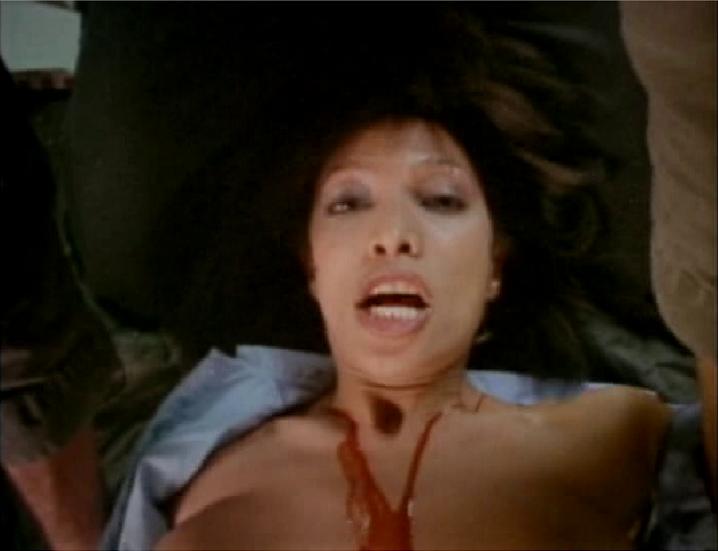
Having no other real choice, Lia and Tina then hit the road and stop by a country restaurant for a bite to eat. There, they suggestively dance to some music from a jukebox... and inadvertently attract the attention of a dozen dangerous goons in the process. Everything leads up to a truly shocking finale telling the grim fate of the two girls, which is made all the more jarring because up until then we've just been following along with their (mostly) harmless and sometimes comical misadventures. Oddly, the much-lower-budgeted and less skillfully made American production The Young Cycle Girls (1978) from the same year also featured young women on the road trying to learn about life and love and all that and opted for the same style of ending. One wonders what the "message" of these two films may be. Is it that women should be punished for being independent, strong-willed or liberated, or is it that many men really, really resent women who are independent, strong-willed and liberated? Either way, the girls in both films pay the ultimate price in their quest for self-discovery at the hands of men who don't like their "teasing."


Guida and Carati were both mainstays of 70s and 80s soft-core and exploitation flicks and amassed dozens of credits apiece. Both look great in and out of their skimpy clothes and are featured in a number of sexy scenes (including a mild lesbian one with each other), but this movie goes beyond your usual sex flick. With its strong counter-culture youth rebellion mindset, I can even dub it 'The 'Smells Like Teen Spirit' of 70s sexploitation' whilst almost keeping a straight face. Most of the sex and nude scenes are at least plausibly worked in to the plot, there's a lot of sociopolitical commentary, name dropping of various famous politicians, philosophers and artists and much mention of the gender gap and the war of the sexes. At one point, three women even read from Valerie Solanas' deranged feminist ranting, "Scum Manifesto." The free-spirited weirdos, pacifists, whores, artists, runaways and druggies at the commune are portrayed as dancing to the beat of their own drummer only to have their party crashed by figures of authority (the police) and power (the gang). There's enough here for this to work on multiple levels, and with perhaps even multiple interpretations depending on the viewer.


Avere vent'anni first saw light on home video in the U.S. on the Private Screenings label; an outfit that specialized in erotica but most especially in imported Euro smut. Their release of the film (under the title To Be Twenty) is, as per their usual, cut, has terrible English-language dubbing, features a model on the box who is not in the film and has a new music score. In 2011, Raro Video released a decent 2 disc version of the film containing both the cut and uncut versions and in its original Italian language with English sub options.

★★★

Wednesday, March 19, 2014

Terror on the Beach (1973) (TV)

Directed by:
Paul Wendkos

It's been a trying year for the Glynn family, so dad Neil (Dennis Weaver) organizes an end-of-the-summer family trip for his wife Arlene (Estelle Parsons) and two college-aged kids, DeeDee (Susan Dey) and Steve (Kristoffer Tabori). They hit the road in their yellow Open Road camper van on the way to the secluded "Dune Beach" for a weekend of camping, fishing, clam digging and some much-needed family bonding. Like with most other families, some deep-seeded issues and inter-generational conflicts arise that needed worked out. Steve has just completed his first year of college but wants to drop out, much to the horror of his father. Neil has been working so hard he's been neglecting Arlene and she perhaps needs more attention than ever because both of her kids are now out of the house and she has no clue what to do with herself. And DeeDee, who's resigned herself to the role of playing peacekeeper and adopted a goody goody routine around her folks, has had a taste of women's lib in school so now she has a hard time relating to her homemaker mother. It seems everyone's been fighting and arguing a lot recently and Neil's hoping the trip will be a good chance for the family to reset and get their bearings. But like they always say, there's nothing like clashing with a group of desert-dwelling psychos to bring a family closer together. Just ask the Carter family from The Hills Have Eyes.


Before they even reach the beach, the Glynn clan have two run-ins with a strange group of aimless, obnoxious hippies whose mode of transport are some dune buggies and a vintage fire engine. They first run them right off the road and then fool them into thinking they're broken down just to annoy them. Steve wants to go to the police immediately, but Neil (who the thugs dub "Mr. White Bread") suggests they just ignore them and go about their business. After the family arrive at the beach, things quickly begin to escalate. The hippies crash their dinner and eat their food, destroy their campsite, ogle DeeDee in her bikini and scare Neil by dressing a mannequin in his daughter's clothes and lying it face down in the water. By the time Neil finally decides to pack up and get the family out of there, they discover the radiator cap from the camper has been stolen so they can't go anywhere. The goons then proceed to terrorize them all night long into the next day; blasting wild animals sounds using radio equipment, hiding a microphone and playing back their personal conversations, tipping over the van with them in it and chasing them around the dunes with their buggies trying to run them over. Neil finally must confront the gang face-to-face in order to protect his family.


Terror on the Beach is one of many films from the decade with an "It's either you or them" mantra and featuring a mild-mannered "normal" pacifist driven to violence out of sheer necessity to protect himself, his loved ones and / or his way of life. These kind of movies; spearheaded by the success of such films as Straw Dogs (1971) and Deliverance (1972), were extremely popular at the time. Beach also brings in another popular 70s theme: the violent hippie cult; something else common in this post-Manson family era. Minus the cannibalism and gore, this is actually extremely similar to the aforementioned The Hills Have Eyes, with a vacationing middle class family being terrorized in a dusty, desert area and having to become the aggressors in order to survive. Because it was a made-for-TV movie, the thrills are tame, the bad guys don't seem as threatening and it doesn't have the luxury of graphic violence for impact like many of the theatrical releases. Nevertheless, the film manages to say what it wants to say and do so in an intelligent yet far less exploitative manner since it depends largely on its cast and a multi-layered and thoughtful script by Bill Svanoe.


Unfairly demonizing the generally peaceful youth counterculture (who were given quite the bad rap by Manson and company) was a trap many of these films fell into and this likewise presents the 'bad guys' in a one-dimensional fashion and refuses to characterize any of them. However, this is effectively counteracted by giving the children - not their parents - the upper hand in dealing with the hippies. They are, after all, still within the same peer group, so it makes perfect sense. Steve wants to go to the police before things get out of hand, and he's right. They should have and would have if not for Neil's outmoded way of dealing with matters. When the hippies manage to get the mom and daughter alone, it's actually the daughter who knows how to calmly and effectively handle the situation so it doesn't get out of hand, not her flustered mother. It's also worth noting that it's an act of undeserved compassion on DeeDee's part that ultimately saves her family, not the violent retribution of her father. The film allows both kids the opportunity to be defiant of the ideals and expectations of the past generation, but in a non-violent and positive way, and is uncommonly well-rounded in exploring its subject matter, which elevates it above many similar tales. The shooting locations (California's Pismo Beach) are very nice as well, and the cinematography is above par for a 70s TV movie.


The cast includes Scott Hylands (who also did a great job playing psycho in the vastly underrated DADDY'S GONE A-HUNTING [1969]) as the sociopath hippie ringleader Jerry, Michael Christian (who went on to play the title role in the exploitation favorite Poor Pretty Eddie [1975]), drive-in movie goddess Roberta Collins (who's completely wasted here as one of the hippie chicks), Jacqueline Giroux (ditto) and 80s women-in-prison staple Carole Ita White (also of TV's "Laverne and Shirley"). This CBS TV Movie of the Week has never officially been on VHS or DVD, though there are black market copies available and it turns up on the Fox Movie Channel on occasion.

★★★

Wednesday, June 27, 2012

Igor and the Lunatics (1985)

... aka: Bloodshed

Directed by:
Thomas Doran
Brendan Faulkner
Billy Parolini

There's a good reason this doesn't make much sense: It was filmed over the course of several years by three different directors. Apparently the bulk of the film was made by Billy Parolini, who either didn't finish it or didn't make it exciting enough. Executive producers Lloyd Kaufman and Michael Herz had Thomas Doran and Brendan Faulkner, who are credited with "directing the horror, action and suspense sequences," added new footage at a later junction. It starts with a scene set in the 1960s, jumps to present day, zips back to the 1960s, jumps ahead to 1983 and then finally catches back up to present day once again. You got that? Flashback, flash-forward, flashback, another flashback set 20 years later, back to present day. That several of the actors look identical in present day to how they looked in the 1960s footage causes some confusion but not as much as character names changing from scene to scene. Despite the title, no one is named "Igor," though the end credits have someone listed as playing "Ygor." The cult guru is named "Paul" and his maniacal right-hand-man is named "Byron." At the very end, they specify the latter's name as being "Paul Byron." Madness! But I guess "Paul and Lunatics" just doesn't have the same ring to it.


Things begin in present day with a guy named Tom Turner (Joseph Eero), who grabs a gun from the night stand and sneaks out of his home. He's left behind a note and a diary for his female friend Mary Ann Pierson (Mary Ann Schacht) to read that will explain things. Back in the early 60s, a bunch of brainwashed hippies led by Manson-like guru Paul (T.J. "Michaels" / Glenn) have relocated from a NYC tenement building to the country. Tom was reluctantly and briefly involved in the cult, but managed to get out just in time. One girl wasn't so lucky. After trying to flee, she's captured by Paul and two of his men. She calls them "impotent scum!" so they rip her top open, tie her down and then slice her in half long-ways using a table saw. The cult's days of free love, hallucinogenic drugs and murder are short-lived however after most are apprehended during a police raid. Sharon (Joan Ellen Delaney) was forced to leave her baby (fathered by Tom) behind in the woods. An Indian man named Hawk (Peter Dain) finds the baby and decides to raise it on his own.


Flash-forward to 1983, and a still stark raving mad Paul is finally being set free from prison. He's immediately picked up by Byron and Bernard, two former cult members who are still up to their old tricks. Right away, they pick up a hitchhiker, rip her top off and then slice her open with a scalpel. Byron then removes a few of her ribs then yanks out her heart while laughing maniacally. Tom returns to town after all those years to do some kind of conference and goes on the evening news to denounce the existence of cults. He bumps into Sharon, who's working as a prostitute, and asks about the baby. She tells him she'll get ahold of him later, but doesn't get the chance after Paul sneaks into her apartment and rips her head open with his bare hands. To get Tom to back off, Paul sends him an audio recording of the murder. Meanwhile, Mary Ann gets herself involved by going to a backwoods cabin the cult used to live in. When she returns to her apartment, a teenage boy has broken in. She chases him outside and he breaks his ankle, then asks her to go find his guardian, Hawk. It's Tom's long lost son.


Mary Ann's friend, who starts out being named Lucille then suddenly becomes Colette, goes out in the woods to paint and gets stabbed with an ice pick and then chopped up with a machete by Paul and his followers. Mary Ann goes to the police for help but they ignore her. She's luckily bumps into Tom and the two set out to find the teen boy and the cult. Meanwhile, the cult slash a little boy's throat, beat a guy's head in with a rock and kill a couple of cops. Things end with a clash in a barn, with Paul and Byron sneaking in and trying to make mince meat of Mary Ann, Tom, Tom's son and Hawk. Someone is hacked in the head with a machete, another is stabbed with a pitchfork and lifted off the ground and someone is shot with an arrow. Only a few manage to survive the night and there's a ridiculous twist at the very end. Too bad we never got the sequel: "Igor the Habachi Chef."


The acting is pretty bad, it's confusing and the continuity problems and editing are horrendous to put it mildly. The lengthy table saw death is repeated three different times; twice in its entirety. The only thing even remotely memorable about this one is the ridiculously over-the-top (and highly annoying) performance of Niola. I'd like the learn more about the production history of this one, though. According to the snippet below (taken from a mid-80s edition of Rick Sullivan's Gore Gazette), it was filmed in 1983 under the title Bloodshed and was released theatrically under the Igor title.


Doran and Faulkner also made SPOOKIES (1986), another troubled production which was taken from the directors, recut and had new scenes added.

★
Related Posts Plugin for WordPress, Blogger...