... aka: Ertesi Gün-2 (Next Day 2)
... aka: Ipotesi sopravvivenza (Survival Hypothesis)
... aka: Threads by Barry Hines
... aka: Threads - Tag Null (Threads: Day Zero)
Directed by:
Mick Jackson
"In an urban society, everything connects. Each person's needs are fed by the skills of many others. Our lives are woven together in a fabric, but the connections that make it strong also make it vulnerable."
It's pretty interesting how nuclear technology (and the very real threat of nuclear war) has informed certain eras of genre cinema. Hell, we have hundreds of sci-fi / horror movies from the 1950s alone as a result. It's impossible to say just how many films since have involved atomic bombs, nuclear weapons, nuclear waste and / or nuclear radiation, but the numbers are pretty staggering. In the early 80s, international tensions and nuclear threats were on the rise again, and a handful of filmmakers decided that they wanted to say something about it, resulting in three major 'nuclear' films produced around the same time.
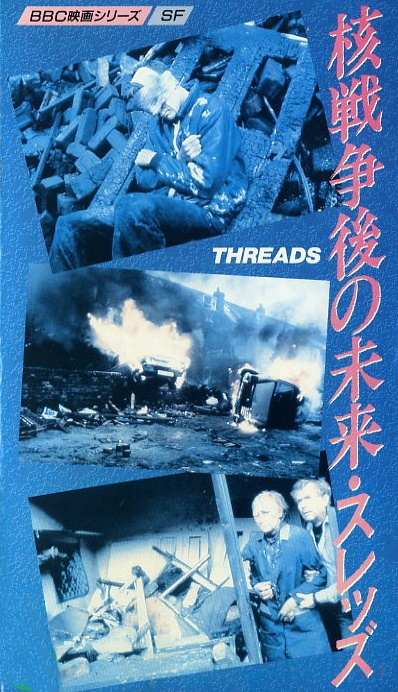
The first and most famous of these was the made-for-ABC-TV movie The Day After (1983) from director Nicholas Meyer. It set its action in Lawrence, Kansas, was heavily-promoted, widely-viewed here in America by over 100 million people when first broadcast (and still holds the record for most-watched TV movie ever) and ended up winning several Emmy Awards. The second film was the somber, quiet and extremely depressing Testament (1983), which centered primarily around the effects of nuclear fallout on a small town and presented the material in a more low-key fashion with no action, violence or special effects. Star Jane Alexander was rightfully awarded with an Oscar nomination for her performance. The third and final film was Threads (1984), which was written by Barry Hines and co-produced by the BBC (UK), Western World Television (USA) and the Nine Network (Australia). It went more the Day After route, but with even more graphic depictions of the wide-scale devastating effect of nuclear war. It's also by far the best and most potent of the three films.


Threads really puts into question what should and should not be considered a horror film. It's debatable either way and I fully understand where both sides are coming from. What tips the scale for me personally is evaluating a film's intent. Why exactly was it made? First, I'd say to be informative. Albeit sometimes speculative, it's clearly very well-researched per the information available at the time, with about as many doctors and scientists listed as program advisors in the end credits as there are actual crew members. It's also expansive in scope. Things begin months before the bombs are dropped and then we're shown how things pan out over the course of thirteen long years. Nearly every possible aspect and angle is covered. This goes beyond the immediate death and destruction caused by the blasts; touching upon future health, societal, psychological, physiological, agricultural, political and environmental concerns that many similar films neglect. But when all is said and done, this was made to scare the hell out of its audience to function as a rallying cry against nuclear armament, utilizing horror imagery to drive its message home.

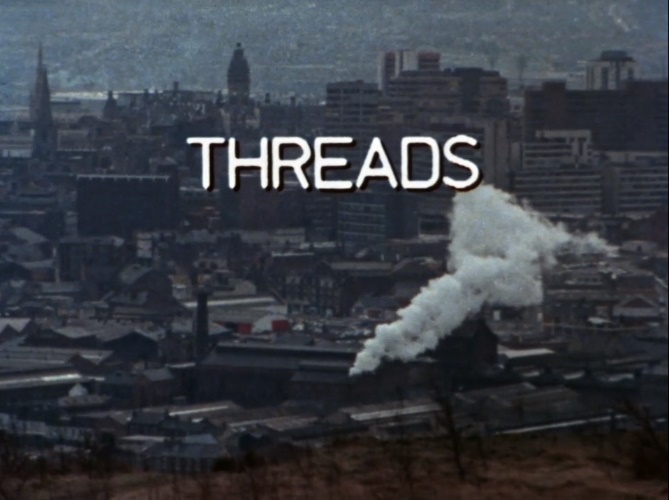
In Sheffield, the fourth largest city in Britain, we're introduced to two average working-class families. Teenage daughter Ruth Beckett (Karen Meagher) has just found out she's unexpectedly pregnant by her boyfriend, Jimmy Kemp (Reece Dinsdale). The two decide to fast track marriage and moving in together, Ruth's parents (Henry Moxon, June Broughton) meet Jimmy's parents (David Brierly, Rita May) and the cycle of life and love play out as the young couple prepare for their future together. All this normality is undercut by international tensions; various countries (primarily the U.S. and the Soviet Union) are at each other's throats and a full-scale nuclear war appears to be on the horizon.


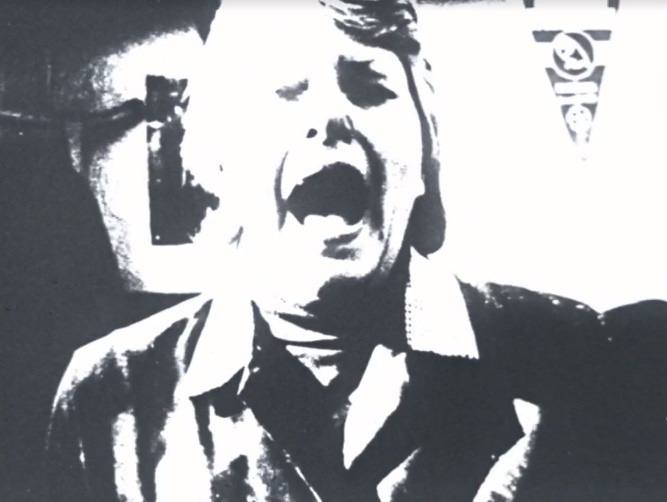
TV programs and newspapers attempt to keep the public informed, fighter jets regularly fly overhead and anti-war protesters fill the streets. As the threat seems like it will become a reality, the government half-heartedly advises the public on what to do, but how can one really prepare for something like this? Some citizens attempt to flee to the country, others stay and barricade their homes and all of the local stores are flooded with people, resulting in massive food, water, fuel and resource shortages. And then numerous bombs are dropped on Sheffield. Those not immediately killed by the explosions then have to face a whole host of other problems in a grim, bleak new world.



Neighborhoods are reduced to rubble, modern conveniences are a thing of the past, rats and stray dogs crawl around feasting on the charred, smoking corpses littering the streets and hospitals are packed with sick, injured, deranged and / or dying people without the resources to really help any of them. Nearly everyone is weak and hungry from lack of food, or radiation sickness from all the fallout. Dust lifted into the sky causes a constant overcast sky and temperatures to drop to freezing, claiming the lives of the very young, the very old and those already sick or injured.
Those who've lived past this point must simply fight for their own survival. Money means nothing. Food is everything. Most must become thieves and criminals. Primitivism is the norm. The best the government can do is post armed military men around to guard dwindling food stocks and divvy out resources to those willing (or able) to work, and taking it upon themselves to execute the looters or put them in detention camps. As for those unable to work, they're allowed a ration of food so small it can't possibly sustain their lives.


After the build up to and immediate aftermath of the nuclear holocaust, the events then begin to focus on the pregnant Ruth. With her boyfriend and family dead, she's reduced to stealing, gnawing on raw dead sheep meat, pimping herself out for dead rats and slaving away doing field labor for diminishing returns in order to carry her pregnancy and then raise her daughter (Victoria O'Keefe), who's born with clear developmental issues.
What's obvious from the outset is that the filmmakers are forced into a potentially hazardous place themselves due to budgetary restraints, which force them to employ cost-cutting measures at every possible turn. The material is presented as a partial documentary with both narration and text scrolls pointing out various facts and concerns. It also relies heavily on both stock footage and black-and-white stills. Given the motley narrative structure and visual presentation, it's quite remarkable just how well they managed to pull it all together. The grimy production design of filth and decay is very well-done, the extremely grainy photography is a major plus and the film is well-cast with talented yet little-known actors (lead Meagher is especially impressive) that don't inhibit the film's realism in the slightest.


Director Jackson eventually ended up in Hollywood where he'd direct big budget films like the Whitney Houston vehicle The Bodyguard (1992) and the corny disaster movie Volcano (1997) but he'd do much better on the small screen and win numerous awards for his work.
In the UK, Threads debuted September 1984 on BBC Two to high ratings. It was nominated for seven BAFTA Awards (winning four, including Best Single Drama) and was also well-serviced on home video and DVD there. Here in the U.S., it premiered on the TBS cable channel January 1985 (with a personal introduction by Ted Turner) and then was occasionally shown on PBS. It made its VHS debut through World Video in 1985 and laid dormant for awhile until renewed interest in the film prompted DVD and Blu-ray releases by Severin in 2018. The film has rocketed in popularity in recent years. On one hand that's nice to see because it's deserving of a large audience. On the other it's not considering said interest is largely due to renewed nuclear threats.
★★★★