.
.
.

Monday, September 7, 2020

Nightmare at Elm Manor (1961)

... aka: Flesh and Fantasie
... aka: Nude in Dracula's Castle

Directed by:
Harrison Marks (uncredited)

After a failed career as part of a music hall comedy duo, director Marks started work as a photographer. In the early 50s he was supplying photographs to publishers on a freelance basis but eventually opened his own studio in Soho. It was there that he formed his company Kamera and became one of the UK's top glamour photographers. And by “glamour,” I mean nude. His company produced their own magazines (the primary one was called Kamera but there were off-shoots like Solo), calendars, cards, photography books and more. In 1960, he branched out further and started making “nudie-cutie” shorts that were distributed on 8mm by the company's new label, Kamera Cine Films. Most of theses were simple little shorts with a little harmless T&A but later on became a bit more explicit to cater to the times. This is one of the earliest of these, runs just 5 minutes and is a showcase for model and former topless dancer June Palmer, who was very popular in England at the time.

Some of the models who started out in Marks' shorts even showed up in legitimate films. Palmer, for instance, had an uncredited bit in Hammer's TASTE THE BLOOD OF DRACULA (1970) while fellow nude model Pamela Green, who dated Marks at the time, was prominently featured in Michael Powell's classic Peeping Tom (1960), on which Marks served as an uncredited "photographic consultant." Years later, she also made an appearance in the Peter Cushing film Legend of the Werewolf (1975). Perhaps most notable was Sue Bond, who started out in softcore shorts for Marks like Hot Teddy and then tried to deny ever working for him after she got a semi-recurring role on The Benny Hill Show and some mainstream TV guest spots.


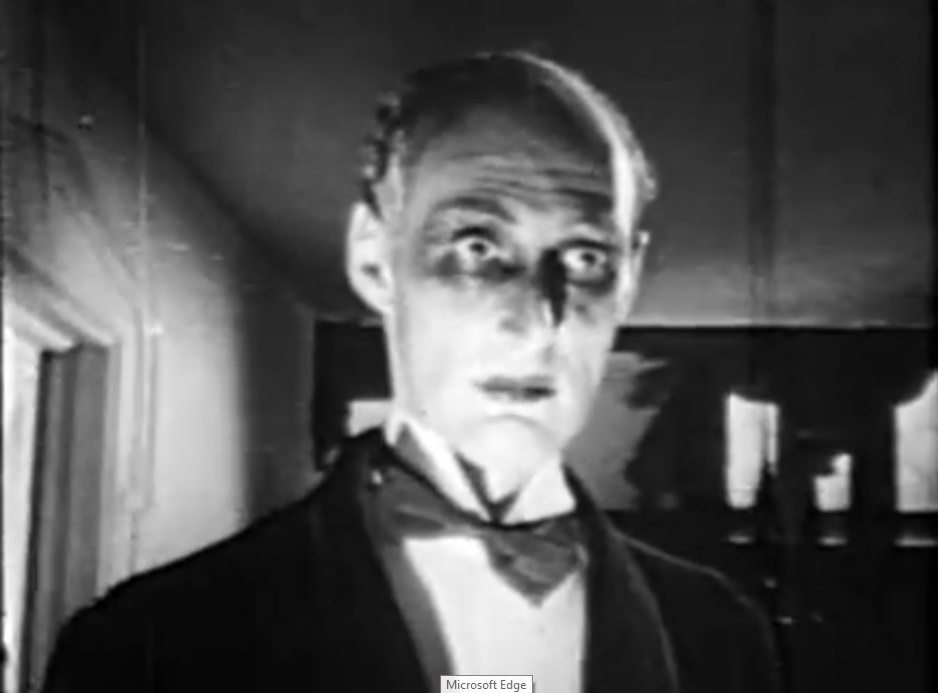


With suitcase in hand, a young woman (Palmer) makes her way through the woods and then to the Elm Manor Hotel. She's greeted at the door by a creepy man (played by Marks' former comedy duo partner Stuart Samuels) and then goes to her room. From here on out she's faced with one terror after another; losing both her composure and her wardrobe. While putting on lipstick in front of a mirror, a caped vampire appears behind her. When she turns around he's gone. She then goes downstairs for some water, where the vampire-butler chases her around for a few minutes until she collapses in bed. The next morning she awakens unharmed. Believing her visions from the previous night were merely a nightmare, she goes downstairs where a surprise awaits her.

There's really not much to go into here. This runs about 5 minutes and is a semi-interesting curio. While there's no dialogue, some added spooky music helps. Aesthetically, it looks more like something made in the 1920s than the 60s and the grainy photography and harsh lighting actually do give it a creepy feel. It also succeeds in giving us a nice look at Palmer, who shows plenty of T and a little A, though keeps the P covered with her nightgown. It's easy to see why she was so popular back then with her beautiful face and voluptuous physique.


A number of Marks' other shorts are also horror in nature. There was Witches Brew (1960) starring Green as a witch and Marks as a hunchback, Vampire (1963) starring Wendy Luton and the director as Dracula, Perchance to Scream (1967) starring Jane Paul and involving women being terrorized in a torture chamber and the mad scientist tale Dolly Mixture (1973) starring Clyda Rosen, which was released in both hard and softcore versions. The former runs 19 minutes and was released in Germany as Vor Geilheit kochen ("Boiling with Lust").

The Alternative Cinema print is called Nude in Dracula's Castle. Many of these are available to view on the BFI website, although you have to be British to be able to see them. Others (including this one) have leaked onto both archive.org and Youtube.

★★1/2

Jûshin densetsu (1987)

... aka: 獣神伝説
... aka: 獣神伝説 - Conton
... aka: Beast God Legend
... aka: Con Ton
... aka: Conton - 獣神伝説 (ConTon - Beast God Legend)

Directed by:
Takuro Fukuda

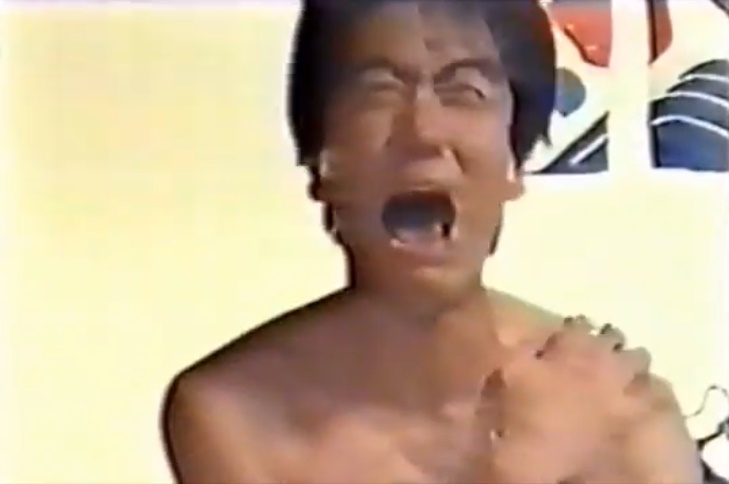
Like many other "analog era" VHS horrors made in Japan in the 80s, this runs less than an hour (46 minutes) and seems made specifically to showcase gory special effects. Even the video box has "SFX" emblazonment on the cover right next to the title. College student Goh (Tasashi Kato) is having a hard time affording his tuition and is constantly harassed by yakuza-connected loan sharks from the Kanto Dragon Club that he borrowed money from after a minor car accident. Though he's already paid them, they're now claiming he owes 5.3. million yen in "interest." If things couldn't get any grimmer, he's haunted by recurring nightmares about monsters and mutants. The dreams are so bad they're keeping him from sleeping and are interfering in his life. He's stopped going to class and is only working a part time job as as gofer at Tokyo Film Studio, which isn't enough to pay his debt. His girlfriend Emi (Kyoko Katayama) is concerned for his future but, as she tries to help, he just keep pushing her away. Both of Goh's parents are dead so he can't get any help there. It all seems hopeless.

Goh has a succession of nightmare of monsters roaming some kind of leaky industrial plant. Others involve a snake-like monster popping out of a mouth in a sink full of green vomit and a zombie head hidden under a bucket on the floor that gets its face ripped off and then attacks him with tentacles that shoot out of its mouth. The yakuza (led by Kazuhisa Kawahara) are just as bad; constantly knocking on his door, standing outside his apartment and calling him. They even show up at his job to rough him up. After he manages to escape them, one of the prominent dream figures - a bulky axe-wielding demon warrior in a horned helmet - seems to materialize in real life and chases him around the studio.


The yakuza confront Goh one more time at the film studio after hours. This time they pull a gun on him, have kidnapped Emi and are threatening to rape her if he doesn't pay up. The intensity is such that Goh does an American Werewolf in London-style transformation (even copying the exact fx, camera shots and editing) into a quilled monster that looks inspired by the radiation monster in Class of Nuke 'em High. It decapitates one of them and rips a face off as blood splatters on the screen. None of this really makes much sense and there's barely enough story to string together the amateurish - though fun - special effects scenes. Also featured are clips from some music video (complete with a choreographed dance), music stolen from PHENOMENA (1985), though slightly re-tooled here, and a surprisingly clever final shot.


While this isn't the worst thing you'll ever see, it's easy to see why it's managed to slip into complete obscurity over the years. It's nowhere near as graphic, gory or exploitative as other films of this type and definitely doesn't have the notoriety factor of, say, the Guinea Pig films or some of the more revolting extreme underground tapes.

To date, this is the only directorial credit for Fukuda, who has mostly worked as a writer and is now best known for the Kamen Rider TV shows. The Japanese VHS release was on the label Zeus. A bootleg DVD-R is also available. None of these are in good condition. The one I watched looked terrible but that's currently the best that's available.

★★

Sunday, September 6, 2020

La mansión del terror (1989)

... aka: Hasta que la muerte nos separe (Till Death Do Us Part)
... aka: Mansion of Terror, The

Directed by:
Ramón Obón

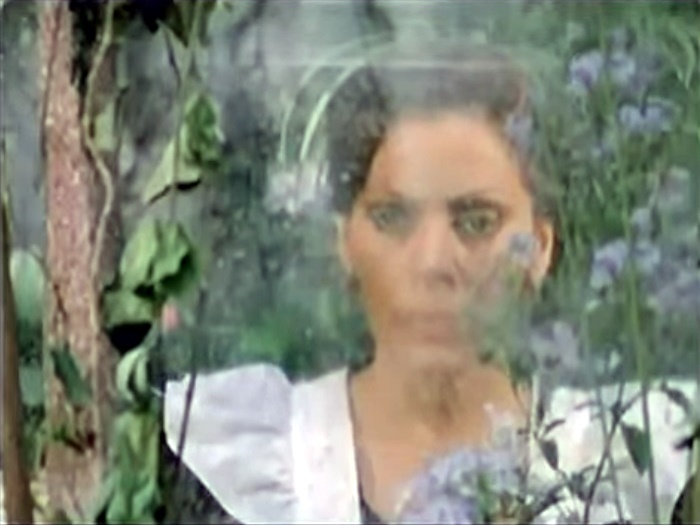
Hugo Stiglitz (in a ridiculous poofy wig that doesn't match his beard) stars as Orlando, a well-to-do, turn-of-the-century pianist obsessed with a theater actress named Griselda (Luz María Jerez). Griselda's recently been cast as the female lead in a small production of Othello. Orlando makes sure to attend every single one of her showings (where he gets to see her being strangled on stage every night), sends her flowers nightly and makes his romantic intentions pretty obvious as he intently watches her from his balcony seat. Late one night at a trolley station, he approaches Griselda and, despite his intense and persistent nature (and the fact he initially creeped her out), charms her into having dinner with him. He then invites her to attend one of his performances. The two develop a mutual admiration for each other's talent and become lovers. Soon enough, Orlando is presenting her with expensive jewelry and asking her to become his wife. Griselda is initially apprehensive and has no interest in giving up her career for marriage and family. However, she ends up caving in and the two have an impromptu wedding on the theater stage in the presence of Griselda's friend / roommate Emilia (Lizetta Romo) and the rest of the Othello cast.


Orlando takes Griselda to his home, a secluded but well-kept mansion, located deep within the desert. She almost immediately regrets her decision as the ice cold maid Tencha (Dacia González) gives her dirty looks, almost completely refuses to acknowledge her and clearly doesn't want her to be there. Not just that, but she hears voices coming from the cellar, hears Orlando arguing with someone upstairs and then has a vision of a blonde woman being strangled by someone wearing a wedding gown while she's in the middle of trying to make love to her new hubby. Was it a ghost? A hallucination, perhaps? The next morning, she finally meets Orlando's mother, Eloisa (Rosita Quintana), who's surprisingly bubbly and friendly and eases her mind by letting her know that the mansion is now also her home. She gives her a tour of the estate, including of her beloved greenhouse.


The relief doesn't last long, however, as Eloisa casually reveals that Orlando was previously married, something he never bothered telling her. The family may even keep a portrait of her on the wall and a weird shrine for the dead woman, with her wedding gown as the centerpiece, in the home, though it's also claimed that the woman is a relative. According to Eloisa, the woman in the portrait is her sister, she went crazy and then had to be locked up in an institution. She also looks an awful lot like Orlando's new wife. When Griselda confronts her hubby about her, he shouts at her, clutches his head as weird sci-fi sounding music plays, almost strikes her with a lash and then storms off. Griselda then begins seeing a wedding gown-clad figure lurking around the mansion grounds, which leads her to an abandoned, overgrown old church filled with creepy religious statues that's unfortunately never used again after this one brief scene.

While she's in the bathroom washing her hair, our heroine is vicious attacked by the bride. She pulls her hair, wrestles her to the floor and slices her up with a wire before Griselda's able to lock her out of the room. Meanwhile, Orlando starts mentally deteriorating into a piano key-pounding, migraine-suffering maniac and the two older ladies are both harboring their own dark secrets. There are character revelations, black-and-white flashbacks, nightmares and ghostly visions, plus a corpse hidden under the floorboards in the cellar.


By late 80s genre standards, this is incredibly tame, old-school, talky, slow-paced and non-exploitative. In other words, it's something that could conceivably be shown on television with just a few minor trims. It's also one of those movies that doesn't quite have the budget to effectively realize its period setting (though effort is at least made with the costumes, hair, vehicles, sets, etc.) nor is it fully able to achieve much in the way of gloomy Gothic atmosphere because the bulk of it takes place in a pristine, brightly white, sparsely decorated house. That said, this is competently directed, written and shot. There's decent camerawork, stylish touches using colors and lens flares and, most importantly as this is a dialogue-driven film, a strong cast who's able to sell it. Jerez is strong in the lead and gets solid support from veterans Quintana and González. Top-billed Stiglitz is OK but gets overshadowed by all three of his female co-stars.

This was the directorial debut of Costa Rican-born Obón, who had previously written or co-written around 100 (!) other films, including The Empire of Dracula (1967), MADAME DEATH (1969), The Perverse Doll (1969), PANICO (1970), The Whip Against Satan (1979) and a number of Santo adventures. He was clearly heavily-inspired by a number of Hitchcock films here, most notably Rebecca (1940). There's also a bit of Flowers in the Attic in here, especially at the end.


I'm not sure what the original release title for this one was. It's listed on most websites as Hasta que la muerte nos separe ("Till Death Do Us Part"), though I was only able to track down a later VHS release utilizing that title. The original theatrical lobby card calls it La mansión del terror ("The Mansion of Terror") so that's the title I'll be using here. Like many other late 80s Mexican films, this has never been available in English.

★★1/2
Related Posts Plugin for WordPress, Blogger...