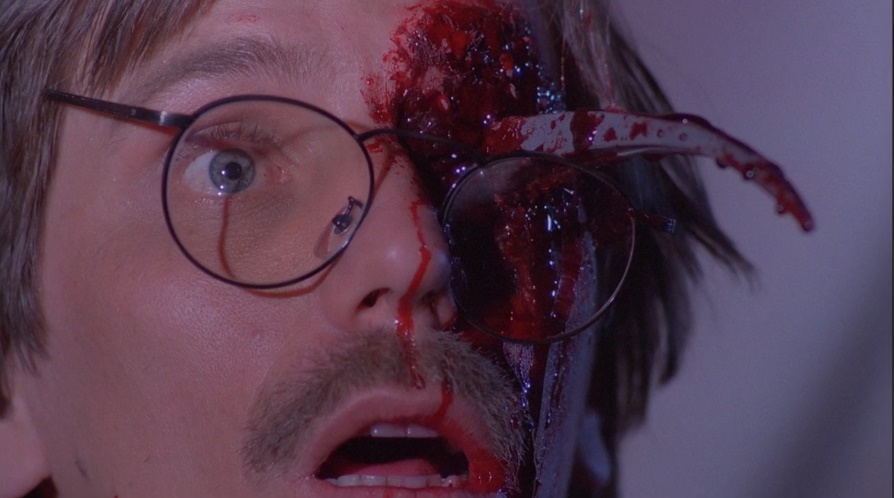
... aka: Small Pox Virus
Directed by:
Goran Marković
With the last known case having been reported way back in 1930, smallpox was thought to have been completely eradicated in Yugoslavia for decades. That was, until it reemerged again in 1972. A Muslim pilgrim named Ibrahim Hoti returned to his home in Kosovo after going on a Hajj to the Middle East and brought the disease back with him, which led to another outbreak in the country. While there was some fumbling around by health professionals who misdiagnosed some of the earlier cases and thus enabled the virus to spread (one patient was bounced around to three different hospitals), the government was quick to respond, bringing in experts from the World Health Organization, instituting martial law, quarantine and a mandatory re-vaccination of the populace. The epidemic was soon back under control and life returned to normal a few months later, though there were around 175 infections and 35 confirmed deaths in total. While not an accurate account of these events, Variola Vera ("variola" being the virus that causes smallpox) does infuse many real details from the 1972 outbreak into its story.
It's clear from the get-go that this is hoping, at least in part, to shine a spotlight on systemic failures within society. The hospital where most of the film takes place is a disorganized, chaotic, loud environment filled with impatient or downright confused patients filling hallways and stairwells, gossipy staff, outdated pipes, a busted heating system and worse. The staff are primarily caught up in their own personal dramas and / or hospital politics while going through the motions of their job in a rather disinterested fashion.


Our proposed "hero," Dr. Grujic (Rade Šerbedžija), is an arrogant womanizer who's been sleeping with an emotionally vulnerable nurse named Slavica (Vladislava Milosavljević) and wastes no time hitting on new hire Dr. Danka Uskokovic (Varja Đukić), who's fresh out of medical school and still at the point where she's actually trying to take her job seriously. One of the patients is being treated for gonorrhea that he claims to have caught from sleeping with one of the hospital's female employees (!) and another nurse is a morphine addict who helps herself to the pharmacy. And then there's a scumbag married hospital superintendent named Chole (Rade Marković), who's also having an affair with Slavica. Though she's fallen in love with him, he's just using her for sex and has no interest in leaving his wife nor jeopardizing his reputation / upper crust social circle to be with her.




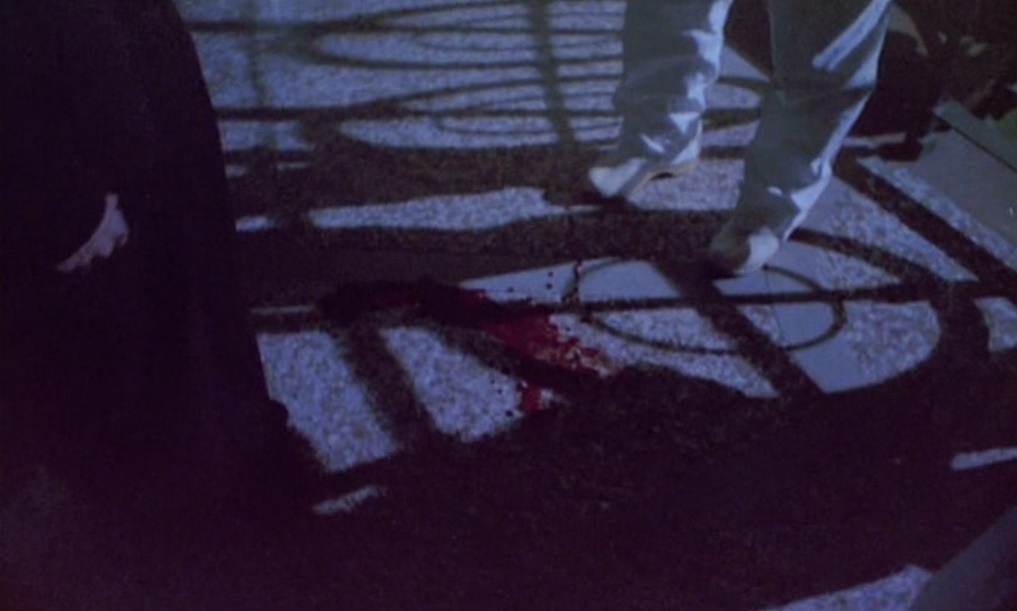
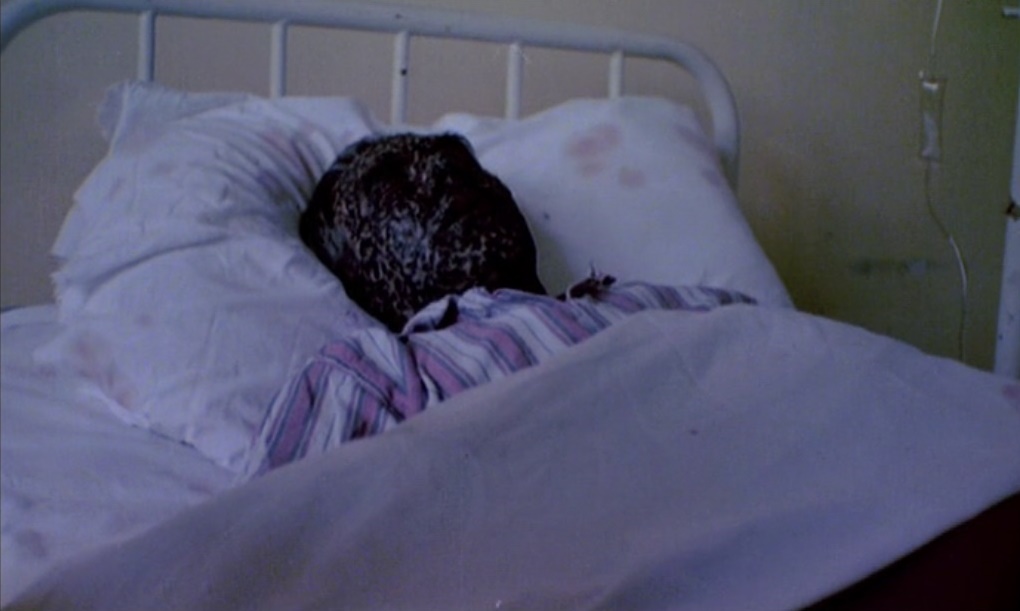
Considering everyone's preoccupations, it comes as no surprise that Halil Rexhepi (Dzemail Maksut), the Typhoid Mary of the story, is not attended to in the way that he should have been. After having been infected with smallpox while on a trip to the Middle East, Rexhepi shows up at the hospital already extremely ill. A doctor escorts him into the crowded lobby and sits him down, where he's forced to wait for care and eventually just wanders off somewhere else, leaving a trail of contaminated blood in his wake. A nurse later happens upon him lying on the floor in the women's restroom in a semi-conscious state. He's then taken in front of the staff and medical students, where Chole offers his (incorrect) prognosis: an allergic reaction to penicillin. He's treated for that instead of smallpox (which also happened in the 1972 incident) and is placed in a room with another patient to recover.
As the staff joke around in the hallways and go about their various dramas, the parched, increasingly-sicker and neglected Rexhepi has to be tended to by the other patients, including a young boy. The boy even tries to escort him to the bathroom, but he starts puking up blood in the hallway before even making it in there. A repairman gets on his hands as he tries to help. Later, Rexhepi awakens again and again tracks blood all over the hospital corridors before passing away in an elevator. Due to the deceased's religious beliefs, his family take the body home with them and refuse to let the doctor's perform an autopsy. Even at this early stage, the virus has clearly spread around to most of the staff and other patients, some of whom then return home for the night to no doubt then expose their friends and families before returning to work the next day.




When the government gets word about what has occurred and an elderly infectious disease expert who was around during the 1930 smallpox outbreak demands martial law and quarantine as a means to contain it, the military immediately step into action. The hospital is marked as ground zero, armed guards are posted everywhere, windows are boarded up and no one is permitted to leave. The phone line is cut so they're unable to reach the outside and officials are initially forbidden from informing the press about what's going on as not to create a citywide panic. Another high ranking official seems mostly concerned about the plague costing the city tourist season revenue.
Not surprisingly, the government barely has any smallpox vaccine in stock since it's been over 50 years since that's been an issue, which means the hospital staff are left to their own devices to decide who will and who will not get a shot. Dr. Dragutin Kenigsmark (Erland Josephson) insists they "prioritize" what they do have, which means those who were in direct contact with the initial victim are first in line. Exposed or not, those with certain illnesses, like Dr. Markovic (Dušica Žegarac), who suffers from a heart condition, are unable to even take a vaccine. Some get sick and recover while others get sick and die. Some can't handle the stress and either go crazy or commit suicide. Bodies are taken outside, wrapped in cloth, covered in sawdust and then placed in a metal coffin, which is then welded shut.
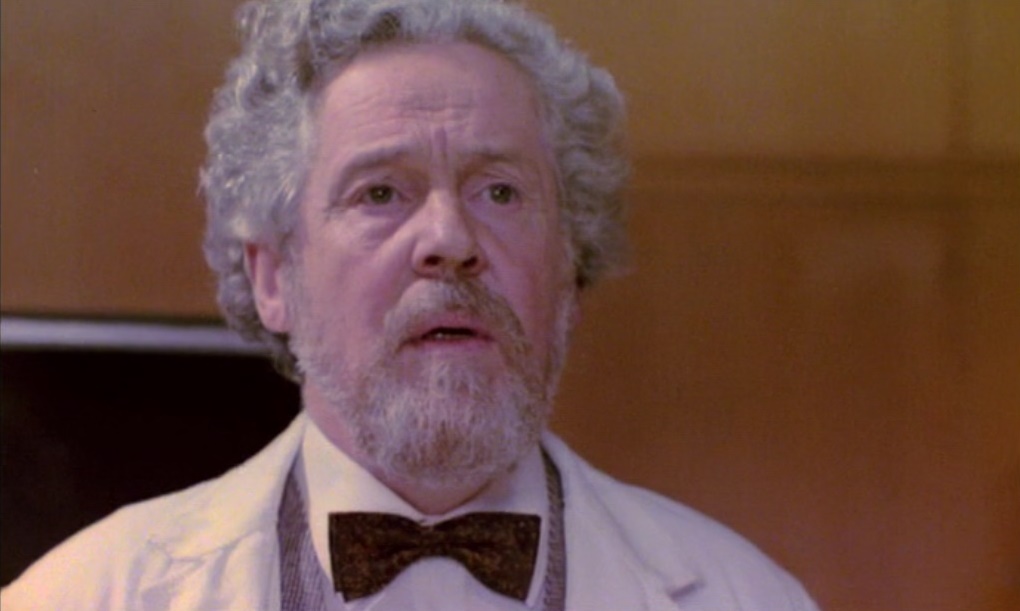
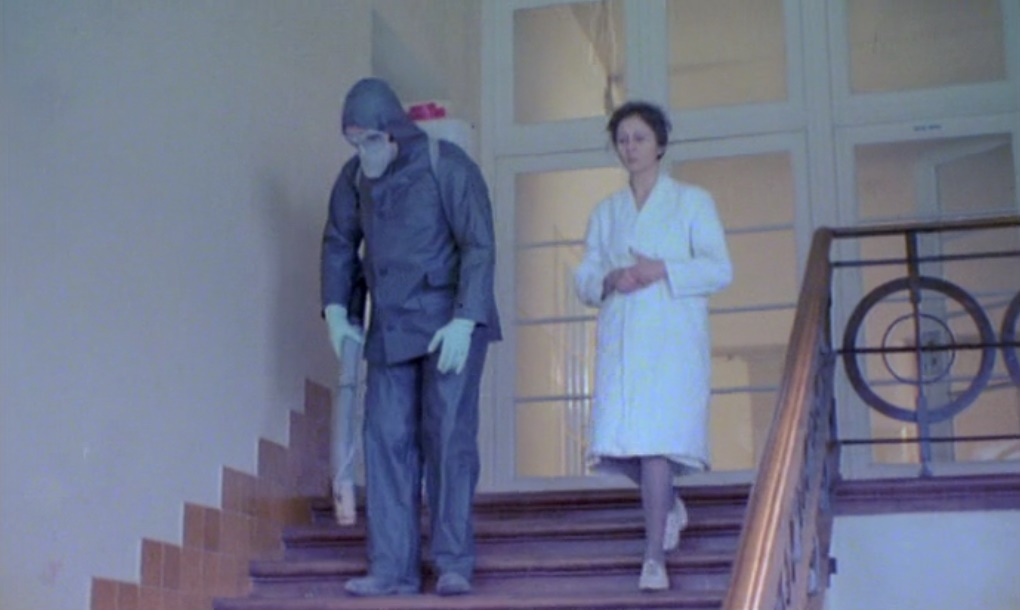
The grim, high stress situation brings out both the best and the worst in the characters. Due to her well-connected politico uncle, Dr. Uskokovic is given the opportunity to sneak out of the hospital, but instead passes because she's needed there. Meanwhile, Chole hoards medicine, locks himself away in his office and refuses to leave. A UN epidemiologist (Peter Carsten) who spent two years in Africa trying to contain a similar smallpox outbreak, shows up in his gas mask and hazmat suit to dish out advice and administer care, though he's just one man and unable to do all that much, especially since the majority of the hospital staff refuse to risk their own lives to help.




Bleak, depressing and highly unpleasant, this isn't going to be for all viewers or moods. However, compared to glossy, big budget Hollywood takes on similar material, like Outbreak (1995) and Contagion (2011), this is much grittier and more effective, and feels more realistic. While the expensive blockbusters are busy showing international superstars trotting around the globe like action heroes, this places its focus almost entirely on its one hospital setting, which not only acts as a microcosm of society to illustrate how different people react to stress-inducing crises but also creates a suffocating atmosphere. That, mixed with the grainy photography, low light settings and creepy music score (by Zoran Simjanović), help the material frequently cross into the horror realm, though as a whole it defies easy categorization. Structural corruption, from the highest levels of government right on down to the inner workings of the single hospital, seems to be the most prevalent theme here.
In a brief interview with Dejan Ognjanovic (which can be accessed right here), the director said he was inspired to make the film by the concealment of information by the Yugoslav government during the 1972 epidemic, which he insists is tantamount to "some kind of cover-up." Marković also states he was intending to "place doubt on the validity" of our "sick society." While that all comes across fairly well here, and there's no doubting that governments do indeed hide many things from the general public, I do have mixed feelings about that kind of commentary being applied in this particular case. This is only because of how quickly and efficiently the '72 epidemic was contained by world health officials and the government after it was discovered to be smallpox.



Viewing this also made me realize that we absolutely need another virus / plague film covering similar territory; one that's updated for the times. Recently we've seen the drastically different ways various world leaders, the press, the business world and regular everyday citizens reacted to the COVID-19 pandemic. What they didn't have in 1982 was gov't-sanctioned psyops / online disinformation campaigns and various conspiracy-addled loons, amoral grifters (sadly including several disgraced former members of the scientific community) and, well, just not very bright people, banding together to actually help spread a deadly virus with their social media bullhorn. There's certainly a fascinating movie that could be made taking this new angle into account. Of course, it should be a horror film, because observing some of this shit go down over the past few years has been rather disturbing.


In January 1983, Variola Vera was chosen as the best Yugoslavian film of 1982 by a poll of thirty top Yugoslavian critics and publicists conducted by the Sarajevo-based daily newspaper Oslobođenje. In 2016, the film was also selected by historians as one of the top 100 Serbian films from 1911 to 1999. The director also made Već viđeno / REFLECTIONS (1987) and Sabirni centar / "The Meeting Place" (1989), both of which also made the Top 100 list.
The only official home video releases I was able to find for this title are a Serbian VHS release and a 2003 DVD from the company VANS, which is in Serbian with no subtitles. However, English fan subs are available for this title, which are also used for the various unsanctioned DVD-R releases from grey market dealers.
★★★