.
.
.

Sunday, January 22, 2023

Lubię nietoperze (1986)

... aka: I Like Bats
... aka: Mám ráda netopýry
... aka: Szeretem a denevéreket
... aka: Wenn Vampire lieben (When Vampires Love)

Directed by:
Grzegorz Warchoł

Izabela (Katarzyna Walter) has been raised from a young age by her weak-hearted aunt (Malgorzata Lorentowicz) and works at her curio shop. Though she's attractive, of age and certainly wouldn't be short of options, the virginal Izabela has thus far resisted dating let alone settling down, despite her auntie's insistence that she needs to get married before it's too late. Izabela claims to prefer her life of solitude and living alone and doesn't care what anyone thinks about that nor about the threat of one day becoming an old spinster. The attentive Marceli (Edwin Petrykat), who's recently been pursuing her to the point of her needing a restraining order against him, frequently visits the shop, waits outside for her and keeps asking to walk her home at night, only to be rejected time and time again. Sometimes persistence is rewarded, but with Izabela it appears to be a lost cause.

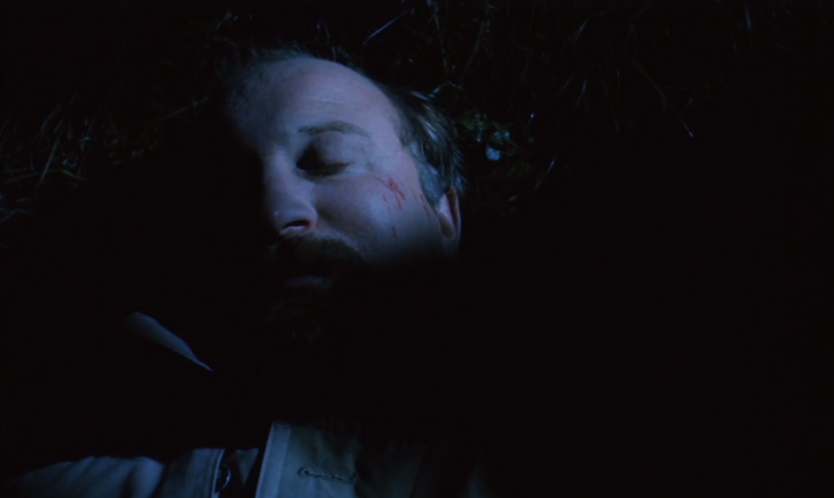
Izabela declining something even as simple as an escort home is especially curious considering there's a serial sex predator / killer roaming around the city who's thus far raped and murdered eight young women nearby. Nevertheless, Izabela insists she can handle herself and leisurely walks through a dark park every single night by herself; the same park where numerous victims have been discovered. Does she have a death wish or something? Nope. When she says she can handle herself she really means it. When the killer tries to attack her, she's easily able to turn the tables on him and kill him. That's one perk of being a vampire.




The roles are reversed when distinguished Rudolf Jung (Marek Barbasiewicz) enters the shop one day and shows an interest in Izabela's hand-made bat-themed tea set yet zero interest in her. That doesn't sit too kindly with the vampiress, who's used to getting attention showered upon her. She's the rejector, not the rejectee. He even passes on her sexual advances. Slapping on a dark wig, sunglasses, heavy make-up and a sexy dress, Izabela stalks Rudolf to a pub and attempts to proposition him again, only for her dream man to inform her that he's not into women. Though he's clearly lying, she leaves with an old pervert who thinks she's a hooker and kills him in his van instead.


Izabela ends up killing her wannabe suitor Marceli after he breaks into her home and attempts to kill her for continually turning him down. Then, seeing a news story about Rudolf on TV and learning that he's a famous psychiatrist, she goes to his massive, luxurious castle-like clinic (really the grand Pałac w Mosznej) and checks herself in as a patient. While she openly confesses to the professor and a few other staff members that she's a vampire, nobody believes her, so she starts telling other patients she's being treated for nymphomania instead. Some of the other nuts being treated there include a painter working on a gigantic canvas who's paranoid that everyone is spying on him and a frantic guy who believes x-rays cause AIDS.

Dr. Schulz (Wiktor Grotowicz), whose specialty is hypnosis, is unable to ever put Izabela to sleep, while an attempt at an x-ray has her turning up invisible. Eventually, she seduces, kills and feeds on the man-whore gardener, who's been sleeping with all of the nurses at the facility, and then hides his body in a pile of manure. Once it's discovered, she confesses to the professor that she murdered him yet he still won't take her seriously. She then willingly just leaves the hospital.


While this maintains interest up to this point, unfortunately the film completely falls apart in the third act. After leaving the clinic, Izabela makes an over-the-top jovial (and extremely annoying) gag prop salesman in a toupee keel over from a heart attack by flashing her fangs at him at a costume ball. She then attempts to commit herself to some kind of experimental psychiatric clinic run by Professor Wolf (played by the director), where criminally insane patients are kept caged out in the open air on the beach (?) Finally, we zip through Izabela's "cure" when the psychiatrist decides to finally have sex with her (I suppose that's a unique enough treatment method) and she's finally able to settle into a "normal" life.

This particular vampire has no issue with daylight, garlic, crucifixes, stakes, silver, holy water or anything of the sort. She also doesn't possess great strength, nor can she turn into a bat (though she has pet bats at home), nor can she turn others into vampires, nor is there any indication she's ageless or immortal. She's simply among us drinking blood from time to time. Like many film vampires, she's sick of actually being a vampire but, unlike other doom-ridden vamps who seem to hope for death to end their curse, here she simply wants to change her ways so she can blend into society and experience normal humanly pleasures like sex, love and motherhood.
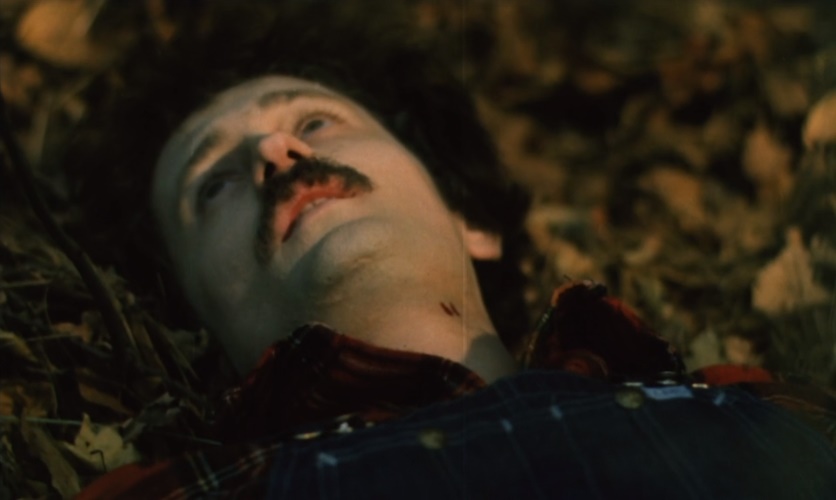


On the plus side, the film is well-shot, the acting (particularly the female lead) isn't bad and there's some visual style. As a warning to horror / vampire fans, much more of an emphasis placed on the drama and comedy here than on the horror. In fact, this is almost entirely blood, violence and action free. Most of the time, it doesn't even attempt to be scary or suspenseful.


I've no issue with vampirism being used metaphorically, and I always welcome deviations from standard vampire lore, but the characters here are all unlikable, hideously self-absorbed and not really all that interesting. We get approximately zero backstory on the protagonist and little more on the male lead. The fact we could care less about any of these people renders the dramatic elements ineffective, as does the fact any serious content is constantly being undercut by hit-or-miss humor. Also having a "feminist" heroine who spends the bulk of her screen time pestering / stalking a guy and trying to suppress who she truly is, and her individuality, to ease herself into a housewife position to a wealthy career husband, is bizarre to put it mildly. Of course, this also could be an attempt at commentary about how women - even bloodsucking ones - feel compelled to change to fit into a certain expected societal mold, but it's too muddled and missing the kind of sharp, insightful satirical edge that could have made it memorable.


In addition to Poland, this was also released theatrically in Czechoslovakia, Germany and Hungary. It was made widely available here in America for the very first time in 2022 thanks to the 4 disc Severin Blu-ray set "House of Psychotic Women Rarities Collection." The set also includes Identikit aka The Driver's Seat (1974) starring Elizabeth Taylor, Footprints aka Primal Impulse (1974) starring Florinda Bolkan and the British experimental film The Other Side of the Underneath (1972), which is yet another feminist offering, this time from a female director.

★★

Saturday, January 21, 2023

Ôkami no monshô (1973)

... aka: 狼の紋章
... aka: Crest of the Wolf
... aka: Horror of the Wolf
... aka: Wolf Guy

Directed by:
Masashi Matsumoto

"Nowadays, it's better to have an iron body than a healthy mind."

Young Akira Inugami's peaceful life with his archaeologist parents at a remote cabin in Alaska is shattered when a helicopter senselessly swoops by and shoots both his mother and father dead. The young boy's anguished cries then fade into the sound of a wolf howling. He's then sent to live with his billionaire aunt, who owns a successful chain of Japanese restaurants in America, who then sends him to a private school in Tokyo. Despite living a life of privilege, the now-teenage, eternally brooding Akira (Tarô Shigaki) is having a hard time adjusting to life in the big city. Despite having some of the highest grades in his class, the school authorities are forced to send him to another "special" school for juvenile delinquents from well-off households due to the amount of violent altercations he's been involved in. However, none of that is his doing. He simply wants to be left alone to live a quiet loner's existence. It's other people who won't leave him alone.


The new school turns out to be a complete hellhole due to the lack of supervision. Students completely ignore or openly defy the comically incompetent staff, argue, fight, threaten people and even pull out knives on other students and face no discipline whatsoever. While I'm not sure how Japanese schools were run in the 1970s, I'm pretty sure things like expulsion existed back then, but the people who run this particular establishment seem to only care about getting tuition money from the rich parents. Due to his quiet, composed, stoic demeanor, Akira soon finds himself on the bad side of a ruthless teen gang who basically run the entire school. Their ringleader, Dô Haguro (Yûsaku Matsuda), is the son of a powerful yakuza boss (Kôji Kawamura) who also happens to responsible for Akira's parent's deaths.

Akira is subjected to all kinds of torment at his new school. He's punched. He's kicked. He's stabbed. He's beaten repeatedly and mercilessly with chains, bats and bamboo poles and even has "Dog" carved into back with a kitana by Haguro, but doesn't so much as lift a finger to fight back. There's so much constant abuse being dished out that they even have to montage much of it as the film would probably run 3 hours otherwise. When the gang aren't terrorizing him, they do things like slip on masks, beat and gang rape women in broad daylight around the city.


In a bit of plotting that's certainly questionable by today's standards, Akira's romantic interest ends up being his own teacher, Akiko Aoshika ("Masako Aki" / Yôko Ichiji), who becomes sexually infatuated with him. She even hunts him down to his apartment late at night to see if he needs any "help," though her motives are certainly of a less-than-teacherly nature and even Akira himself calls her out on it. However, he also has to fight his attraction toward her as she's a dead-ringer for his, uh, deceased mother. I'm not even going to go into the Freudian psychology of all that.

While walking home late one night, Akiko is attacked by some motorcyclists who drag her into an abandoned building, rip off her clothes off and attempt to rape her, but she's saved by what the press later call a "wild dog" attack. Investigative reporter Akira Jin (Toshio Kurosawa - EVIL OF DRACULA) has fur found at the crime scene analyzed only to discover it belongs to a wolf, not a dog... and wolves were driven extinct in Japan long ago. Well, that it until Akira arrived.


Despite the fact he's unfriendly, generally disinterested in human relationships and keeps to himself most of the time, Akira's distinct form of "quiet protest" in the face of violence has managed to influence many others at his school. Student activist Noriko (Michiko Honda) organizes protests demanding a change and that the adults actually do something about all of the brutality. It's at this point the film takes a sharp turn into social commentary territory. During one scene, the anti-violence student protesters are giving a demonstration at a baseball field when the gang show up and beat everyone with chains and bats while comical music plays.

On one hand this is clearly condemning the violence of the yakuza and on the other it's mocking the naivety of the peace-and-love hippie movement of the day. Akira himself could be seen as the human embodiment of why pacifism doesn't work as he sits back, takes one beating after another, refuses to get involved and lets evil flourish all around him despite having the tools to actually do something about it. That doesn't change until he's given a pep talk by another covert 'wolf' in the cast and Akiko is kidnapped, beaten, raped and held prisoner at the Haguro family compound.


I've seen many 1970s movies ridicule and / or satirize the whole hippie peace mindset (today's closest equivalent would probably be far left progressives) but I think it's important to illustrate the good intent behind that stance when one does so. There's absolutely nothing wrong with being anti-violence and anti-war. Unless you're some kind of demented sadist, you should be. Yet taking a completely pacifistic stance 100% of the time is not only unrealistic but also destructive in its own way as it requires either downplaying or turning a blind eye to various atrocities. You can say you're anti-violence and anti-war until you're blue in the face but ignoring countless people being victimized or slaughtered elsewhere in the world as you stand on your moral high ground digging in your heels about peace doesn't do anything to alleviate those problems either. Unfortunately, we don't live in a perfect world without sociopaths, criminals and corrupt world leaders, so sometimes violence is the only option we're left with. I think this movie does a fair job of finding this gray area.


Though some viewers may be disappointed at the lack of werewolf action (the creature is seen in just a handful of scenes) and it starts to drag and become a bit repetitive in the mid-section (how many times do we have to see Akira getting beaten up, anyway?), this does come through in several other ways. There's an intense, vicious and gory final confrontation filled with whipping, slashing, impalement, biting, shooting, throat-ripping and generous blood sprays all over the place, and the aforementioned unexpected subtext in the plot is certainly welcome. This is also extremely interesting from a visual standpoint and the direction is surprisingly surreal, experimental and artistic at times. That's enough to tip this over into solidly good territory despite its problems.


This Toho production was written by the director, Fumio Ishimori (Kamen Rider) and Jun Fukuda (SECRET OF THE TELEGIAN) and is an adaptation of Kazumasa Hirai's popular Urufu gai ("Wolf Guy") series, which began in 1970 as a two volume manga, spawned numerous later manga and then a long-running series of novels. The Toei Company release Wolf Guy (1975) starring Sonny Chiba is based on the same property, though it apparently adapts content from some of the spin-off books (detailing the Akira character in his adult years) while Horror of the Wolf specifically tackles the 1970 manga.

Though this has been issued on DVD, laserdisc (under the English title Wolf Guy) and VHS numerous times in Japan by Toho, there's never been an official release here in America. That said, a widescreen, English-subbed print is available and can easily be found to view or download for free many places, including Internet Archive. Judging by the lack of reviews and votes on most websites, this has clearly failed to generate much interest over the years despite being pretty good. Its sort-of companion film, 1975's Wolf Guy, has had it much better. It was given a high def restored Blu-ray release by Arrow Video in 2017. Why it and not this one? Well, it may have something to do with licensing or it may have something to do with Wolf Guy boasting the star power of Chiba while this has a cast that's going to be completely unknown to most Western audiences.

★★★
Related Posts Plugin for WordPress, Blogger...