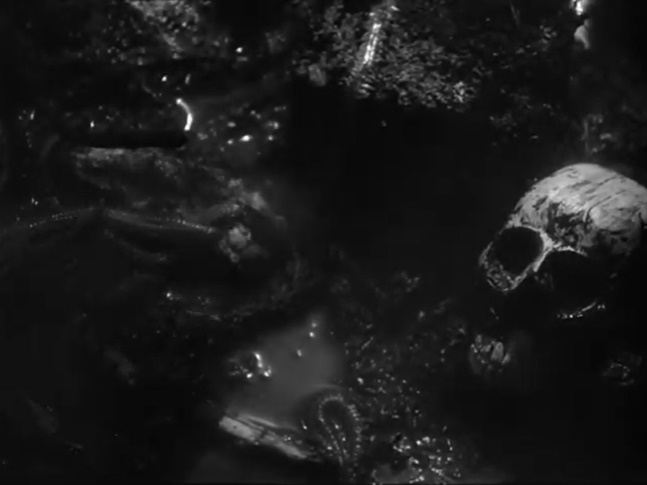
Celso Ad. Castillo
They starred in titles like Naked Island, Bomba Queen, Bed Sins, Room 69 and Brown Emmanuelle. They were ever-so-briefly popular in Filipino cinema at a time when the country was enjoying a "second golden age" and a loosening of censorship laws after a long period of martial law was finally lifted in 1981. They were (well, at least a few of them were), of questionable age to even be appearing in such films. They were the Softdrink Beauties; a small cadre of young Filipino "bold" actresses who were groomed to become superstars by talent agent extraordinaire Rey dela Cruz. Each of these inexperienced starlets were plucked from obscurity based solely on their visual appeal, assigned the name of a popular caffeinated beverage and then immediately given star vehicles. They were often cast together and their films unabashedly boasted their erotic credentials in advertising materials. In other words, audiences knew exactly what they were getting here. For a spell, these actresses became superstars in their home country; working for top directors and sometimes appearing alongside respected acting legends, but it was all short-lived. Something that just started to gain steam in the mid 80s would be dead by the end of the decade. And so would one of its main stars.
The primary Softdrink Beauties (all pictured below) were Maria Jennifer Obregon Mitchell, Geraldine Zervoulakos, the British-Filipino Johnnalee Hickins and the American-Filipino Delia Dueñas Smith. Mitchell was rechristened Sarsi Emmanuelle (after the root beer-like Sarsi, a beverage popular in Southern Asia), Zervoulakos became Myra Mirinda Manibog (Mirinda being a Crush / Fanta like orange soda also popular in Asia), Hickins became Coca Nicolas and Smith became Pepsi Paloma. Several of these actresses fell into substance abuse problems at their height of their fame, none of their careers would withstand the test of time and most are now back to living normal lives. Well, aside from one...

In a case that dominated Filipino tabloids for years (and one that's extremely infuriating to read about), Pepsi Paloma was drugged and gang raped by three popular male comedians / TV hosts; Vic Sotto, Joey de Leon and Ritchie D'Horsie. She was around 14 years old at the time. Now this wasn't a he said / she said type of situation either. After Paloma lawyered up and brought charges against the men, all three of the accused, who had initially denied the allegations and claimed this was nothing more than a cheap PR stunt, publicly apologized for it... and on live TV! However, Paloma would mysteriously drop her charges after being paid a visit by Sotto's older brother. According to Paloma herself, he brought a gun to her residence, threatened her and got her to sign an affidavit of desistance which (supposedly) prevented her from legally pursuing matters.

Most interestingly, the brother (Tito Sotto), would become a successful conservative politician who's been reelected over and over again and eventually became Senate President. He's frequently in the news now for opposing female reproductive rights, mocking single parents and members of the LGBT community and for getting caught up in numerous plagiarism scandals. In 2014, he used his clout to successfully get online articles detailing his involvement in the Paloma case removed, though his detractors fought back and recirculated the articles, anyway. Now they're all over Reddit and various other places; preserved for posterity whether he likes it or not. And, just so you know there's no real justice in this world, despite publicly admitting to their crime, (Vic) Sotto and de Leon have remained gainfully employed on the popular and long-lasting variety show Eat Bulaga! since 1979 (D'Horsie was also on the show but died in 2015). None of these men faced legal repercussions or suffered even minor career setbacks for their actions. In fact, they only flourished and remain beloved by the public at large in their home country to this very day.
As for Paloma, who was pushed into doing exploitation films and stripping as a young teen by her own mother to help support the family after her father abandoned them, she didn't even make it to her 18th birthday. She was found dead in her apartment; a suicide by hanging, in 1985. The actress had three films and plenty of high-paid dancing gigs lined up, plus had just adopted a 4-month-old son, prior to taking her own life. To add insult to injury, images of her corpse lying in the morgue were then plastered all over newspapers and tabloids, along with all kinds of gossip. Among those tidbits were passages from a supposed secret diary of hers detailing her financial, family and drug problems; a diary that curiously was never actually verified as being hers nor proven to actually even exist. Rey dela Cruz, the man who had discovered her and helped her file her initial rape charges, would be shot to death in 1987. His murder remains unsolved.


After credits proudly presenting the stars, a difficult-to-read opening scroll provides a backstory for the tale we're about to see. On an uncharted island in the South Seas, a big mother snake slithered into a cave, where she layed a total of sixteen eggs; thirteen normal-sized and three that were abnormally large. Upon hatching, the ordinary eggs produced ordinary snakes while the larger ones produced snakes in human form. Since then, the three unnamed snake girls (played by Paloma, Emmanuelle and Nicolas) have managed to make it to their tween years; surviving and thriving on the island far removed from human civilization; our pesky concepts of things like sin and morality being completely foreign to them.
The daily rituals of the snake sisters are outlined in the first few scenes. They catch some sun lounging around in caves, merrily frolic in the water, run around on the beach with their (horrified-looking) leashed pet monkeys and go on hunting excursions for food. During their hunts (real animals are actually killed here), they capture a bird and lick it, bite the head off of a frog and spear and eat a raw lizard. Oh yeah, and they're clad only in thongs during all of this.

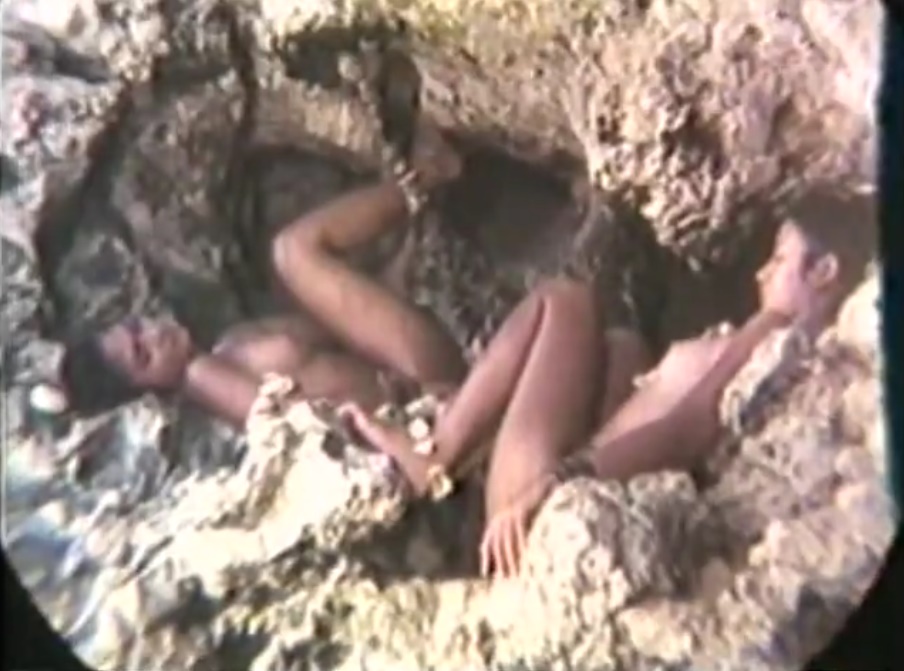



All three freak out ("What is this blood flowing in my vagina!") when they all simultaneously start menstruating. They call forth their father, Kalina (Joonee Gamboa), some kind of supernatural being that shows up as a giant head with green, glowing eyes, who assures them there's nothing to worry about and they're just becoming women. The lonely girls soon luck out, or so they think. As they're out on their raft they stumble across an unconscious man floating on a piece of debris. After sniffing him, licking him and observing their biological differences, they take him back to their island. When the man, Godok (Ernie Garcia) comes to, he soon proves to be some kind of cruel, macho survivalist type who wastes no time trying to lay claim to everything on the island. He eats a couple of sea urchins, takes a machete and cuts the top of a monkey's head off (!) and eats it brains and is soon forcing himself upon the virginal sisters.





Godok manages to get Coca cornered and rapes her. Later that night, a curse is unleashed. As it turns out, now that the snake girls have hit puberty, sex will a human will transform them permanently back into a snake, which is exactly what happens to Coca. The following day, Godok ties up Pepsi with vines and rapes her at machete-point, which results in a similar fate for her. Sarsi then attempts to seduce / "sacrifice" herself to the man so she can join her sisters. However, he first opts for native girl Kuyani (Manibog), whom he molests in a cave. That ends up angering the girl's tribe, who then drag both her and Godok back to their village for some tree branch whipping and castration fun. Rene Hawkins (Zuma) is the tribe leader and future director Tata Esteban (billed as "Steve Paolo" and also the production designer) plays a tribe member.





While this is all weird, wild and entertaining throughout, and boasts some charmingly awful special effects, the fun is dampened a bit by some utterly confused moralizing, which I suppose shouldn't be so surprising considering 86% of the population of the Philippines identify as Roman-Catholic and most of the rest identify as either Christian or Protestant. Still, does anyone really want to watch a clearly exploitative "sexy" film with gratuitous nudity and intentionally titillating camera angles and then simultaneously get an antiquated lecture about how sex outside of marriage is sinful and shameful? Doubt it.
Now that I think about it, this doesn't seem to have a very high opinion of females either. Then again, neither does the bible, where you're either a saint (virgin or obedient wife) or a sinner (unmarried non-virgin or evil, scheming seductress). The unsullied snake sisters live a harmonious life right up until their virtue is violently taken away from them. Now "destroyed," and we can assume worthless by this film's moral standards, they transform into undesirable literal snakes and slither away into the dark. Barely-concealed biblical allusion much? Even from a religious vantage point, it seems the message they wanted to get across would have been more potent had the snake sisters willingly had sex instead of punishing them for being sexually assaulted! It's just another archaic story point that attempts to justify its content by presenting girls as martyrs to the male libido.


As for the rest, I'm not so sure what we're supposed to make of the one snake sister who doesn't get raped. Instead of plotting revenge, she starts stalking, begging and groveling at the perpetrator's feet for him to have sex with her as an act of virtual suicide. The fourth female character, the village girl who dares to mess around with an outsider, gets her comeuppance by being tied down and whipped to death by all of the male members of her tribe complete with endless close-ups of her breasts and private parts getting lashed. The presentation of the snake sisters also doesn't really ring true. They should be tough as nails having to survive the elements for as long as they have. They skillfully hunt their prey, are agile, strong and possess constrictor-like abilities, yet suddenly become weak and completely powerless the minute a guy enters the picture.



Like the vast majority of Filipino films from this era, Snake Sisters seems like it may be forever lost to time. An attempted restoration by Mondo Macabro was abandoned because the only known surviving film elements had deteriorated beyond repair. All we're left with now is a very poor quality VHS-sourced print, which is a shame because this looks like it would be visually quite beautiful (there are consistently breathtaking and nicely-framed outdoor shooting locations used throughout and the photography looks to be well done) in a restored print. The surviving copy does have burnt-in English and French subtitles and the end credits feature some outtakes and behind the scenes footage.
According to one source I found, the film played for just a couple of days in the Philippines before it was pulled from theaters and then banned for fifteen years. I've been unable to find any evidence of an official VHS, VCD or DVD release, though there had to have been at least one at some point.
★★1/2