... aka: Der Museumsbesucher (The Museum Visitor)
... aka: Expulsion from Hell
... aka: Izgnanie iz ada (Exile from Hell)
... aka: Visitor of a Museum
... aka: Visitor to a Museum, A
Directed by:
Konstantin Lopushanskiy
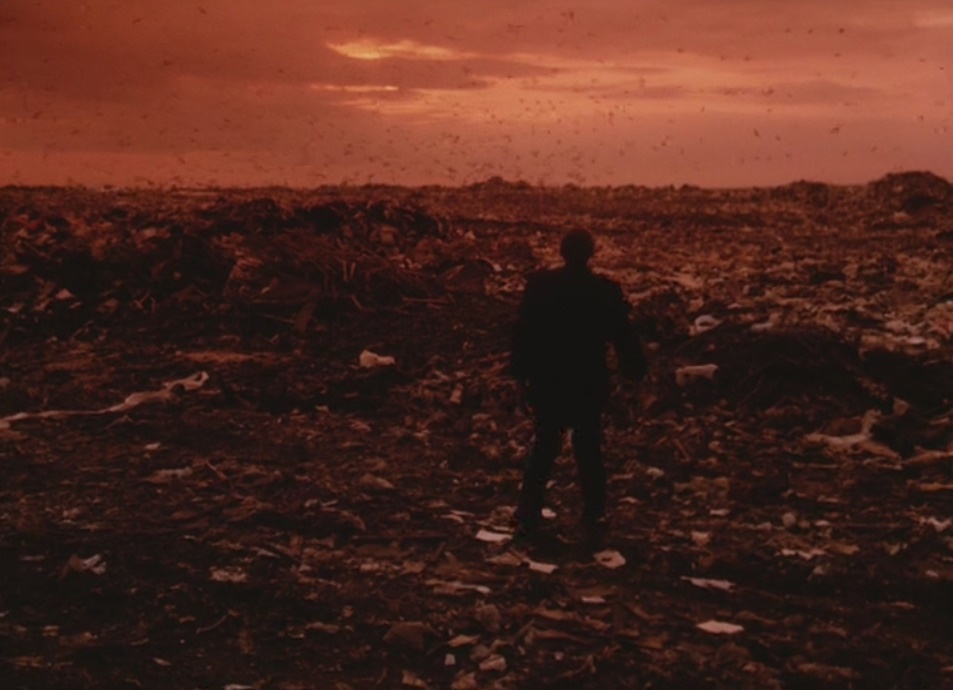
Strange reddish colors emanate from the night sky. The winds are strong and dust fills the air. If you spend too much time outdoors without a face covering and breath in too much of it, get ready for a rough cough. The oceans are not only treacherous and effectively dead of sea life, but they also reek of chemical waste. Trash and debris and split wood and hunks of scrap metal and skeletons of old vehicles and broken glass are all heaped in huge piles everywhere you look, which are constantly sifted through by filthy vagrants. Half of the children are now born deformed, mentally disabled and with severe psychological problems. These "degenerates," as they're now called, must be relocated to "reservations" to live out their miserable existence. Those who haven't been effected have to now take precautions, like having fires constantly burning in front of their windows, to keep these degenerates from breaking into their homes at night. Welcome to the apocalypse. Or (hence all of the fire and red lighting) hell on Earth.
Some kind of unnamed disaster (referred to merely as an "ecological catastrophe") has occurred that's had a disastrous effect on our planet. Whether that was nuclear war or environmental damage of another sort isn't important. What's important is that we did it to ourselves. From conversation, we gather that things are somewhat better in certain places; namely some of the major inland cities. But our brooding and soft-spoken protagonist, played by Viktor Mikhaylov, has traveled to a heavily-damaged area of the country, where he has but one objective.


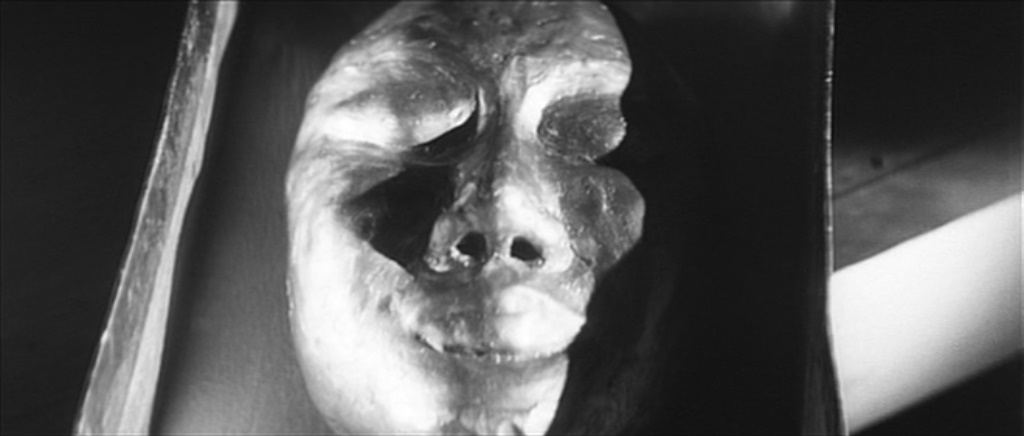
The tourist (who is unnamed so we'll just refer to him as "Tourist" from here on out) is there to see a museum. He claims he merely wants to see and touch it. However, this is no ordinary museum. It's kept hidden underwater for all but one week of the year. During that time of low low tide, the ocean recedes back for miles and stays that way for about a week, which is about the same amount of time it takes for a round trip to and from the museum. Due to a coating of toxic slime and the uneven terrain, vehicles cannot be taken to the destination. It's a journey that must be done by foot. Few have ever tried. Some have chickened out. Others have stayed out for too long or gotten lost and drowned. The waters don't slowly come back, they come back suddenly and violently. It's nearly a suicide mission, but our hero is determined to see it.
The tourist has made arrangements with a couple (Vera Mayorova and Vadim Lobanov) who live at a remote weather station. The same couple (they're also not named - actually no one is in this film - so I'll be referring to them by the actor's first names) have hosted previous travelers who've attempted the journey; all of whom either backed out or didn't come back. Despite having two well-mannered and trained degenerates; a female maid (Irina Rakshina) and a male servant (Aleksandr Rasinsky) living in their home, Vera hates them and refers to them as "vile monkeys" while Vadim views them as being their children, which causes strain on their marriage.


The physically unharmed survivors in this new post-apocalyptic society are kind of like the old society (TV still distracts with soccer games, music videos and stories about the latest fashions, like high heels for men) but now have very little use for religion. Vadim claims priests are merely another form of degenerate and chastises his servant for continuing to quote scripture. The new society has even gone so far as to drive the religious leaders underground. They now live among the degenerates. Still, the tourist holds strong about his own religious convictions and believes this journey is going to be a spiritual awakening for him; equating it to Jesus' sermon on the mount. With things being so grim and bleak, he needs something to believe in, as do the degenerates, who gather together during low tide to celebrate something called "The Feast of the Branches" where they burn "branches" (candles) despite being deathly afraid of fire.

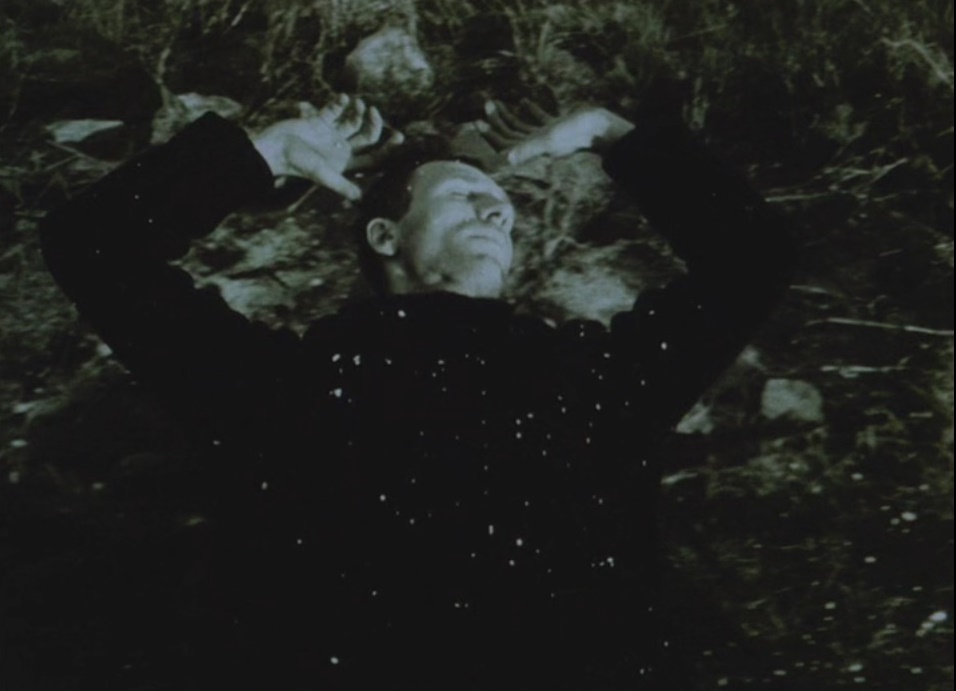


After setting up the atmosphere, premise and characters (which takes a good hour), the film then opts to go the surreal-and-existential-and-"profound" route and it's difficult to make heads or tails of just what in the hell is going on half the time. The tourist sneaks into the reservation to visit the priests, attracting the attention of the degenerates in the process. After attending a party thrown by his hosts, he changes his mind about visiting the museum and attempts to go back to the city. Returning to an inn he visited in one of the earlier scenes, he suddenly loses it and freaks out about "The sorrow! The sorrow!" and being nothing but a "marionette", prompting the innkeeper's wife to suspect he's a covert degenerate himself. And then he's suddenly back at the weather station with the bickering couple.
A mob of candle-carrying degenerates (mostly played by people with real physical deformities and / or developmental disabilities) show up, capture him, pour some kind of milk or cream into his mouth and then carry him away on a board. He's taken back to their temple, where he's stripped, cleaned and dressed in a suit. There's lots of bell chimes, indecipherable chanting and people lining up just to touch him. He's paraded through the streets and then led into the (now receded) ocean bed where he finally sets out on his museum quest.


Any film that's artistically accomplished (as this certainly is with its impressive photography, lighting, colors, shot framing and art direction) and delves into topics like the environment, religion, how awful and irredeemable the human race is and the purpose of our existence (granted there is one) is going to be deemed a masterpiece by some viewers... but then there are those other people like me. As much as I enjoyed looking at this, and as much as I was captivated by the first half, it eventually devolves into a miserable, noisy, humorless and depressive screed whose sole purpose appears to be reminding us that, yes, we're doomed as a species and, yes, our lives may very well be completely meaningless. Nihilism masquerading as depth if you will. Is there really anything to gain from subjecting yourself to that? I suppose that depends entirely on the viewer.
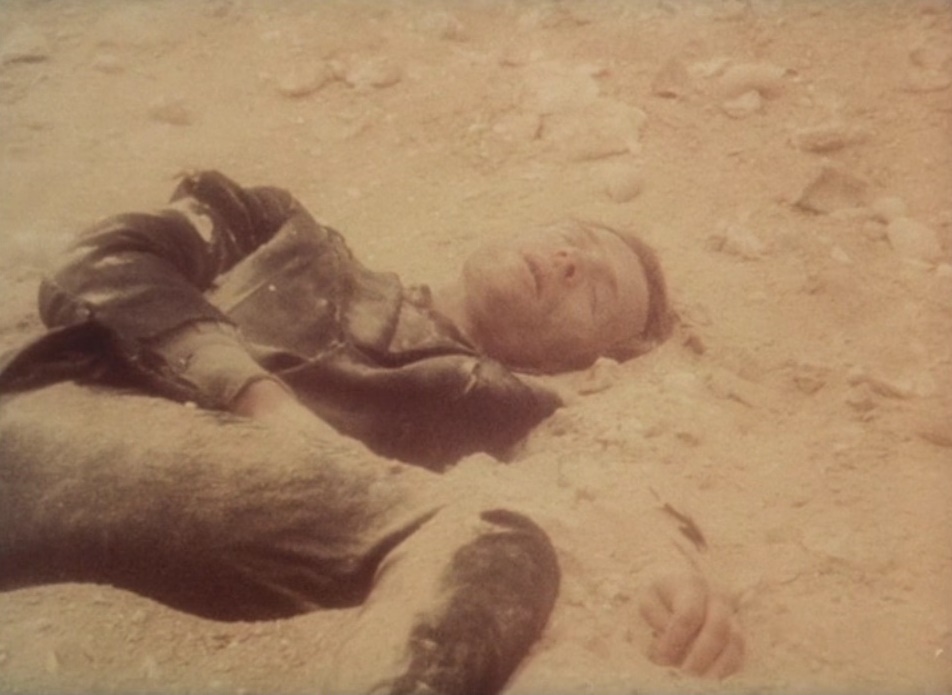
A number of needlessly long sequences drag this all out to 129 sometimes grueling minutes. The last half hour consists mostly of the tourist endlessly wandering around in the sand, in the water and through the ruins of a city praying to God, crying to God, pleading to God, screaming to God and then just plain screaming in frustrated agony as his questions are never answered by God. While much of that makes sense in the context of the rest of the film, it's histrionic, endlessly drawn out and not exactly pleasant (or all that entertaining) to sit through. That's capped off with a long unbroken shot of the man looking through a window opening and closing his mouth like a guppy and then a five minute long unbroken shot of him, back to the camera, slowly lurching through a field until he finally falls over. Thanks to the red tinting, it ends up being a striking final image nonetheless.


A co-production between the Soviet Union, West Germany and Switzerland, this won several awards at the Moscow International Film Festival but has sparked little interest elsewhere. The director was a production assistant on Andrei Tarkovsky's Stalker (1979), which was an obvious influence, and also made the (even more depressing if you can believe it!) post apocalyptic drama Dead Man's Letters (1986).
★★1/2