.
.
.

Sunday, May 1, 2022

Nido to Mezamenu Komori Uta (1985)

... aka: 二度と目覚めぬ子守唄
... aka: Death Lullaby, The
... aka: Lullaby for Sleep of the Death, A
... aka: Lullaby to the Big Sleep

Directed by:
Hiroshi Harada

Ugly is the key word here. There's the main character, a young, nameless schoolboy living a lonely existence in Kiryū who is, by conventional standards of beauty, physically ugly. He's taunted daily by his peers for his short stature ("dwarf!") and buck teeth ("protruding tooth deppa!" ["deppa" is a Chinese word for a mope or a dull, spiritless person]), because finding those insecurity scabs and picking at them incessantly is what bullies like to do. The boy is hounded so mercilessly (punched, hit with balls, beaten with a stick, told to die...) that his first inclination when the final school bells rings is to run and find a place to hide where his tormentors can't find him. He's not always lucky. The frequent dehumanization is manifesting itself as another kind of ugly: A constant scowl on the face of a child that has been completely sapped of his joy, curiosity and sense of wonder and imagination. Only a repressed anger and inner rage linger in his eyes, which may one day erupt into violence.

The behavior of the bullies is far uglier because it's an inner ugliness; an emotional and psychological corruption and a lack of soul and empathy. Receiving an affirming, positive emotional response from intentionally making another human being feel terrible about themselves, with zero regard for how your actions may harm or even kill that person, is perhaps the nadir of human ugliness. And these bullies, with their early onset sociopathic bent, will eventually (at least physically speaking) grow up. After they spend their childhood railroading through the weak and vulnerable, then what will their interests be?


Perhaps they'll seek out a profession that enables them some leverage and power over the majority. After all, they'd already spent their youth elevating themselves by knocking others down and THAT made them feel good. For children, words and fists may give them an upper hand but, as adults, nothing speaks louder, gives more leverage or provides more societal advantages, than wealth. If they're in a position of power over the poor, the sick, the weak, the physically and / or emotionally damaged, then they can still resume their bullying, just in more adult, socially acceptable ways. And then, most of society will look upon them favorably because the greatest metric of success in the adult world is money.

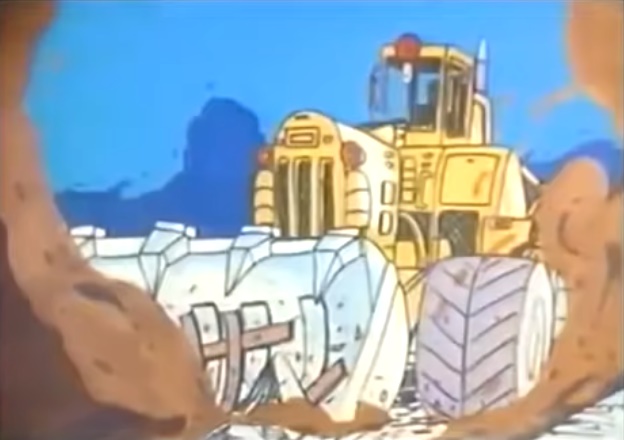
Perhaps they can oversee some big project. Maybe that project would even come with non-monetary perks, like the pleasing feeling of nostalgia they get in demolishing through low income areas populated with damaged souls; souls like "Deppa" who've had it beaten into them from a young age that they're inferior and not of much value. The Deppa's of the world, who've had their abilities to get an education, develop a sense of self-worth and make peace with their differences all taken away, now get to have their homes torn down by bulldozers, get toxic fumes pumped into their air and chemicals dumped into their water by the very same people who had a hand in diminishing them in their formative years and now require more money to maintain their "superior" position.


Deppa lives in an impoverished, cramped, ugly part of the working class city. Airplanes constantly fly overhead; so loud that the citizens have to plug their ears as they pass, and they spit out their fumes as they go, which fall like a blanket on the slums. Beaming TV newscasters brag about advancement in the form of a new "superexpress" train system being built through the city that will be the new "Japanese pride." Old buildings must come down so the bulldozers roll in and big steel beams are planted right in between homes for the upcoming track. Textile and silk mills in the area (the chief employers) dump their waste into the water, where scores of dead, smooth-eyed fish float. The skies are always orange and red and hazy and filled with smog. And billboards try to convince everyone to pay their taxes and support whatever next project those at the top are pushing at any given time.


We get flashbacks to the bullied boy's youth, which show how a fall as a toddler messed up his teeth. After the death of both his grandfather (to disease) and his father (a military man who was killed in a war), he and his mother were forced to live in a home with another poor couple. After his mother started suffering from mental problems, she was placed in a hospital (where she will later commit suicide), while "Deppa" was sent to live with distant relatives, who aren't too fond of his presence. His existence is one of social isolation, constant loneliness and ridicule. If the bullies knew any of this, would they stop tormenting him? Would this knowledge make the adults who laugh at and mock him think twice about what they're doing? In both cases, likely not. If you first need to know someone's life history and past traumas in order to treat them with a bare minimum of respect, you're probably already a lost cause.

There's a lot to unpack in this lightning-fast, 27-minute short, which utilizes animation, drawn and photographic stills, live action shots (filmed with 8mm), newsreel footage and surreal imagery. What's most important to note are the overt political themes, how they parallel the bullying story and why they parallel the bullying story. The primary real world reference used here is the construction of the Narita International Airport, which found the Japanese government basically steamrolling over local residents, students protesters and left wing activists until they got their way. Just like that socially acceptable bullying I was talking about earlier, this is yet another example of the little man getting crushed in the name of capitalism and progress by a much more powerful entity. On the other hand, construction of the Narita Shinkansen (bullet train) through the same city (the "superexpress" referenced here), a concern on the director's mind at the time he made this, was successfully stopped by protests in 1983.


The wonderful thing about this multi-layered short is that the bullying and urban development angles perfectly compliment one another and both aspects of the film are affecting. Though you can certainly absorb how the parallel plot threads feed off one another, this also allows viewers to put primary focus on either aspect of the film, as the "secondary" content works well to accentuate whichever area you choose to put your attention on.


This took three years to complete. The director (20 years old at the time) also wrote, produced, photographed, did the animation, character design, sound, Moog synthesizer score and basically everything else! He'd go on to make the controversial and grotesque Midori (1992), which took five years to complete and was also basically a one man show for the talented Harada.

This was given a limited release in Japanese theaters in 1986 and played at film festivals in Belgium, Canada, Germany, Italy and the UK, but was never given any kind of official home video release until 2021. The current Japanese distributor (TACO ché) offers a remastered version with lots of extras, including slideshows of the original drawings, an interview with the director, some of his other short films, a graphic novel and more. This is also available on Youtube with English subtitles.

★★★1/2

Saturday, April 30, 2022

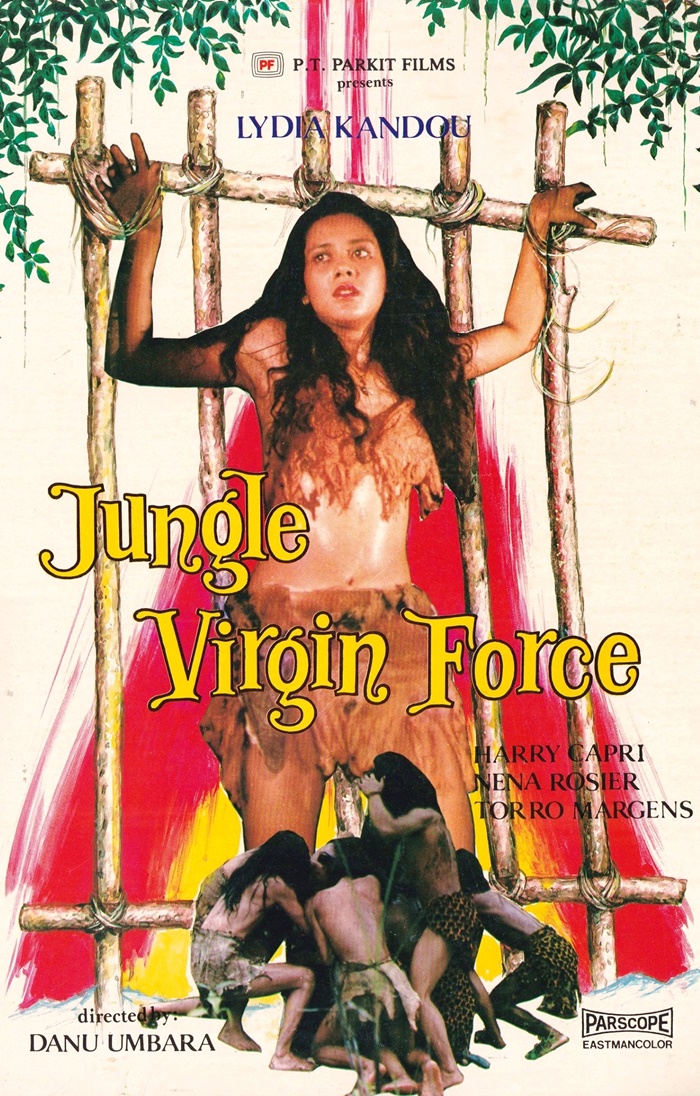
Perawan Rimba (1983)

... aka: Jungle Girl
... aka: Jungleritualer (Jungle Rituals)
... aka: Jungle Virgin Force
... aka: Jungle Virgin Force - Le assassine nude di Giacarta (Jungle Virgin Force: The Nude Killer of Jakarta)

Directed by:
Danu Umbara

Vine-swinging jungle gal Jelita (Lydia Kandou) lives so deep in the jungle (on some uncharted island in between Australia and New Guinea) that she's never made contact with any other tribe, let alone any civilized man. All she's had is her pet monkey to keep her company. That finally changes when she sees a half-dozen young women from another tribe bathing topless under a waterfall and saves them from a crocodile attack by leaping into the water and stabbing it to death. The thankful women befriend her and then take her back to their tribe. The tribe's queen decides that since Jelita is in possession of a glowing talisman (the "symbol of holy powers") that proves she was sent their by the Gods. The queen (Rita Zahara) attempts to make her their new ruler and protector, but a faction of detractors led by evil high priest / witch doctor H.I.M. Damsyik, decide to overthrow them. During a fight filled with plenty of stabbings and spearings, many of the tribes people get killed and the queen is stabbed and thrown over a cliff. Jelita however manages to escape back into the jungle.

Meanwhile in Jakarta, a group of college anthropology students; Haydar (Harry Capri), Larasati (Esther Sumampouw), the hot tempered John (Torro Margens) and comic relief Mat Solar (Mat Solar), plus journalist and photographer Maya (Nena Rosier), are organizing an expedition to the island. Even though their professor (Hadisyam Tahax) has already tried to discourage them from going (after all, it's located in the "triangle of death" and only a handful of explorers who've dared gone there have returned), he agree to help them with maps and such, so long as they don't tell anyone about the island's location or attempt to take a treasure that's rumored to be hidden there. The professor also hooks them up with a guide: A hunter named Bunyan (Alwi A.S.), who's spent years searching the jungles looking for his daughter, who's been missing since a plane crash there years earlier. I'm sure you already know who THAT is...


John's lover rats him out to an unscrupulous group of criminals headed by Doris (Enny Beatrice) and her blonde, FILA shirt-sporting sidekick Piet, who have also heard about the treasure. She and her men head on over to the professor's place to get the details and end up killing him, but Larasati gets hold of the map and runs off with it. A brawl ensues and then a car chase, which finds one of the cars crashing through a horse drawn buggy wedding caravan (!) and then blowing their car up. The students manage to catch their plane and fly off. They first make a pit stop at another island to meet up with Bunyan. From there, it's a long boat ride to the uncharted island, where they're immediately greeted by dangerous water rapids, crocodiles, snakes, tigers and, of course, the evil tribe. Doris, Piet and their group, who've paid off the pilot friend of the students to bring them there, show up soon after.

After everyone has arrived, the evil tribe start capturing and killing everyone off. After falling into some rapids and into the tribe's clutches, Larasati is tied upside down on a "torture pole," has her stomach sliced open and is then decapitated with an axe. There's also death by spear, boulder, arrow, shards of rock, someone falling into a pit of spikes, arms chopped off, a native woman melting down into a pool of what looks like strawberry jam and much more. One guy is shot with a laser, ripped apart and becomes the main course for a cannibal feast.


With everyone getting killed left and right, you'd figure the characters would have other things to worry about than their relationships, but no such luck. Jelita discovers that Bunyan is her father right before he dies from a spear wound. He's set plenty of money aside for her and his last wishes are for Haydar and company to take her back to civilization so she can get educated and live a normal life. Haydar finds himself falling for Jelita, which doesn't sit too well with Maya, who's also in love with him. John thinks this leaves an opening for him to put the moves on Maya. However, she's not interested, so he tries to rape her instead. Hoping to exploit this fracture in the group to get the map, Doris tries to seduce Haydar and her men get in good graces with John, whom Doris also tries to seduce, though successfully this time. Despite his earlier transgression, Maya eyes a possible partnership with her attempted rapist. Lots of backstabbing, fist fights and cat fights follow.


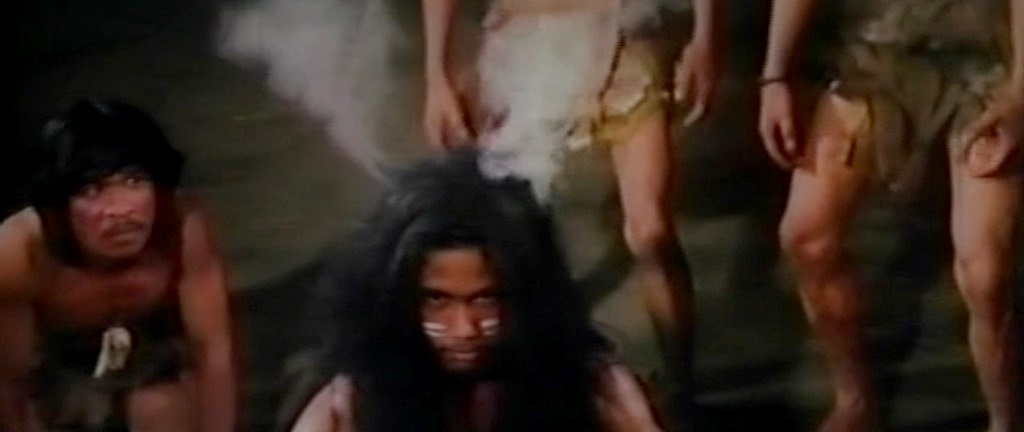
While all that's going on, the evil and mostly male black magic / cannibal tribe and a faction of mostly female outcasts splintered off from the original tribe but now under the guidance of a white magic practicing priestess, are at each other's throats. The high priestess and her girls conduct a ritual dance to weird electronic music that concludes with a snake getting its head cut off and a voodoo doll popping out of a bubbling pool of blood. The doll is then used to make the cannibal tribe's "general" (Jeffry Sani) spit out his tongue and fall over dead. And that means all-out war between the two groups, which finds lots of men (many of whom have sprouted large devil horns due to a spell!) and women running around in loincloths and fur bikinis fighting and killing one another. The city folks get involved and nearly everyone is killed either during the fight or when things start blowing up everywhere!


Too much going on? Too many characters? Too many side plots that never really get resolved because they should have never been included here to begin with? Yes, yes and more yes. Thankfully, the rapid pacing, energy and overall weirdness keep you from caring all that much. Putting aside the female Tarzan wannabe and the black magic stuff, this very much resembles one of those 70s / early 80s Italian jungle cannibal flicks at times, which makes perfect sense seeing how they were still churning those out around the same time this was made. There's a very high body count, a wide variety of different kills and lots of blood and gore being flung around, though nothing nearly as gruesome as what can be found in the more extreme examples of this genre. This also lacks the gratuitous nudity (the topless bathing scene is optically censored, leaving only a couple flashes of bare male ass) and real animal killing / torture (though there's a scene where an already-dead goat is butchered) of those films, and tonally comes off as more of a light, silly jungle horror adventure.


IMDb and many other websites currently have this title listed as a 1988 release, though that's clearly not the case. Film Indonesia lists it as a 1982 production and the copyright date is 1983. This was also out on home video in certain countries well before 1988. In 1984, it was given a VHS release in Denmark courtesy of Video International and under the new title Jungleritualer ("Jungle Rituals"), plus there was an 80s era VHS release in Japan by TCC Video. Japan also received an English-language DVD release with Japanese subs, though the print quality is terrible. Actually, per my knowledge ALL of the available prints for this film are bad.

And speaking of terrible quality, this made its inauspicious U. S. debut on Videoasia's Tales of Voodoo: Volume 1 two film set in 2006, where it was paired with the Indonesian women-in-prison film Hell Hole (1983; aka Escape from Hell Hole). In 2014, bootleggers Mutant Sorority Pictures also released a DVD that they claim is "digitally remastered" (not sure about those claims) and which lazily steals the poster for the Eva Arnaz rape-revenge vehicle Barang Terlarang (aka Commando Wild Cat aka I Want to Get Even aka Lady Exterminator aka Violent Killer).

★★1/2
Related Posts Plugin for WordPress, Blogger...