.
.
.

Thursday, October 3, 2013

El cepo (1982)

... aka: Icebox Murders, The

Directed by:
Francisco Rodríguez Gordillo


In Paris, high-priced prostitute Chantal (Mirta Miller) has been seeing an unusual new client: eccentric, soft-spoken weirdo Dr. Geneau (Jack Taylor). The crippled Geneau refuses to ever meet Chantal out in public, won't take off his sunglasses and isn't the least bit interested in sex or even basic affection like hugs and kisses. So what does he have to offer? Money, and lots of it. The strange, wealthy doctor tells Chantal he wants her to give up her trade, stop dressing so provocatively and possibly even eventually become his wife. Since Chantal's getting used to being showered with money and gifts, and is getting up there in age anyway, she figures she'll at least give it a shot. Geneau arranges for the two of them to go on a holiday together at his country home. Chantal insists she be able to bring a friend along to keep her company so she chooses fellow prostitute Sylvie (Claudia Gravy), who's a bit more world-weary and skeptical than her friend. Geneau gives the ladies a wad of cash to meet him at the train station and then they're off on the overnight trip to the isolated villa. While all this is going on, a psycho killer is targeting women in the area. Whoever it is has already killed six and has managed to successful hide the bodies.


Upon arrival at the villa, Sylvie's bad initial feelings about the situation begin to come true. Geneau proves not to be the quiet, gentle academic type Chantal met back in Paris. Instead, he shows a cruel streak in the mistreatment of his quiet, voyeuristic servant Jean (Juan Meseguer), whom he frequently beats with his cane ("You clumsy, dirty meddler!"), as well as some blood-hunger since he has a huge collection of trophy animals on display that he's hunted down, killed and stuffed all by himself. The woods surrounding his entire estate are even lined with dangerous traps in hopes of snaring a wild boar, both Geneau and Jean seem to carefully watch over a large walk-in freezer in the basement and the doctor doesn't seem to want anyone to ever leave the grounds. While he's upstairs in his bedroom, the ladies and Jean sneak off to a discothèque for the evening, where Sylvie meets and becomes interested in Michele, who somewhat resembles Geneau. That's because he is actually Geneau, and is also played by a bewigged Taylor minus the mustache and sunglasses and using a different voice. You won't burn too many brain cell figuring out what's going on.


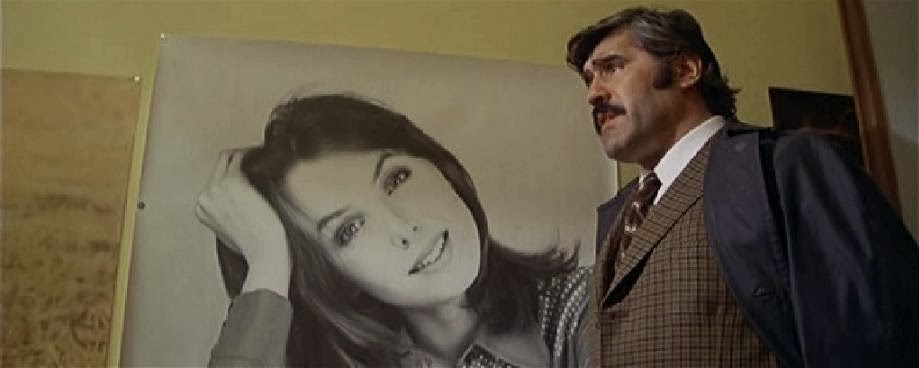
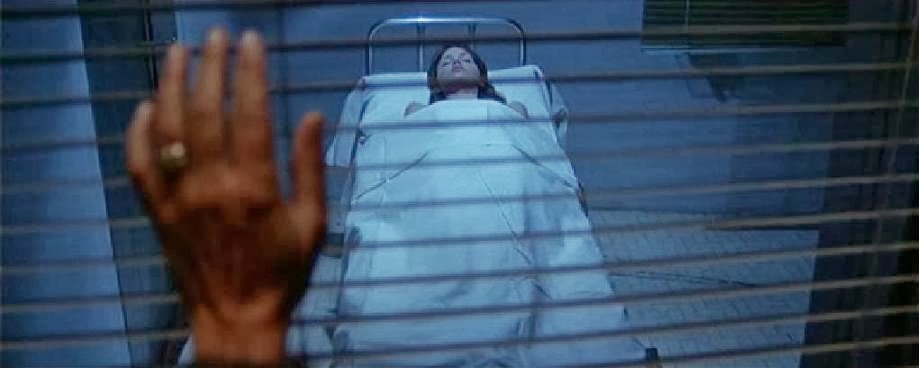
El cepo (which translates to mean "leghole trap") was first released in the U.S. under the title The Icebox Murders by the company Mogul, who created a pretty cool VHS box for it. Unfortunately, the actual film fails to deliver what anyone wants to see from it under any title. There's no nudity or sex, next to no blood and, worst of all, the story is extremely predictable, talky, unoriginal and slow-moving. Only two people are actually shown being killed in this entire film, and both murders are bloodless. Incidentally, the bear trap shown on the original poster is never actually used to ensnare victims in the movie, and the promise of frozen corpses stored in a deep freeze on the video box is also dashed since the walk-in is barely even utilized. The mystery elements are also rather weak. The writers attempt to turn the servant character into a suspect by making him a former asylum patient who has photos of the victims plastered all over his bedroom walls. Since we see Geneau / Michele in and out of his disguise from an early part in the film, this 'Who is the killer?' aspect doesn't work at all.


One thing I did somewhat like about this one (at least while it lasted) was that the two lead females begin to somewhat warm to the abused, lonely, misunderstood servant character and take his side, though that aspect is eventually thrown to the wind after a scene where Jean takes them out on the lake in a boat and then tries to force them to remove their blouses so he can take topless photos of them. The Most Dangerous Game-style 'hunting humans' element also isn't followed through with as we don't ever get to see the Geneau character really hunting down his prey. It's later revealed that he likes to decapitate his victims and then stuff their heads for his private collection (which are hidden behind his animal bust collection), though all we get to really see are a couple of actresses with their heads stuck up through holes on a shelf.


All three main actors were familiar faces on the 60s / 70s Euro exploitation scene. Both Taylor (Eugenie de Sade [1974]) and Gravy (Marquis de Sade's "Justine" [1970]) were featured in numerous films for director Jess Franco while Miller had appeared alongside Paul Naschy in films like Dracula's Great Love (1973) and Vengeance of the Zombies (1974). Director Gordillo went on the make the late Naschy film Lycantropus: The Moonlight Murders (1996).

★1/2

Wednesday, October 2, 2013

La polizia chiede aiuto (1974)

... aka: Coed Murders, The
... aka: Police Want Help, The
... aka: What Have They Done to Your Daughters?

Directed by:
Massimo Dallamano

Originally, blandly titled La polizia chiede aiuto ("The Police Want Help"), this middle-of-the-pack giallo / poliziottesco (police procedural) was released stateside under the title The Coed Murders. (Great poster, huh?) It was also titled What Have They Done to Your Daughters? at one point specifically to recall director Dallamano's slightly better-known What Have You Done to Solange? (1971). Both films fall into the then-popular 'troubled schoolgirl' sub-category, which were made pretty much for audiences to thrill at the prospect of underage girls (well, older actresses pretending to be them, at least) being sexualized and murdered. When compared to, say, the Dallamano-co-scripted Enigma rosso aka Trauma from a few years later, which featured a tasteful plot-line involving young girls being dildo-raped to death, or even the aforementioned Solange, which involved young girls being stabbed to death in the vagina, this seems much more tame and classy. The gore, violence and nudity are fairly minimal in this one and, though there's some pretty crude dialogue describing the seedier aspects of the story, most of the time is spent on the police investigation.


One thing hoping to separate this from the pack is its casting of Giovanna Ralli as assistant district attorney Vittoria Stori. Since the detectives in these films from this time were almost always male, it was somewhat novel (at least in concept) to have a female leading up the investigation. Unfortunately, the execution sadly downplays this angle. Nearly every character on the male-dominated police force doubts her capabilities at doing her job simply because she happens to be female, her gender is constantly addressed and everyone acts like it's big of her to be able to enter a crime scene with a dead body present and not faint or something. Now this would have been OK if the film had not made such a big fuss about her gender to begin with or if Vittoria had been allowed to be the heroine or otherwise prove her worth, but the writing strictly forbids her from becoming a brave Jodie Foster-in-The Silence of the Lambs type. And when all is said and done, she herself is eventually reduced to the 'victim' role; cowering in the corner and having to be rescued by a man. Afterward she's all but pushed off to the side so that the male inspectors can take over the heavy lifting. It's also worth noting that Vittoria's contributions to cracking the case become less important as the film progresses.


Things begin with the discovery of the nude, dead body of 15-year-old Silvia Polvesi ("Cheryl Lee" / Sherry  Buchanan) found hanging in a sublet attic apartment. Forensics reports uncover that she was murdered prior to being hung. The same reports conclude that she was something of a whore and had traces of semen found in every orifice except her nostrils. A team of detectives - led by Claudio Cassinelli as Inspector Silvestri - hit the city and start to piece the clues together. They first interview Silvia's parents. Farley Granger plays the neglectful father in a small, why'd-he-even-bother role. The mom (Marina Berti) relates a hilarious flashback where she finds her daughter's birth control pills and confronts her while she's topless in the bathroom. ("Sure, I know I'm still a child but I'd rather not have a kid every nine months!") From there, they interview Silvia's shady psychiatrist Dr. Beltrame (Steffen Zacharias), peeping tom Bruno Paglia (Franco Fabrizi), who'd been snapping pictures of Silvia having sex from a building across the street from where her body was found, a bunch of secretive schoolgirls and others.


A private detective who followed Silvia around for a few days is later found dismembered in the trunk of a car and the killer - who's clad in a leather outfit and motorcycle helmet and carries around a hilariously huge meat cleaver - goes after the detective's mistress Rosa (Micaela Pignatelli) in the hospital because she has some incriminating audio recordings, as well as anyone else who threatens to uncover what's going on. The motive? Well, it has something to do with a bunch of old perverts and a teenage prostitution racket. Nothing new there.

This is all pretty by-the-numbers stuff. Lots of characters, lots of red herrings, lots of silly dialogue (upon entering a bloody crime scene, the chief inspector notes "That's two dead now... always assuming that this isn't chicken blood.") and a very typical and very Italian score (a bunch of young girls going "Nah nah... nah nah... nah nah!" over and over again) by Stelvio Cipriani. Watchable? Sure. It's reasonably well-made, has pretty good acting and production values and some neat camera placements (like behind the handlebars of a speeding motorcycle). A few of the suspense scenes are good, especially one where Vittoria is pursued through a parking garage, as are a couple of gory moments (like a policeman's hand getting hacked off). Sadly, none of that is enough to overcome a general lack of creativity. Since nothing memorable or even remotely original happens, this probably would have benefited from being sleazier than it actually is. I'm also still trying to figure out why it was acceptable to play audio recordings of underage girls being coerced into anal sex by nasty old men but the "fuck" in "Go fuck yourself" had to be bleeped out to protect our sensitive ears.


Giallo regular Mario Adorf (The Bird with the Crystal Plumage [1970], Short Night of the Glass Dolls [1971], etc.) co-stars as a detective whose teen daughter is also involved. Dallamano also made the interesting Dorian Gray (1970) and The Night Child (1975).

★★1/2

Tuesday, October 1, 2013

Alarido del terror (1991) [filmed in 1989]

... aka: Alarido Terror
... aka: Chaneque
... aka: Shriek of Terror

Directed by:
René Cardona III

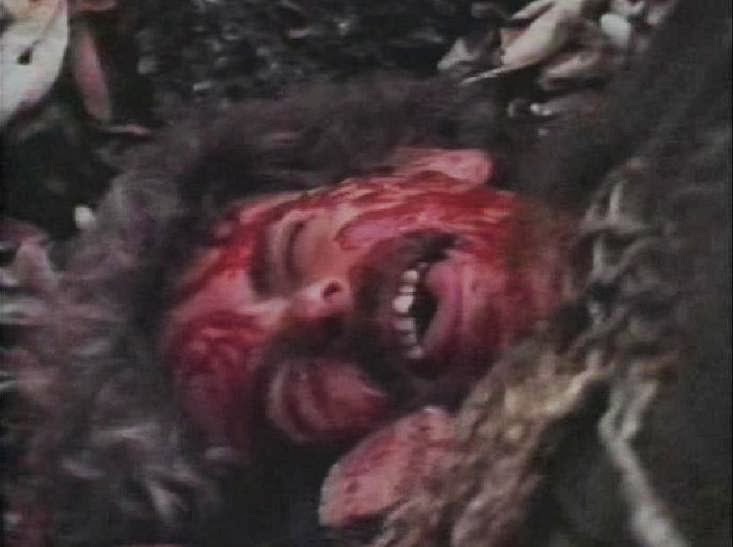
Roberto Navarro (Hugo Stiglitz) takes his unhappy, neglected wife Laura (Azela Robinson) and little girl Gaby (Hugo's real-life squirt Sofia Stiglitz) out into the country for a relaxing picnic. Well actually he's primarily there to meet up with his wife's uncle, Carlos (Bruno Rey), and Carlos' sidekick Eladio (Rojo Grau) to look for a hidden treasure. Leaving his wife and child behind in the woods, Roberto joins the other two men in exploring a crumbling 16th Century monastery. They break down a wall with a pick axe and, finding nothing inside other than a skeleton, promptly leave. On their way out, Eladio snatches a few bone fragments and sticks them in his pocket. Immediately after leaving, everyone's chased off by an armed posse who are presumably there to protect the tomb from scavengers. A few men in the posse then go to where the wall was broken down and unwisely take some bones as souvenirs themselves. Because his tomb was raided, a big, centuries-old man-in-a-rubber-suit monster with big claws and fangs emerges to get his bones back. The creature slaughters an entire barn full of goats and quickly kills both of the posse members who stole from him, an entire family and a drunk who's outside taking a piss.


A forest-dwelling mystic named Colibri (Roberto Ballesteros), who seems to know pretty much everything about the long-dormant beast, is on the monster's trail... which isn't too difficult to follow since he leaves green slime everywhere he goes. Colibri is decked out to look like a samurai and they play pan flute music every time he appears, so you know he means business. The creature, called the "Chaneque" and played by Arturo Vencez, was a former monk named Ibar who's been cursed. Not content with simply having a monster on the loose and an easy-to-follow story line, about midway through the writers decide to ignore the set-up and make things as convoluted as humanly possible. Little Gaby is somehow linked to the creature and has been having problems in school because of it. She doesn't socialize much with the other kids, scares them with macabre stories and draws creepy pictures. The fact her parents hate each other doesn't help matters and leaves her more susceptible to possession. Colibri (who can telepathically communicate with the young girl) shows up to give Gaby a magic amulet to protect herself, but mum immediately tosses it in the garbage for no good reason. Chaneque then shows up. He makes knives fly out of a drawer, slaughters their dog and and makes Gaby levitate off the ground and spin around in circles. She vanishes and then starts whining for her parents in an echo voice exactly like Heather O'Rourke's after she's been sucked into the TV in Poltergeist (1982).


Alarido del terror develops an extremely confused mythology for its creature that seems to change from scene to scene. The idea that Chaneque just wants his bones back is dropped after 20 minutes when the monster suddenly stops caring. An elder mystic Colibri goes to visit says the monk's skeleton needs to be destroyed to stop the curse but nothing of the sort ever happens. The monster is also described as a primitive spirit looking for a means to enter our world who needs to possess someone to accomplish this. No one is ever possessed and, as far as evidenced in this movie, the creature has always been lurking in the monastery ruins and clearly has no issue existing in our reality since it kills about a dozen people there! And then we learn the monster lurks in a parallel universe to ours. A couple of characters even go there at the very end through a portal that miraculously opens up in a bedroom wall. There, they face reanimated vines, quicksand, tarantulas, the monster taking on the appearance of other people (including Roberto's dead mom a la The Exorcist) and other "horrors."


Aside from numerous American movies this rips off (especially - of all things - the lousy Charles Band production Troll), there's also an obvious and strange Asian influence at work here. The Colibri character, a scene where Stiglitz has a bunch of fireballs heaved at him and the complicated magic elements all instantly bring to mind Asian genre films of the 70s and 80s. The creature is said to be a gluttonous beast who loves wheat and sugar and things of beauty, so our heroes must make a large offering, cover themselves in mud and sea shells and then call the beast forward by blowing into a conch. Once the portal opens a pot of incense must be kept burning or else the portal will close and those who enter it will be trapped for all eternity. As needlessly complicated, confusing and dumb as all this all is, the film does have an enjoyably zany vibe to it. Stiglitz's character - who's usually beet red from screaming and arguing so much - is so unlikable it's almost impossible to root for him, though I guess he does learn not to be such a douche by the end. There's also a hilarious moment when the usually-conservatively-dressed wife character has to go to an important meeting at her daughter's elementary school and suddenly decides that's the appropriate time to dress like a streetwalker in a skimpy all-leather outfit.


René III, grandson of René and son of René Jr. (both of whom were responsible for their fair share of schlock through the years), does the family proud with this one. He also was associate producer (along with Stiglitz) and co-wrote it. Veteran Mexi character actor Carlos East shows up in one scene as a detective, as does the pretty Edna Bolkan (from Cemetery of Terror) as a school psychologist. Filmed in 1989 but not released  until 1991, this was first issued in Mexico on the Video Alfa label. The only known American distributor (Million Dollar Video Corp.) carried just the un-subbed Spanish-language version.

★★
Related Posts Plugin for WordPress, Blogger...